Espostoa Guentheri
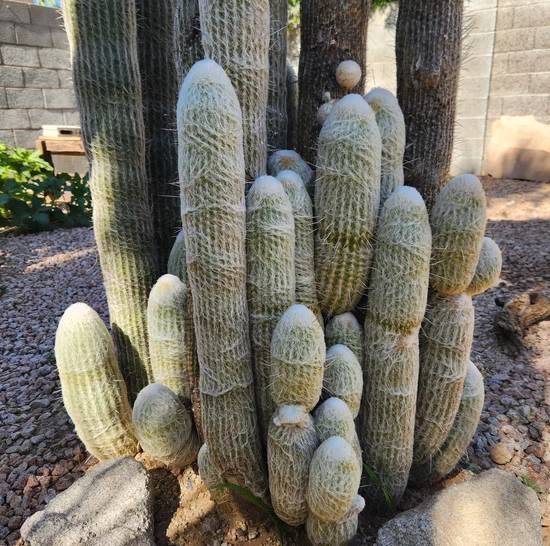
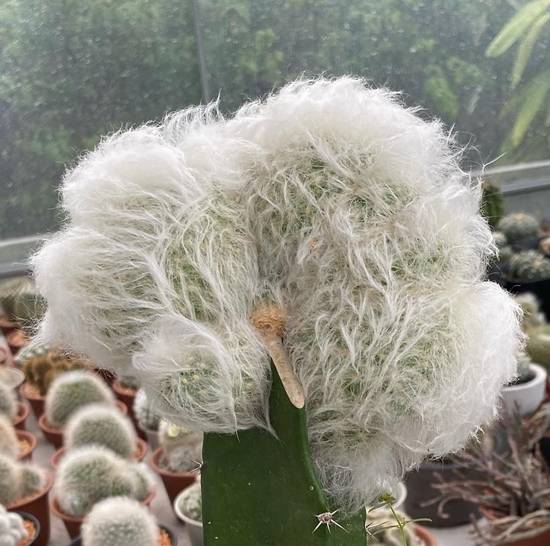
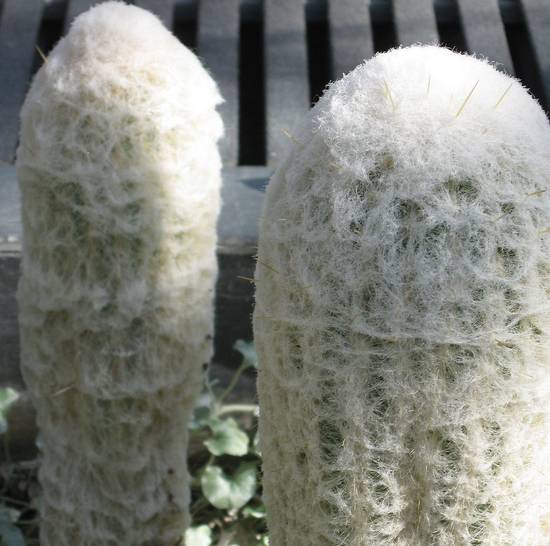
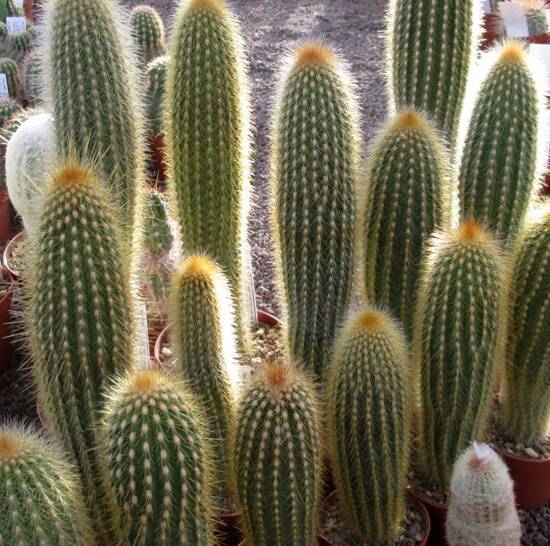
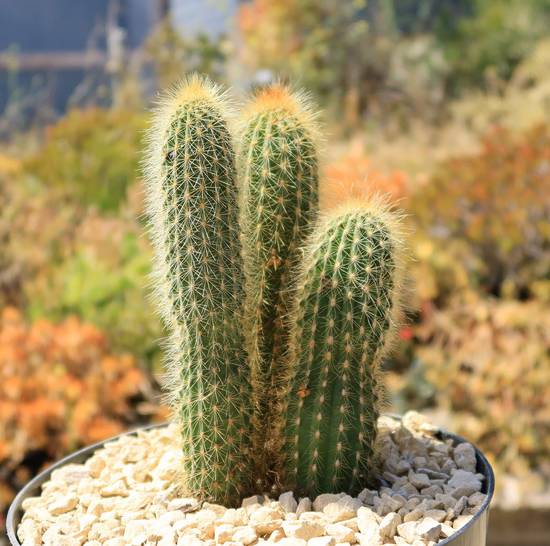
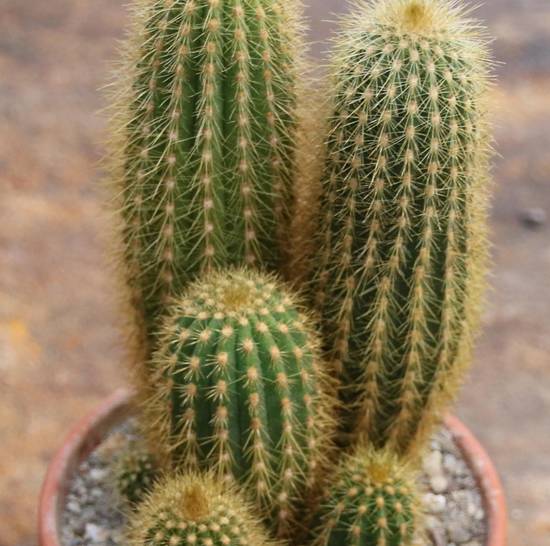
The Espostoa Guentheri is a spectacular columnar cactus native to the Peruvian Andes. It belongs to the Cactaceae family and is distinguished by its straight silhouette, well-defined ribs, and above all, its silky white wool that covers the plant from top to bottom. This natural fleece, made of fine woolly hairs, has earned it the nickname “bearded cactus” or “wool cactus”.
Its pale green column can exceed 2 meters in its natural habitat. In pots, it remains more compact (generally 60 to 100 cm), while retaining its slender appearance. It is prized for its graphic beauty and soft-looking texture, although hard spines are sometimes hidden beneath the wool.
Over time, the Espostoa Guentheri develops an apical flowering zone called a cephalium, from which nocturnal flowers emerge. Its growth remains relatively slow, making it an excellent indoor or greenhouse plant for lovers of pure forms and original textures.
🌞 Outdoor: Direct sunlight from spring onward, with gradual acclimation.
🌤️ Indoor: Place it near a south-facing window or use a grow light.
🌡️ Warning: During heatwaves, light shading at peak hours can prevent burns.
💧 Spring / summer: Water once every 2 to 3 weeks. Always wait until the substrate is completely dry.
❄️ Winter: No watering if the plant is resting in a cool environment.
⚠️ Tip: Avoid wetting the wool, as it can retain moisture and promote fungal diseases.
🌡️ Optimal range: 20 to 30°C.
❄️ Minimum resistance: Down to 5°C briefly, but it is best to bring the plant indoors below 10°C.
🏠 Wintering: A bright and cool space (8–12°C) is ideal for proper dormancy.
🪨 Recommended mix: 50% cactus soil + 50% mineral components (pumice, perlite, coarse sand).
🪴 Drainage: Do not forget a draining layer at the bottom of the pot.
🌸 Flowers: White to pinkish, tubular, opening at night. They emerge from the apical cephalium on old specimens.
🕑 Frequency: On mature, well-established plants, usually after 10 years.
🌿 Encouraging flowering: Provide cool winter rest and feed with appropriate cactus fertilizer in spring.