Espostoa Guentheri Cristata

Espostoa Guentheri Cristata

Espostoa Guentheri Cristata

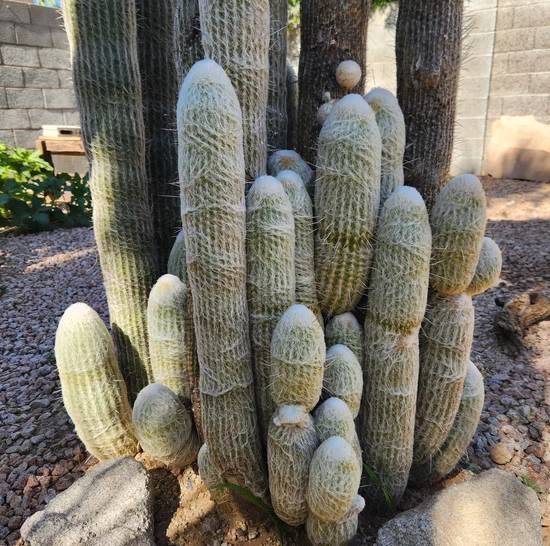
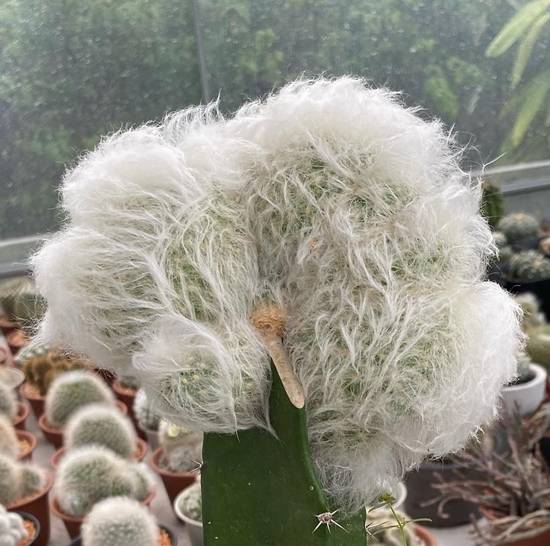
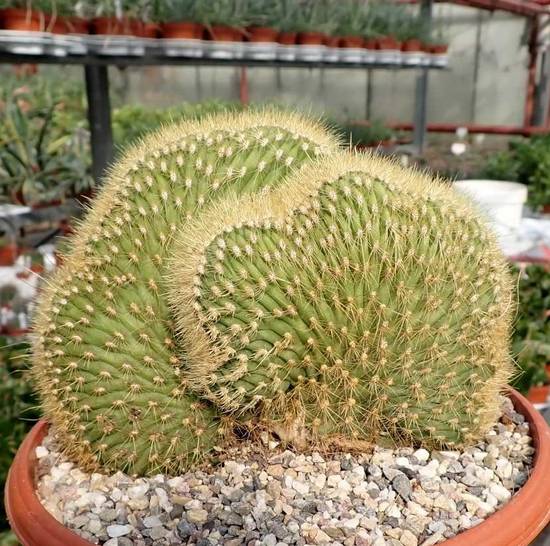
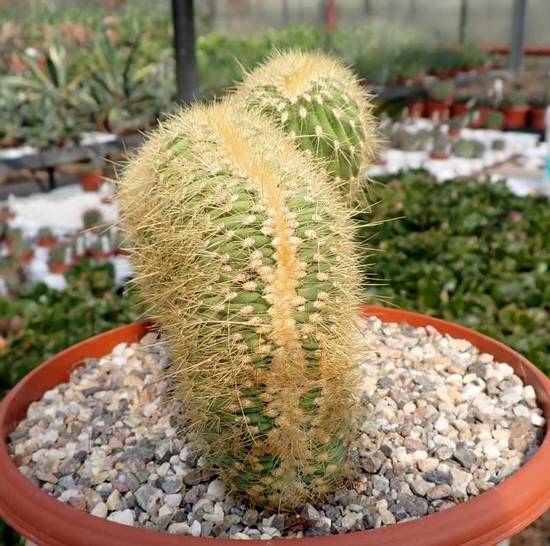
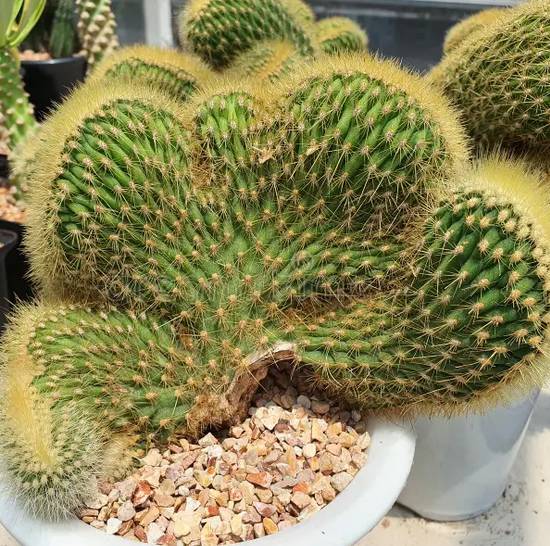
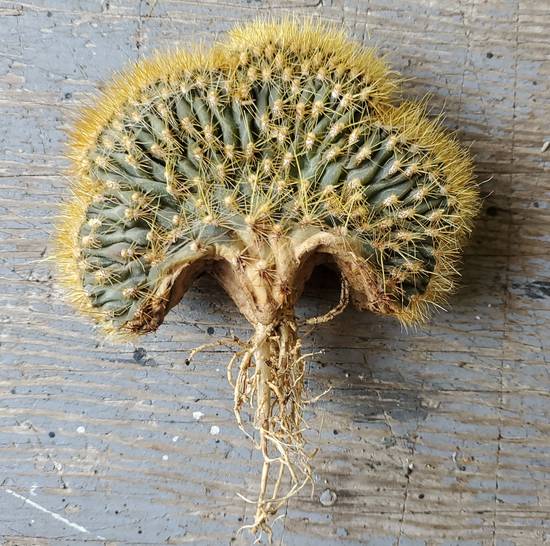
The Espostoa Guentheri Cristata is an exceptional cactus belonging to the Cactaceae family. This crested form, resulting from a rare mutation, transforms the stems into undulating, fan-shaped structures that appear almost sculptural and are covered with dense white wool. It irresistibly attracts lovers of botanical curiosities and experienced collectors.

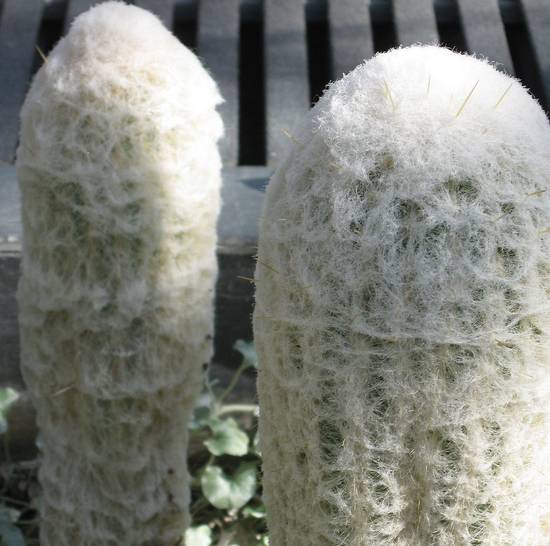
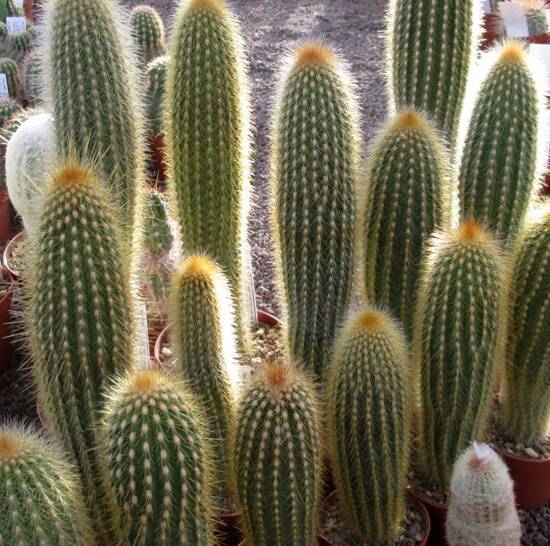
Unlike the typical form of Espostoa Guentheri, whose cylindrical columns can reach several meters in its natural habitat, the crested form develops laterally, sometimes in tortuous meanders. Its plush appearance comes from thousands of fine white hairs that completely cover the epidermis, providing both protection from the sun and a truly unique aesthetic.

Its growth is slow but steady, forming over the years a compact and architectural cactus, ideal for pot cultivation or display in a collection.

The Espostoa Guentheri is native to the Andean regions of northern Peru, at altitudes between 800 and 2500 meters. It grows on rocky, sun-exposed slopes, often in semi-arid conditions. The crested version is a rarity obtained through selection or natural mutation and preserved in cultivation.
Light is crucial to maintain the compact shape of the crested form and the density of its wool.

☀️ Recommended exposure: Direct sunlight or very intense light throughout the day.

🌤️ Warning: During intense summer heat, avoid full southern exposure at peak hours to prevent burning the exposed areas.

🏠 Indoor cultivation: Place it as close as possible to a bright window or under a powerful grow light.
Like all cacti, the Espostoa Guentheri Cristata is sensitive to excess water.

💧 Spring and summer: Water moderately every 3 weeks, only when the substrate is completely dry.

🍂 Autumn / winter: No watering if temperatures drop below 12°C.

🧼 Tip: Never wet the woolly coat, as it can retain moisture and promote rot.
This cactus prefers warm, dry conditions.

🌞 Ideal temperature: Between 20 and 28°C.

❄️ Minimum tolerance: Can briefly tolerate 5°C when dry, but ideally should be brought indoors below 10°C.

🏡 Winter care: Choose a bright, airy, and cool room to simulate natural conditions.
The substrate must strictly avoid water retention.

🪴 Recommendation: 50% cactus soil + 50% draining materials (pumice, perlite, coarse sand).

🌋 Base drainage: Add a draining layer at the bottom of the pot.
Flowering is rare but possible on very well-established specimens.

🌸 Flowers: Tubular, white to pinkish, barely emerging through the wool.

🕑 Period: Summer, on mature plants (10 years or older).

🌿 Tip: Encourage flowering with proper winter rest and suitable cactus fertilizer.
FAQ - Espostoa Guentheri Cristata

How should the wool of Espostoa Guentheri Cristata be maintained?
Do not wet or brush it. Leave it intact, as it naturally protects the cactus.
Can Espostoa Guentheri Cristata live indoors?
Yes, provided it receives very strong light. A good substrate base and placement near a south-facing window are ideal.
How often should Espostoa Guentheri Cristata be watered?
Once every 3 weeks in summer, and not at all in winter if the plant is kept cool.
Can Espostoa Guentheri Cristata flower?
Rarely. It requires a mature plant, well exposed and fed with a suitable fertilizer.
What is the growth rate of Espostoa Guentheri Cristata?
Very slow, but steady. It may take several years before developing large crests.
Can it be propagated easily?
No, crested forms are difficult to propagate by cuttings. They are often grafted to stabilize their growth.
What type of pot is suitable for Espostoa Guentheri Cristata?
A terracotta pot with good mineral drainage at the bottom is ideal.
Is it toxic or dangerous for animals?
No, it is not toxic. However, its hairs may cause irritation if inhaled.
Can I place Espostoa Guentheri Cristata outdoors in summer?
Yes, but acclimate it gradually to the light. Avoid direct rain.
Is Espostoa Guentheri Cristata fragile?
Its wool can trap moisture, so beware of excess water. Otherwise, it is a robust and resilient plant.