Cotyledon Undulata

Cotyledon Undulata
Cotyledon Undulata
Cotyledon Undulata

Cotyledon Undulata

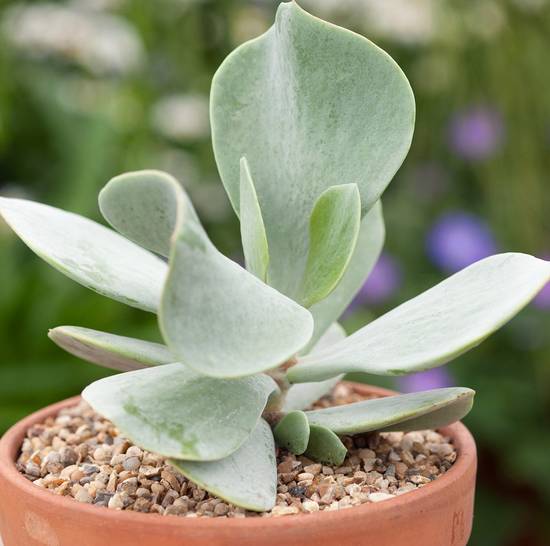
The Cotyledon Undulata is a remarkable succulent, instantly recognizable by its thick, undulating leaves coated with a bluish-white, almost ghostly powder. Native to the arid regions of southern Africa, this species fascinates with its unique appearance and nearly mineral silhouette. Highly prized by succulent collectors, it combines graphic aesthetics, drought resistance and easy cultivation in pots or rock gardens.

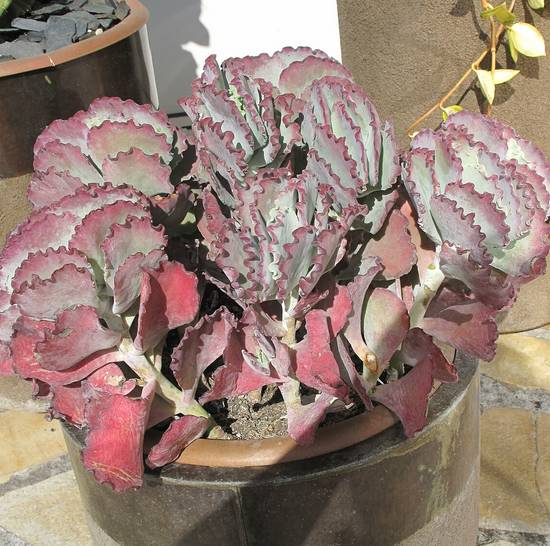
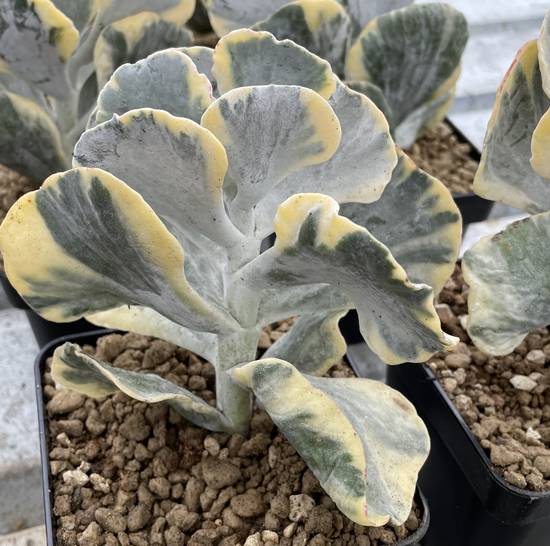
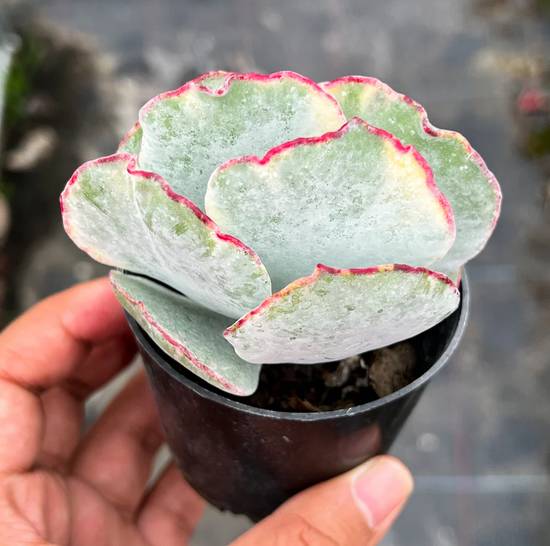
Its thick leaves, arranged in upright rosettes, have strongly wavy margins, giving rise to the name “undulata”. They can reach up to 15 cm in length and are covered with a dense, powdery bloom that protects the plant from intense sunlight. This white coating gives the plant an almost silvery appearance. In full sun, the leaf margins may take on pink or red tones, further enhancing its decorative appeal.

The Cotyledon Undulata naturally grows in rocky environments, often at altitude, on dry and well-drained plateaus. It is commonly found in areas with strong temperature fluctuations, exposed to drying winds and very low rainfall. It has evolved under these conditions to become an extremely water-efficient plant, capable of surviving prolonged drought thanks to its fleshy leaves and waxy surface that reflects sunlight. In its native habitat, it often grows partially buried among stones, benefiting from natural drainage to prevent rot.
The Cotyledon Undulata thrives in sunny locations, which enhance its silvery coloration.

🌞 Outdoors: Place in full sun, in a rock garden or exposed container.

🌤️ Indoors: Position near a bright window, ideally facing south or west.

Lack of light will cause etiolation and loss of the protective powdery coating.
This succulent is extremely drought-tolerant.

🌱 Spring / Summer: Water every 15 days once the substrate is completely dry.

🍂 Autumn / Winter: Watering should be almost nonexistent if temperatures fall below 15°C.

⚠️ Tip: Always use a pot with drainage holes and avoid stagnant moisture.
The Cotyledon Undulata is a heat-loving plant.

🌡️ Ideal temperature: Between 20°C and 28°C for optimal growth.

❄️ Minimum tolerance: Can briefly tolerate 0°C in dry substrate, but wet frost is fatal.

🏠 Winter advice: Bring the plant indoors in a cool, bright place as soon as autumn arrives.
Like all Crassulaceae, it requires a very well-draining substrate.

🪨 Recommended mix: 50% cactus potting soil, 25% perlite and 25% pumice.
The Cotyledon Undulata may flower in summer.

🗓️ Season: Summer flowering, from June to August.

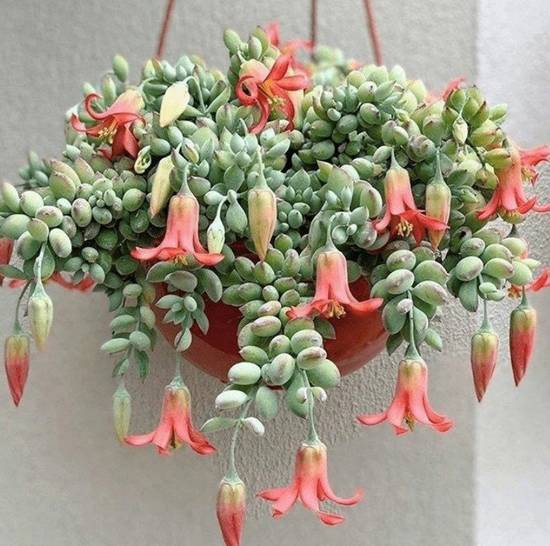
🎨 Flowers: Small pendulous bell-shaped flowers, red to orange, carried on slender flower stalks.

🐝 Pollination: Flowers attract bees and other pollinators.

💡 Tip: To encourage flowering, apply a light succulent fertilizer in spring.
FAQ - Cotyledon Undulata

What is the ideal exposure for Cotyledon Undulata?
It needs strong light to maintain its compact form and silvery coating. Place it in full sun outdoors or near a very bright window indoors.
How should Cotyledon Undulata be watered properly?
Water only when the substrate is completely dry. During the growing season, watering every two weeks is sufficient. In winter, greatly reduce or stop watering.
What substrate is suitable for Cotyledon Undulata?
Use a very well-draining mix. Combine cactus soil with perlite and volcanic rock to avoid water stagnation.
Is Cotyledon Undulata cold-hardy?
It tolerates temperatures close to 0°C only if the substrate is dry. It is best to bring it indoors when temperatures fall below 5°C.
When does Cotyledon Undulata bloom?
It blooms in summer, usually between June and August, producing flower stalks with small red or orange bell-shaped blooms.
Does Cotyledon Undulata grow quickly?
No, it is a slow-growing plant. It may take several years to form a dense shrub, making it ideal for pot cultivation.
How should Cotyledon Undulata be fertilized?
Use a cactus fertilizer once a month in spring and summer. Do not fertilize during winter dormancy.
Is Cotyledon Undulata toxic to animals?
Yes, it may be toxic if ingested by cats, dogs, or other pets. Keep it out of their reach.
Can Cotyledon Undulata be grown indoors?
Yes, provided it receives a very bright location. A south-facing window is ideal indoors.
Should Cotyledon Undulata be pruned?
Pruning is not required, but you can remove damaged leaves or spent flower stalks to maintain a neat appearance.