Aporocactus Mallisonii
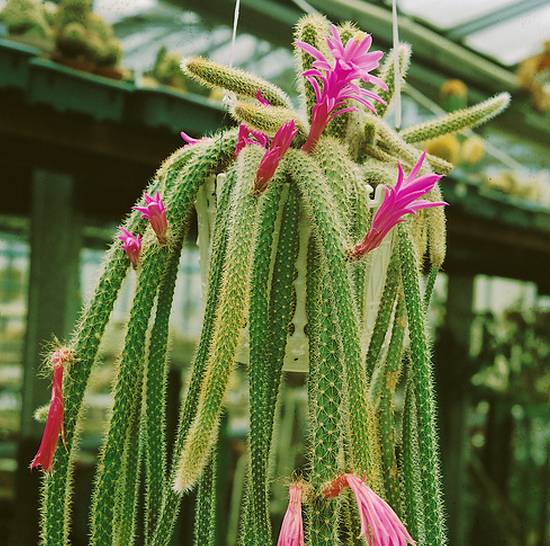
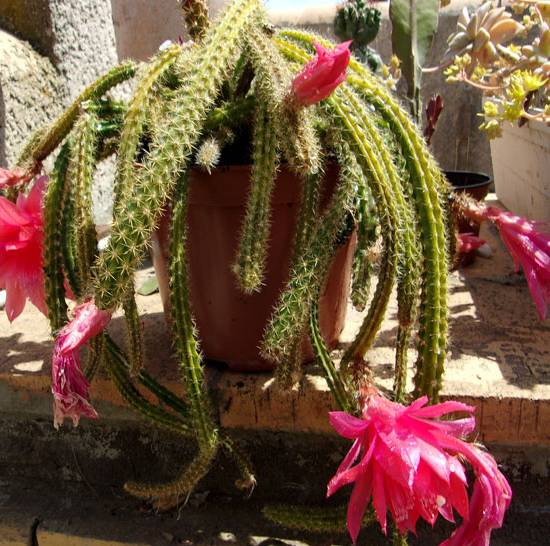
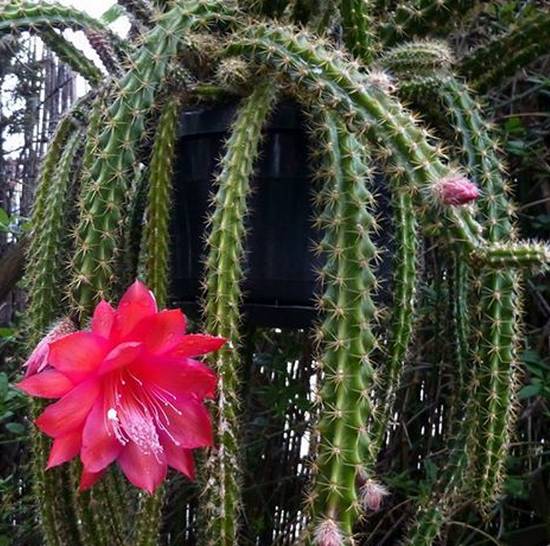
Aporocactus Mallisonii is a spectacular “jungle cactus” whose fine trailing stems form lush cascades perfect for hanging baskets. In bright interiors, conservatories or temperate greenhouses, Aporocactus Mallisonii stands out for its dynamic growth, graphic silhouette and vivid blooms ranging from pink to red.
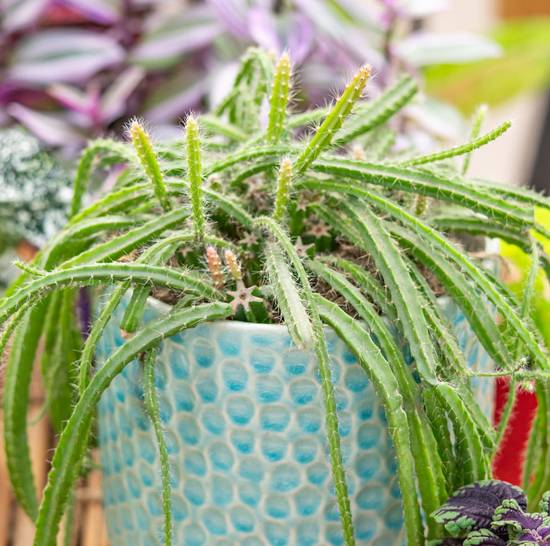
Its cylindrical stems bear closely spaced areoles with flexible spines; from afar they appear almost velvety, yet up close reveal their cactus character. With an ultra-draining substrate, abundant light (without scorching sun) and spaced watering, Aporocactus Mallisonii grows quickly, branches and trails elegantly over more than a meter.
A horticultural hybrid with strong character, Aporocactus Mallisonii inherits the trailing vigor of Disocactus Flagelliformis and the colorful floriferous nature of Disocactus Speciosus.
Rather than having a specific natural range, this hybrid owes its qualities to its Mexican parent species: trailing habit, large tubular flowers, and rapid growth in warm bright conditions. Cultivate it like an epiphyte/lithophyte with airy mix and spaced watering.
Rather than having a specific natural range, this hybrid owes its qualities to its Mexican parent species: trailing habit, large tubular flowers, and rapid growth in warm bright conditions. Cultivate it like an epiphyte/lithophyte with airy mix and spaced watering.
To thicken stems and prepare generous flowering, Aporocactus Mallisonii needs abundant bright light.
🌞 Ideal: 4–6 h gentle sun (morning) + bright light the rest of the day.
🌤️ Summer: filter intense midday sun.
🏠 Indoors: very bright south/east window or strong grow lighting.
🌞 Ideal: 4–6 h gentle sun (morning) + bright light the rest of the day.
🌤️ Summer: filter intense midday sun.
🏠 Indoors: very bright south/east window or strong grow lighting.
Used to brief runoffs then dry periods, Aporocactus Mallisonii prefers thorough but spaced watering with complete drying.
🌱 Spring/Summer: every 10–14 days if fully dry.
🍂 Autumn/Winter: almost dry, just enough to prevent severe shriveling.
⚡ Tip: terracotta pots help drying; empty saucer after 10 min.
🌱 Spring/Summer: every 10–14 days if fully dry.
🍂 Autumn/Winter: almost dry, just enough to prevent severe shriveling.
⚡ Tip: terracotta pots help drying; empty saucer after 10 min.
Designed for bright warmth, Aporocactus Mallisonii thrives between mild and warm but fears cold dampness.
🌡️ Ideal: 18–28°C in growth.
❄️ Minimum: 5–8°C when dry; no frost.
🏠 Rest: bright cooler winter with minimal watering to promote buds.
🌡️ Ideal: 18–28°C in growth.
❄️ Minimum: 5–8°C when dry; no frost.
🏠 Rest: bright cooler winter with minimal watering to promote buds.
To mimic native crevices, Aporocactus Mallisonii requires an ultra-draining, airy mineral mix.
🪨 Recommended mix: cactus soil + 50% minerals (coarse sand, perlite, pozzolana).
🪨 Recommended mix: cactus soil + 50% minerals (coarse sand, perlite, pozzolana).
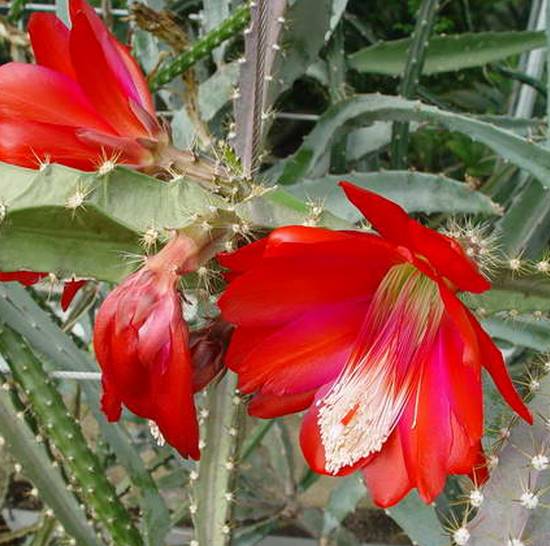
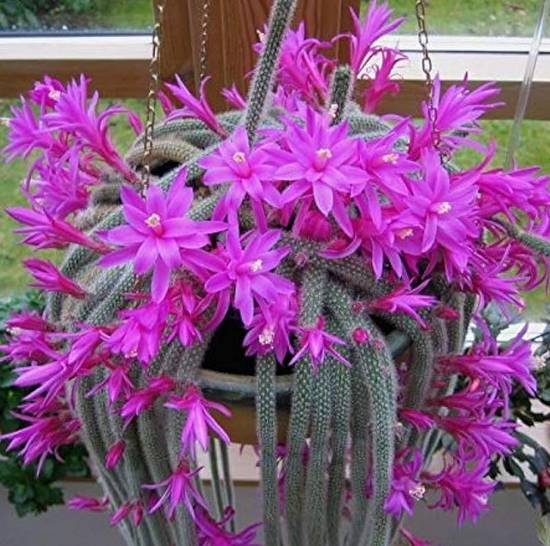
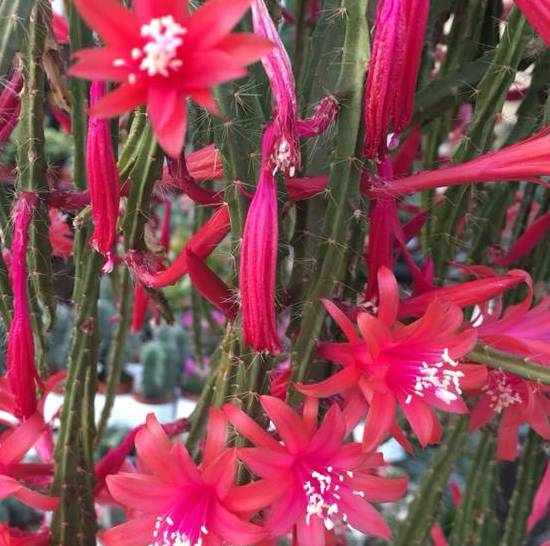
As days lengthen, Aporocactus Mallisonii brightens with vivid pink to red corollas.
🌸 Period: mainly spring, sometimes successive waves.
🎨 Shades: magenta pink to intense red depending on lineage.
🕑 Keys: abundant light, cooler dry winter rest, light seasonal feeding.
🌸 Period: mainly spring, sometimes successive waves.
🎨 Shades: magenta pink to intense red depending on lineage.
🕑 Keys: abundant light, cooler dry winter rest, light seasonal feeding.
FAQ - Aporocactus Mallisonii
How to stimulate flowering of Aporocactus Mallisonii?
Provide a bright, cooler winter rest with almost no watering, then in spring maximum light and applications of cactus fertilizer every 3–4 weeks.
What is the ideal substrate for Aporocactus Mallisonii in hanging baskets?
A cactus potting soil mixed 50% with perlite and pumice for rapid drying.
How often should Aporocactus Mallisonii be watered in summer?
Every 10–14 days if the mix is dry; reduce watering if temperatures drop. Adding drainage granules helps prevent excess moisture.
Should Aporocactus Mallisonii be fertilized?
Yes, lightly during the active period with a liquid cactus fertilizer, once a month, always on moist substrate.
Can Aporocactus Mallisonii live only indoors?
Yes, with strong light (south/east-facing window or grow light) and an airy mix based on cactus potting soil + minerals.
Why are the stems of my Aporocactus Mallisonii turning red?
Often due to excessive direct burning sun; provide shade during the hottest hours and adjust watering. A mineral soil with pumice limits water stress.
How to propagate Aporocactus Mallisonii by cuttings?
Take 10–15 cm cuttings, let them callus for 5–7 days, then plant in a very well-draining mix rich in perlite; lightly mist until established.
What type of pot is best for Aporocactus Mallisonii?
An airy hanging basket or terracotta pot; place a layer of pumice at the bottom to improve drainage.
When should Aporocactus Mallisonii be repotted?
Every 2 years in spring; use a suitable substrate and avoid watering for 5–7 days after repotting.
What plants pair well with Aporocactus Mallisonii?
Pair with compact Aloes and other epiphytes; occasional application of cactus fertilizer during growth keeps stems vigorous.