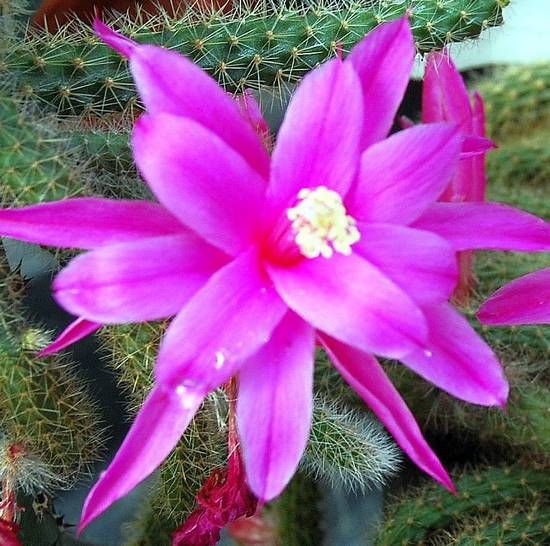
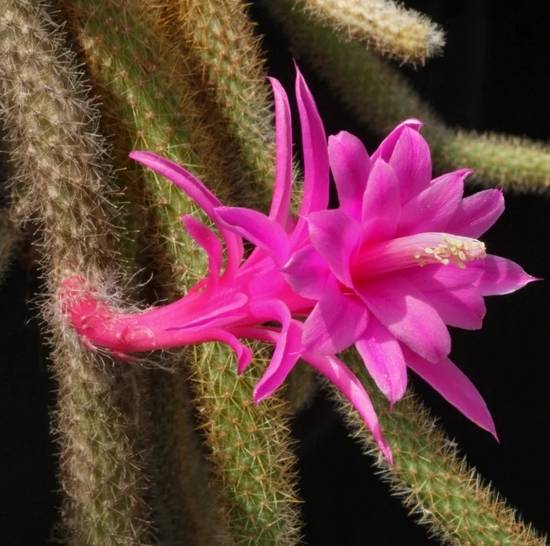
Aporocactus Flagelliformis

Aporocactus Flagelliformis

Aporocactus Flagelliformis

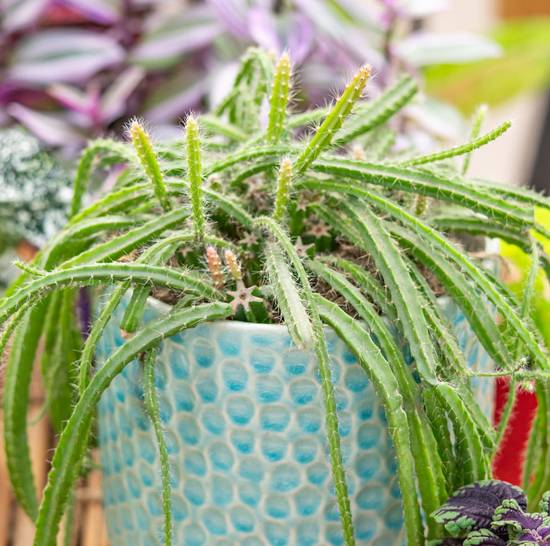
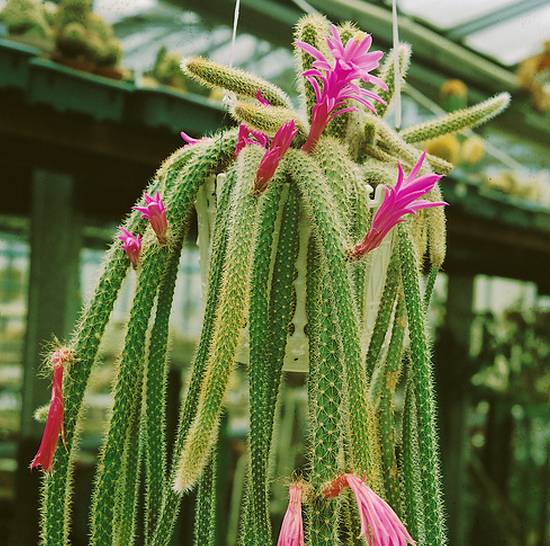
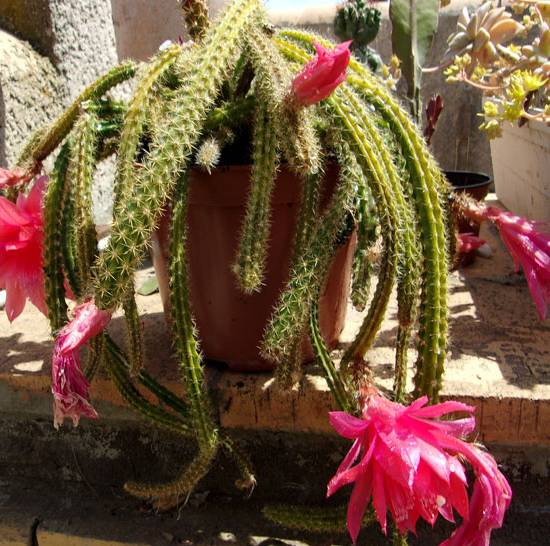
Aporocactus Flagelliformis, often called the “rat-tail cactus,” is a spectacular succulent that instantly transforms a shelf or hanging basket with its long trailing stems covered in fine spines.

Native to rocky areas and open forests of Mexico, Aporocactus Flagelliformis often grows as a lithophyte or epiphyte, rooted in mineral crevices where water drains quickly. In cultivation, its graphic form and bright magenta-pink blooms make it a centerpiece for hanging displays, bright verandas, and sunny windowsills.

Over time, Aporocactus Flagelliformis produces cylindrical stems exceeding 1 m in length, branching and forming a plant cascade. Closely spaced areoles bear numerous flexible spines: from afar the stems look velvety; up close they reveal their true cactus nature. Growth is rapid with warmth, abundant light and a highly draining substrate.

Born among sun-heated rocks and welcoming trunks, Aporocactus Flagelliformis developed its vigor in niches where water drains as fast as it arrives.

Mainly Mexican, it inhabits warm, bright biotopes sheltered from prolonged excess moisture. It benefits from daytime heat, cooler nights and short rainfall cycles, explaining its preference for airy mixes and spaced watering.
To thicken its stems and trigger vibrant blooms, Aporocactus Flagelliformis needs abundant but well-managed light.

🌞 Ideal: 4–6 h of gentle direct sun (morning) + bright light the rest of the day.

🌤️ Summer: filter harsh midday sun to prevent stress.

🏠 Indoors: very bright south/east window or strong grow lighting.
Used to brief runoffs followed by long dry spells, Aporocactus Flagelliformis prefers thorough yet spaced watering with complete drying between.

🌱 Spring/Summer: every 10–14 days if fully dry at core.

🍂 Autumn/Winter: almost dry, just enough to prevent severe shriveling.

Tip: terracotta pots and mineral-rich mixes speed drying and limit rot.
Designed for bright warmth, Aporocactus Flagelliformis enjoys mild temperatures and fears cold dampness.

🌡️ Ideal: 18–28°C in growth.

❄️ Minimum: 5–8°C when dry; no frost.

🏠 Rest: bright, cooler winter rest with minimal watering.
To replicate its native crevices, Aporocactus Flagelliformis requires an ultra-draining, airy mineral mix.

🪨 Recommended mix: cactus soil + 50% minerals (coarse sand, perlite, pozzolana).
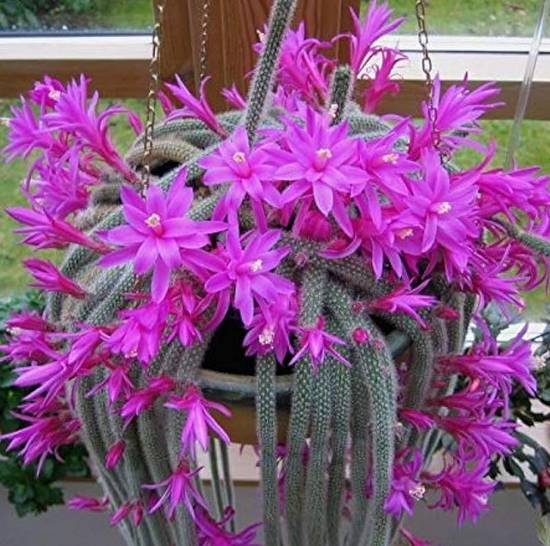
As days lengthen, Aporocactus Flagelliformis lights up with large fuchsia corollas.

🌸 Period: mainly spring, sometimes successive waves.

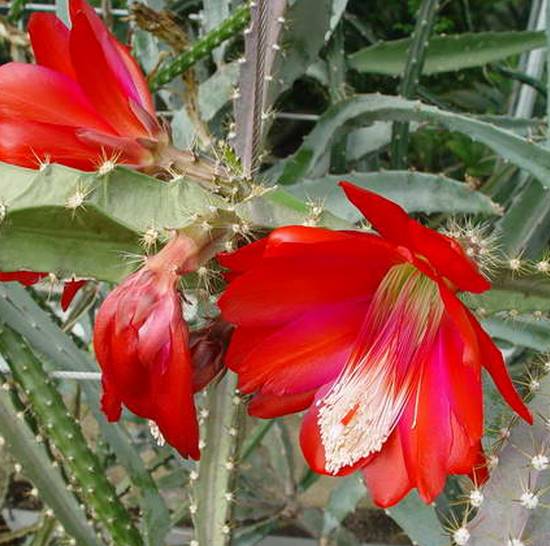
🎨 Shades: bright pink to magenta, large tubular flowers.

🕑 Keys: abundant light, cooler dry winter rest, light seasonal feeding.
FAQ - Aporocactus Flagelliformis

How to stimulate flowering of Aporocactus Flagelliformis?
Cooler and almost dry winter rest, maximum light in spring and moderate applications of cactus fertilizer every 3–4 weeks during growth.
What is the ideal substrate for Aporocactus Flagelliformis in hanging baskets?
A cactus potting soil mixed 50% with perlite and pumice for rapid drying.
How often should Aporocactus Flagelliformis be watered in summer?
Every 10–14 days if the mix is dry; reduce watering if temperatures drop. Adding drainage granules helps prevent excess moisture.
Should Aporocactus Flagelliformis be fertilized?
Yes, very lightly with a liquid cactus fertilizer, once a month during the active period, on moist substrate.
Can Aporocactus Flagelliformis live only indoors?
Yes, with strong light (south/east-facing window or grow light) and an airy mix based on cactus potting soil + minerals.
Why are the stems of my Aporocactus Flagelliformis turning red?
Often due to excessive direct burning sun; provide shade during the hottest hours and check watering. A mineral soil with pumice limits water stress.
How to propagate Aporocactus Flagelliformis by cuttings?
Take 10–15 cm cuttings, let them callus for 5–7 days, then plant in a very well-draining mix rich in perlite; lightly mist until established.
What type of pot is best for Aporocactus Flagelliformis?
An airy hanging basket or terracotta pot; place a layer of pumice at the bottom to improve drainage.
When should Aporocactus Flagelliformis be repotted?
Every 2 years in spring; use a suitable substrate and avoid watering for 5–7 days after repotting.
What plants pair well with Aporocactus Flagelliformis?
Pair with compact Aloes and other epiphytes; occasional application of cactus fertilizer during growth keeps stems vigorous.