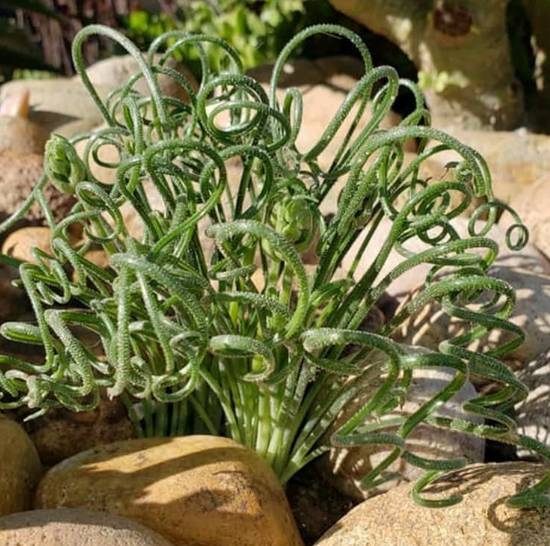
Albuca Namaquensis
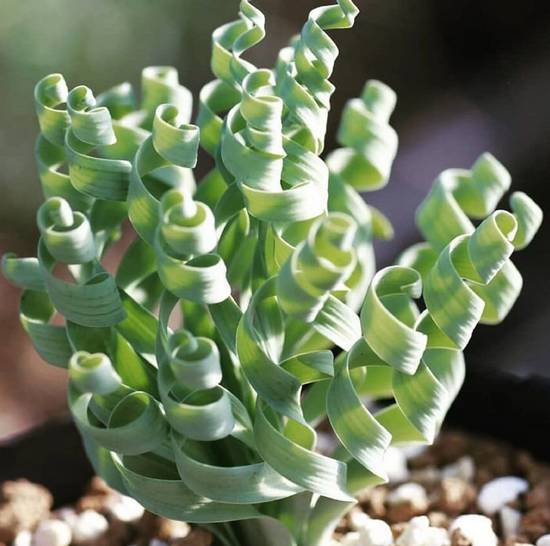
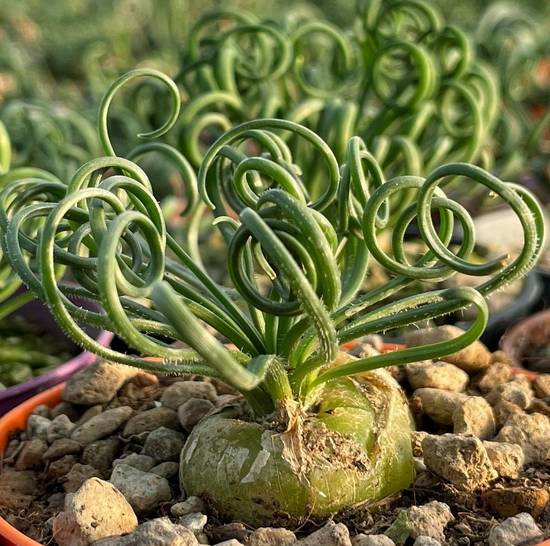
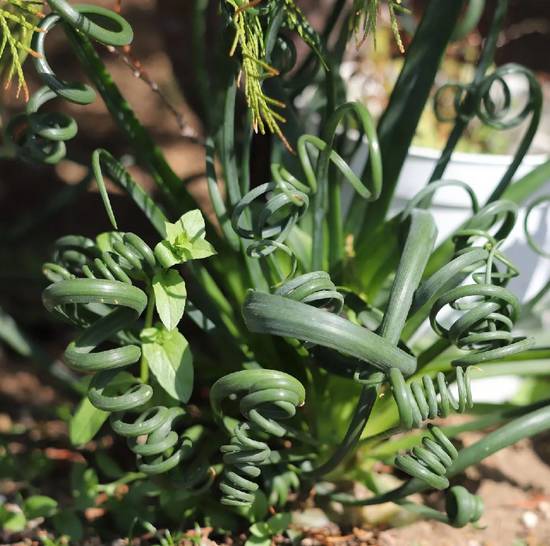
Albuca Namaquensis is a fascinating bulbous plant native to southern Africa. Belonging to the Asparagaceae family, it captivates with its spiral foliage and decorative appearance. Its fine, thread-like, soft green leaves naturally curl into corkscrew shapes, creating an original and almost sculptural effect. This spiral movement is not only aesthetic: it is an ingenious adaptation to arid conditions, limiting evaporation and resisting dry winds.
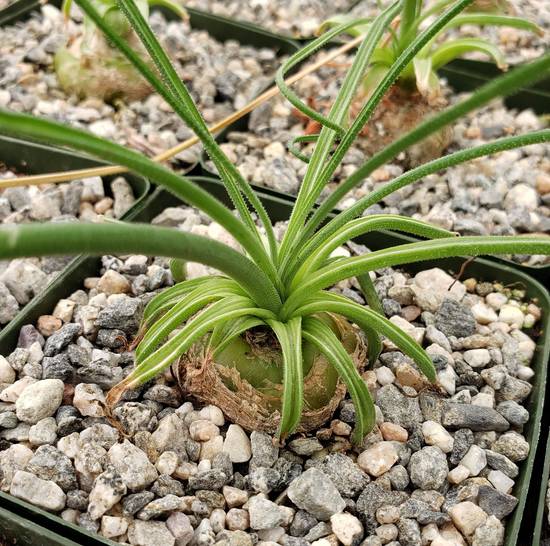
The development of Albuca Namaquensis begins from a semi-buried bulb. This bulb acts as a water and energy reserve, allowing the plant to endure dry seasons. Its growth is seasonal: it enters dormancy during summer, losing all its foliage, then reemerges with autumn rains and cooler temperatures. This rhythm, very different from typical houseplants, often intrigues enthusiasts discovering the species.
This strict seasonal cycle explains its behavior in cultivation: lush foliage and active growth in winter–spring, complete rest in summer.
🌞 Direct sun: Several hours of direct sunlight per day are necessary to keep the leaves tightly curled.
🌤️ Filtered sun: During very hot periods, light shading prevents burns on young shoots.
⚠️ Lack of light: The foliage loses its curl and collapses.
🌱 Growing period (autumn–winter–spring): Moderate weekly watering, allowing the substrate to dry between applications.
🍂 Dormant period (summer): Stop watering completely once the foliage dries. The bulb must remain dry.
⚡ Tip: Grow in a draining mix enriched with perlite or pozzolana.
🌞 Ideal: Between 15 °C and 25 °C.
❄️ Minimum: Can tolerate light frost if the bulb remains dry, but it is preferable to protect it below 5 °C.
🏠 Pot culture: In cold climates, bring indoors to a bright, frost-free space.
🪨 Recommended substrate: Use cactus soil or succulent substrate mixed with coarse sand.
💡 Tip: Improve drainage with 40% pozzolana or perlite.
🌸 Season: Spring.
🎨 Color: Star-shaped yellow flowers, often fragrant and streaked with green.
🕑 Duration: Several weeks.
💡 Tip: A marked summer rest and a succulent fertilizer application in autumn stimulate flowering.