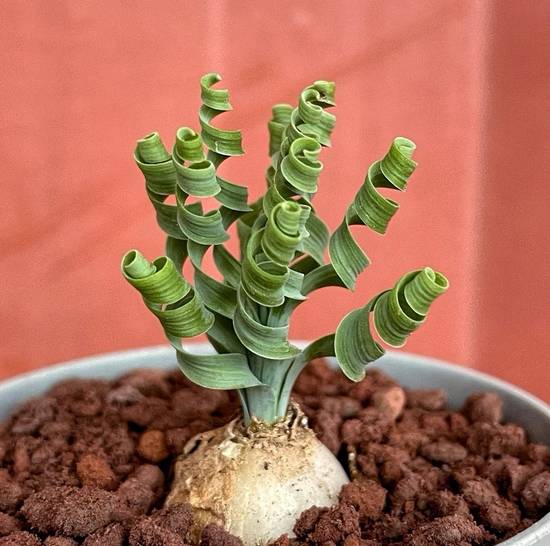
Albuca Concordiana
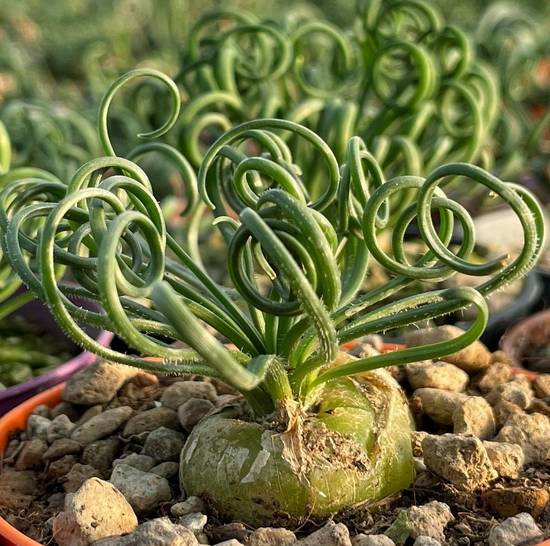
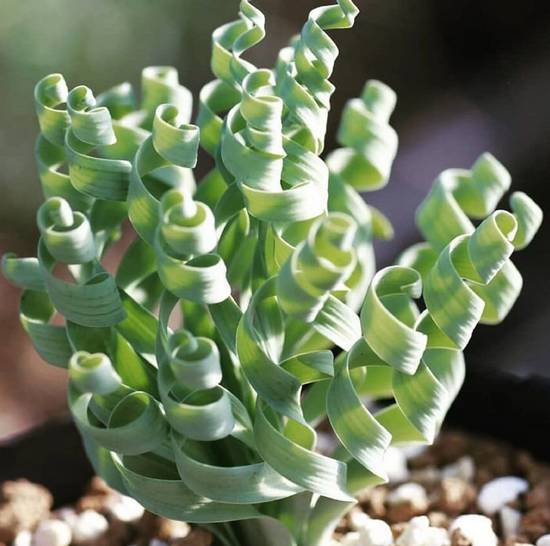
Albuca Concordiana is a South African bulbous plant with unique charm, renowned for its spiral foliage and elegant appearance. It belongs to the Asparagaceae family and is distinguished by its fine, bluish-green leaves that curl into corkscrew shapes. This characteristic makes it highly sought after by collectors of unusual succulents.
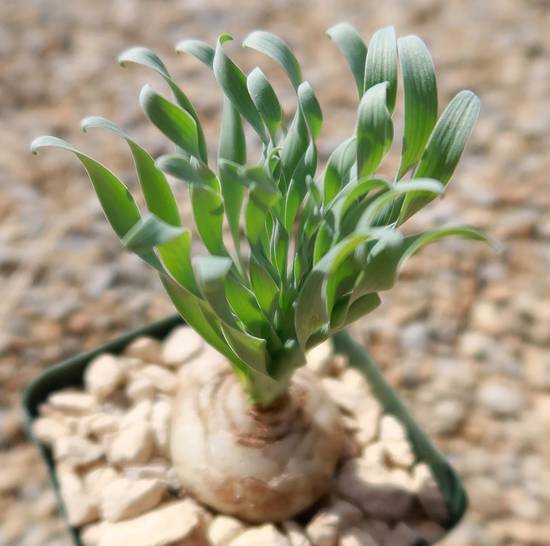
Over time, the leaves of Albuca Concordiana emerge from a semi-buried bulb, forming a compact and graphic clump. Unlike other species of the genus such as “Albuca Spiralis,” its leaves are slightly longer, finer and more elegant, while retaining the characteristic spiral movement that immediately draws attention.
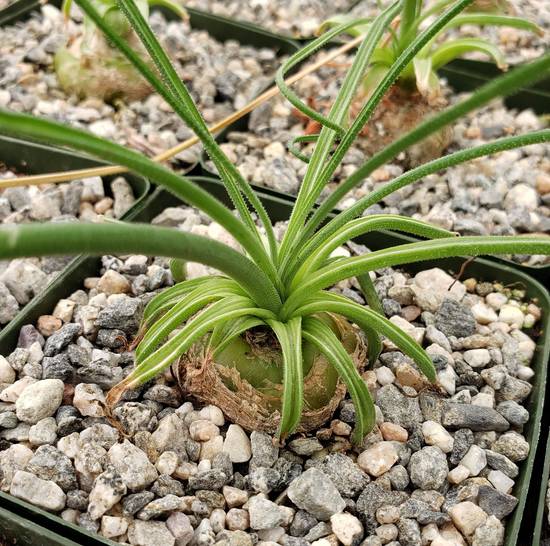
The growth of Albuca Concordiana follows the seasons. It enters dormancy in summer, when its foliage dries up and the bulb rests in the soil. With the first rains and cooler temperatures, the bulb comes back to life and produces new spiral leaves. This active alternation between growth and rest reflects its arid origin, where water resources vary greatly.
Its adaptation to this climate alternating seasonal drought and moisture explains its particular cycle, with active growth in winter and summer dormancy.
🌞 Direct sun: Several hours of bright exposure per day are ideal, especially in winter.
🌤️ Filtered light: In very hot regions, light shading in summer prevents burns, particularly during regrowth.
⚠️ Lack of light: The foliage loses its characteristic curl and becomes straighter.
🌱 Growing period (autumn–winter–spring): Water moderately when the soil is dry. A light weekly watering is often sufficient.
🍂 Dormant period (summer): Stop watering completely once the foliage has dried. The bulb must remain dry to prevent rot.
⚡ Tip: Use a draining mix enriched with perlite or pozzolana.
🌞 Ideal: 15 °C to 25 °C.
❄️ Minimum: Can tolerate 0 °C briefly if the bulb remains dry, but it is preferable to protect it below 5 °C.
🏠 Pot culture: In cold climates, bring the pot indoors in winter to a bright, frost-free location.
🪨 Suitable substrate: Mix cactus soil or succulent substrate with coarse sand.
💡 Tip: Add 40% pozzolana or perlite to prevent any stagnant moisture.
🌸 Season: Generally in spring.
🎨 Colors: Fragrant yellow flowers, sometimes streaked with green.
🕑 Duration: Several weeks.
💡 Tip: A well-defined summer rest and a succulent fertilizer application in autumn stimulate flowering.