Aeonium Canariense

Aeonium Canariense
Aeonium Canariense
Aeonium Canariense

Aeonium Canariense

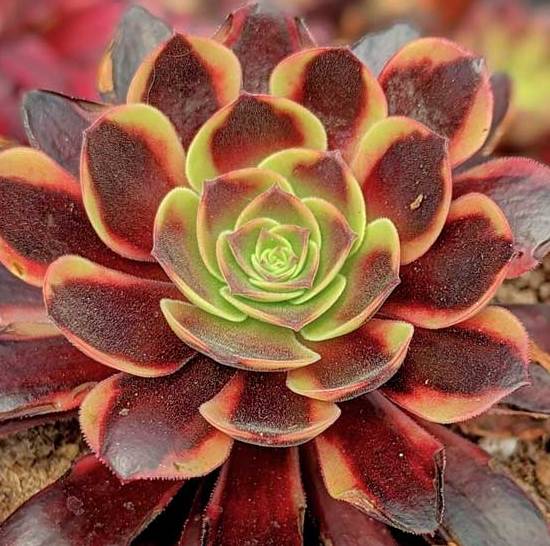
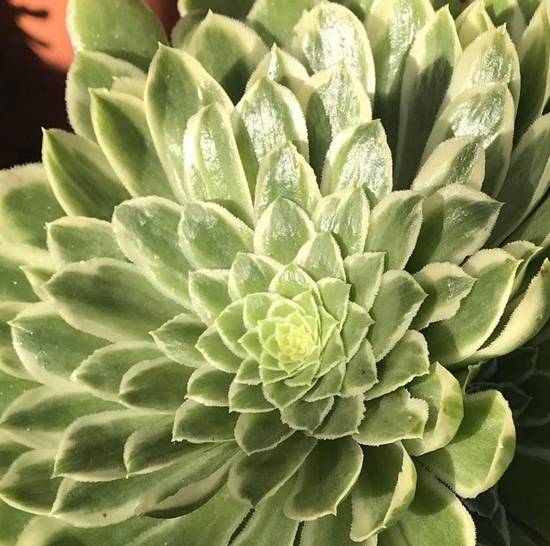
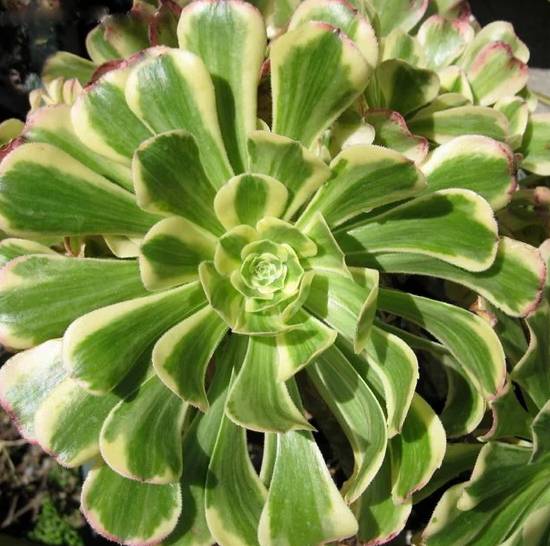
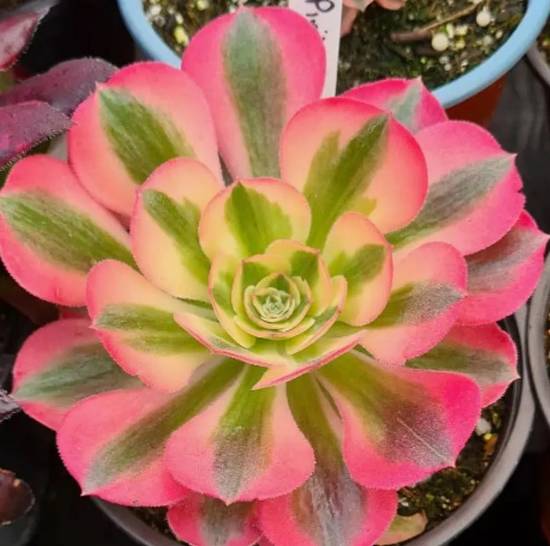
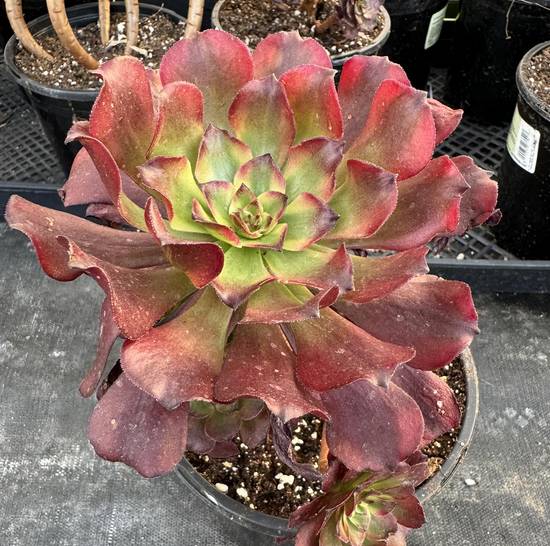
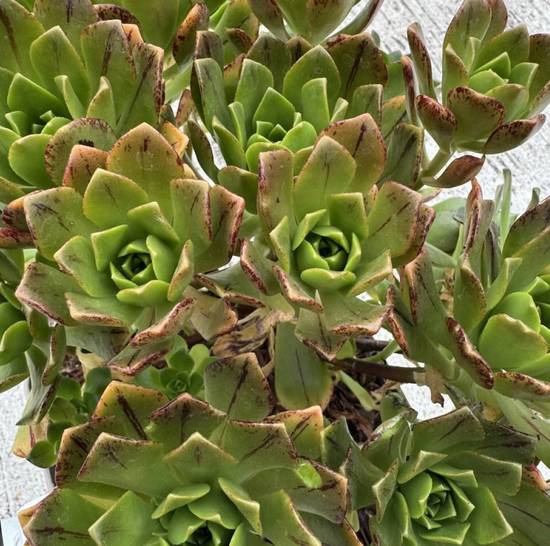
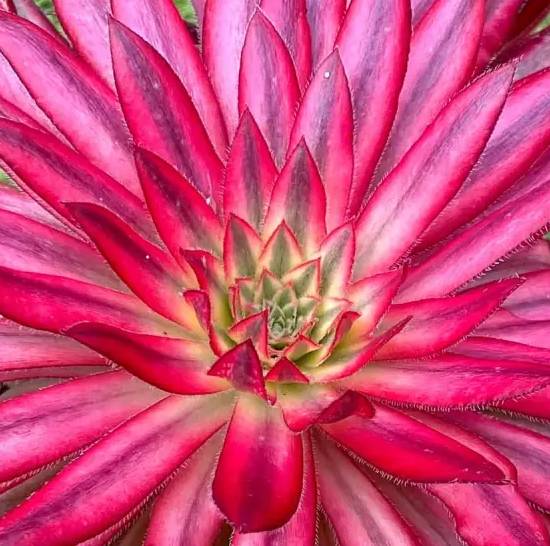
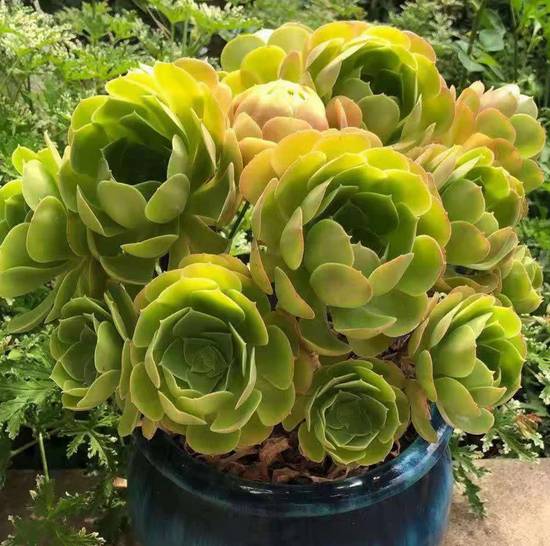
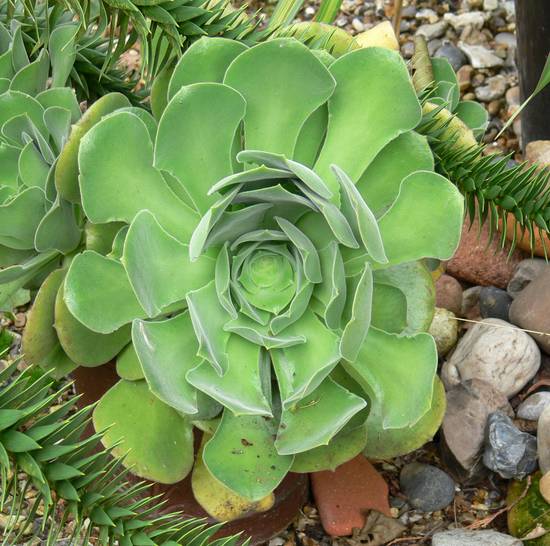
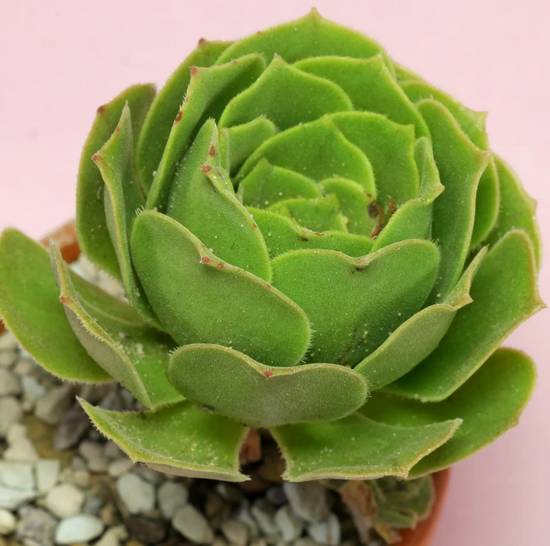
Majestic and spectacular, Aeonium Canariense is a succulent that never goes unnoticed. Native to the Canary Islands, this plant forms immense bright green rosettes that can exceed 50 cm in diameter. Its dense, slightly velvety foliage forms a perfectly rounded and flattened shape, giving the plant the appearance of a vegetal mandala. It is one of the largest species of the Aeonium genus, and its spreading habit makes it a true graphic jewel, whether grown in pots or in the ground.

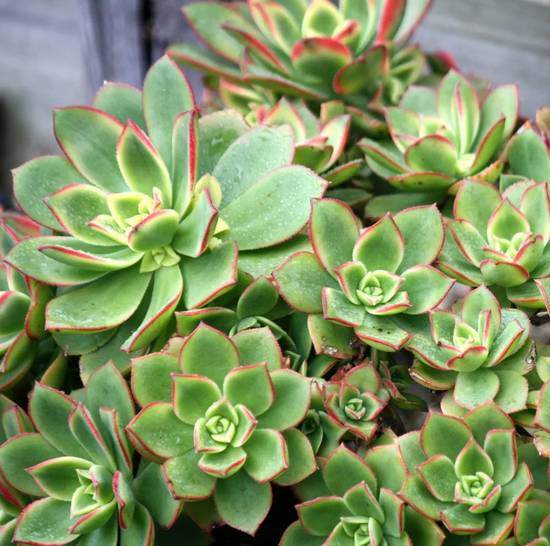
The thick, soft-to-the-touch leaves are designed to maximize light capture. Under intense sunlight, the leaf edges take on reddish hues that beautifully contrast with the luminous green center. During flowering, Aeonium Canariense produces a large pyramidal yellow inflorescence emerging from the center of the rosette — a brief but remarkable spectacle, as the rosette then dies according to the monocarpic nature of the genus.

In its natural habitat, Aeonium Canariense grows on steep volcanic slopes of the Canary Islands, often forming dense colonies. It withstands extreme conditions such as heat, saline mists, and rocky soils. This resilience explains its popularity in Mediterranean gardens and rockeries.
Aeonium Canariense requires strong light:

☀️ Full sun: For compact growth and red leaf margins.

🌤️ Partial shade: Possible but less intense coloration.

⚠️ Protection: Light shade during peak summer heat.
Aeonium Canariense prefers controlled watering:

🌱 Spring / Autumn: Water when soil is fully dry.

☀️ Summer: Very little or no watering.

❄️ Winter: Every 3–4 weeks in mild conditions.
Aeonium Canariense dislikes frost:

🌡️ Ideal: 15–25 °C.

❄️ Minimum: 5 °C when dry.

🏡 Bring indoors below 8 °C.
🪨 Use cactus soil mixed with 30% perlite or pumice for optimal drainage. Prefer terracotta pots.
📅 Period: Spring after several years.

🌼 Flowers: Bright yellow pyramidal panicle 50–80 cm tall.

⚠️ Monocarpic rosette replaced by offsets.
FAQ - Aeonium Canariense

How large can a rosette of Aeonium Canariense grow?
It can exceed 50 cm in diameter at full maturity, making it one of the largest rosettes in the Aeonium genus.
Is Aeonium Canariense suitable for indoor cultivation?
Yes, provided it is placed in a very bright location, ideally near a south-facing window.
How can you achieve red tones on Aeonium Canariense?
Strong sun exposure, especially in the late afternoon, enhances the red pigmentation along the leaf edges.
What is the best substrate for Aeonium Canariense?
A cactus substrate enriched with perlite or pumice is perfect to ensure good drainage.
Is Aeonium Canariense monocarpic?
Yes, the flowering rosette dies, but offsets usually appear around the mother plant.
How can Aeonium Canariense be propagated?
By taking offsets or young rosettes and letting them dry for a few days before planting.
What are the signs of overwatering?
Blackened or soft leaves and signs of rot at the base of the stem indicate overwatering.
Is Aeonium Canariense cold-resistant?
No, it is sensitive to frost. It must be protected or brought indoors in winter in most regions.
What fertilizer should be used for Aeonium Canariense?
A cactus fertilizer applied monthly in spring and autumn is recommended.
When should Aeonium Canariense be repotted?
Every 2 years in spring, in a slightly larger pot with fresh substrate enriched with perlite.