Adromischus Maculatus
The Adromischus Maculatus is a compact and particularly decorative succulent, appreciated for its unique foliage marked with dark spots. Native to South Africa, this plant belongs to the Crassulaceae family and stands out with its minimalist and graphic aesthetic.
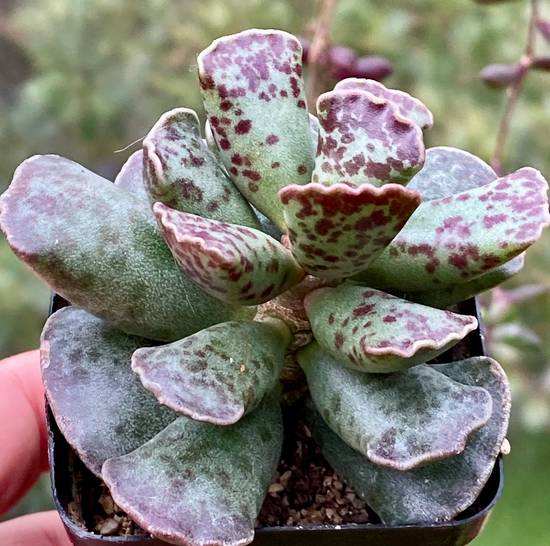
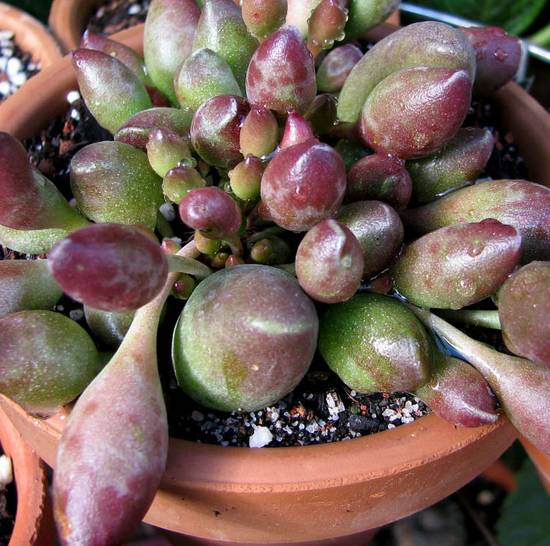
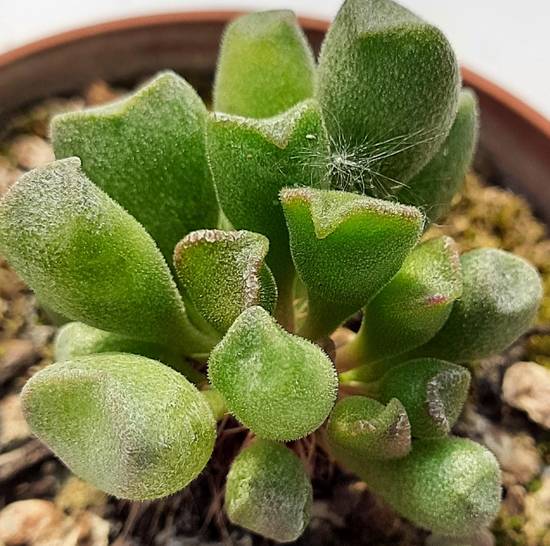
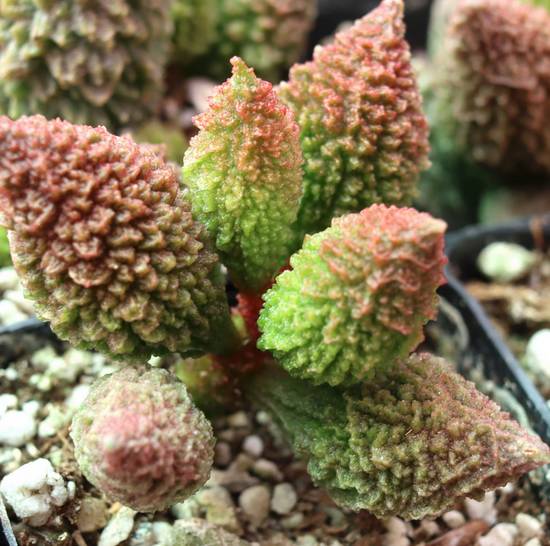
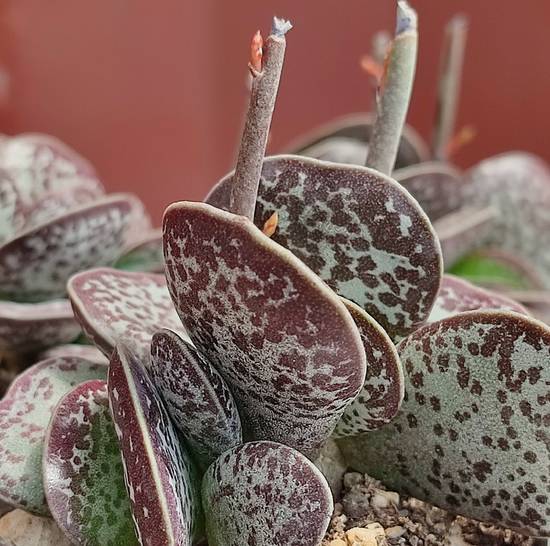
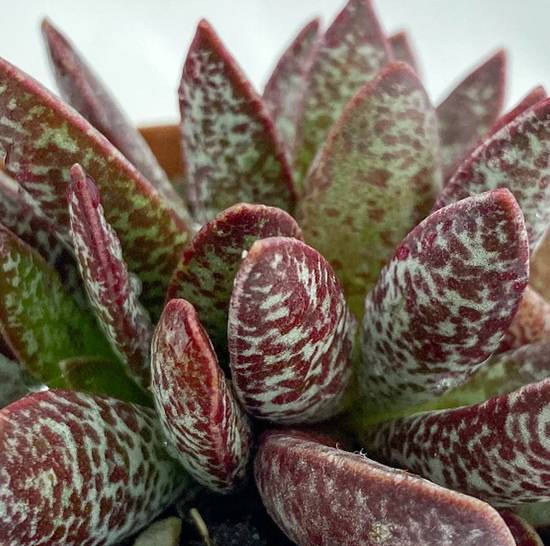
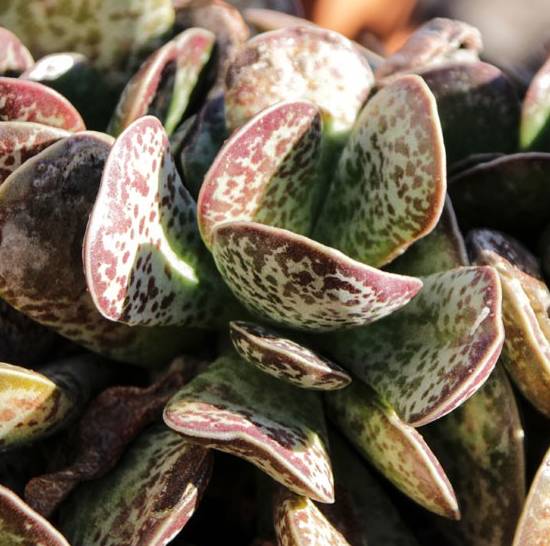
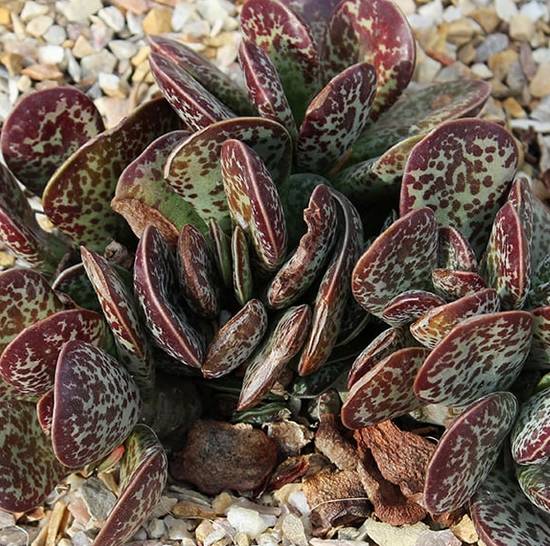
The Adromischus Maculatus forms small rosettes composed of thick, oval to slightly rounded leaves. These leaves are fleshy, smooth and display a light green to grey-green coloration, often marked with purple or dark brown spots, giving it a characteristic mottled appearance.
These patterns vary depending on exposure and growing conditions. The more intense the light, the more pronounced the spots become, enhancing its decorative aspect. This particularity makes it a highly sought-after plant for succulent collections.
It evolves on poor, very draining soils, often exposed to strong sunlight and prolonged drought periods.
🌞 Bright light to indirect sun: ideal to maintain compact foliage and well-marked spots.
🌤️ Moderate direct sun: tolerated in the morning or late in the day, promotes pattern intensity.
🏠 Indoor cultivation: near a south or west-facing window.
⚠️ Warning: sudden exposure to sun can cause leaf burns.
🌱 Spring / summer: water moderately when the substrate is completely dry, about every 2 to 3 weeks.
🍂 Autumn / winter: greatly reduce watering, or almost complete stop.
⚡ Essential rule: better too little water than too much.
💧 Technique: deep watering followed by complete drying.
🚫 To avoid: standing water and prolonged humidity.
🌞 Ideal temperature: between 18°C and 28°C for optimal growth.
🌡️ Tolerance: tolerates heat well if the substrate is dry.
❄️ Minimum temperature: 5 to 10°C, provided the soil is perfectly dry.
🏠 Wintering: indoors in bright conditions if temperatures drop.
🪨 Key principle: light, airy and mostly mineral soil.
🔬 Recommended mix: 30 to 40% cactus soil + 30 to 40% perlite + 20 to 30% pouzzolane
🌸 Period: spring to summer
🎨 Color: greenish-white to pinkish
🌼 Shape: small tubular flowers carried on long thin stalks
📏 Feature: delicate flowers contrasting with the thick foliage