Adromischus Indian Clubs

Adromischus Indian Clubs

Adromischus Indian Clubs

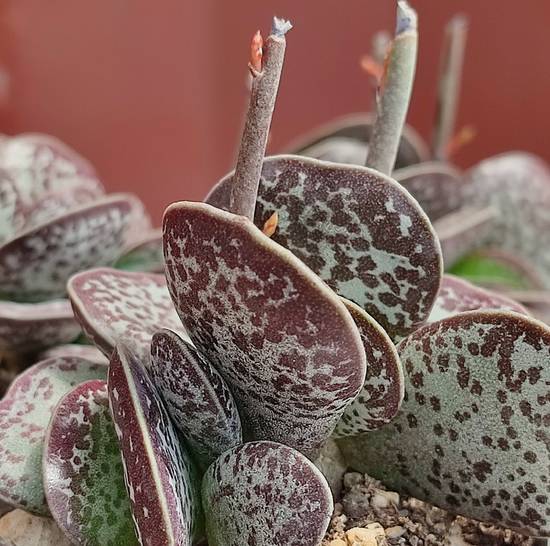
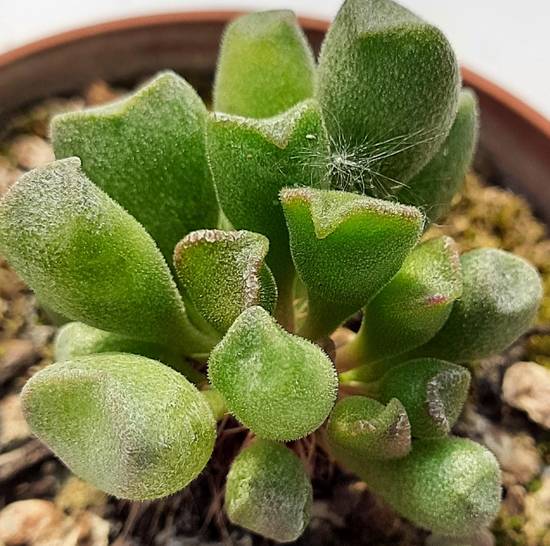
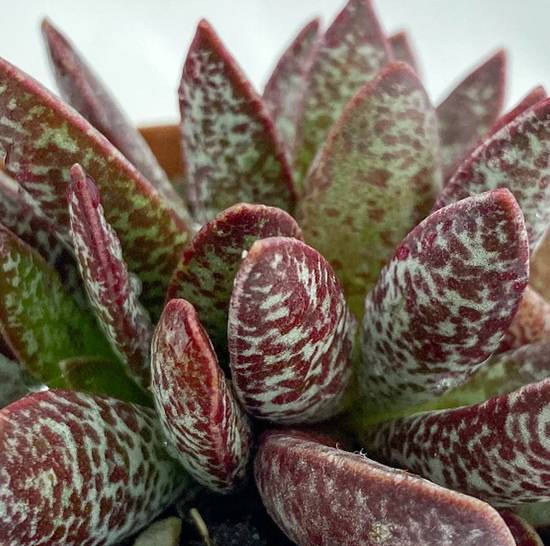
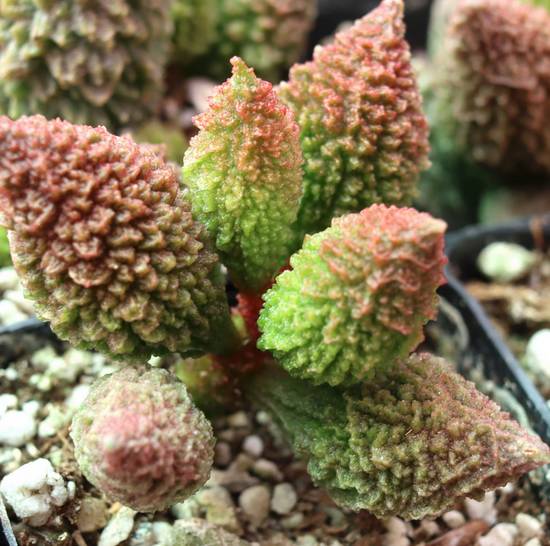
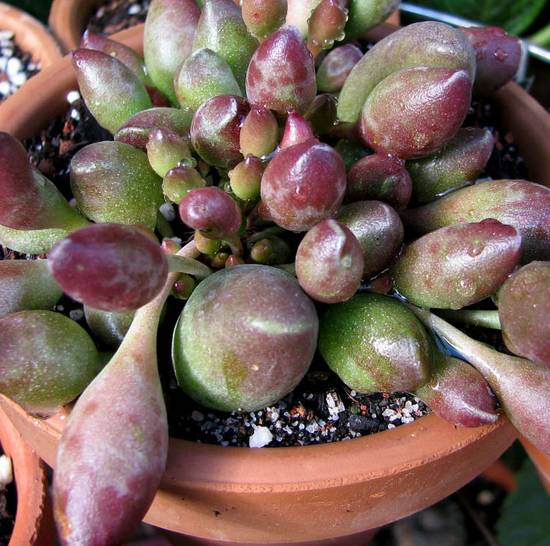
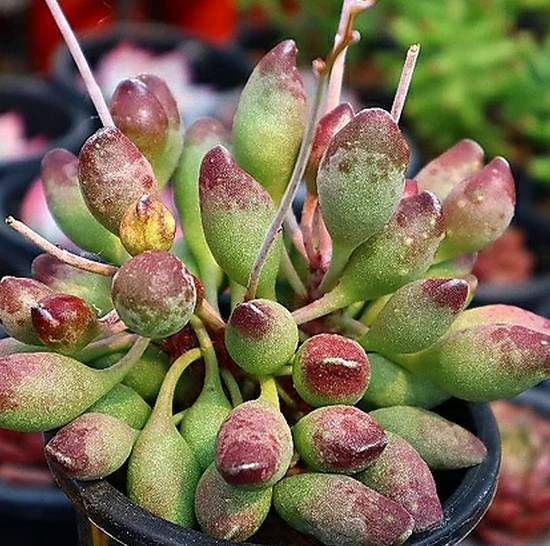
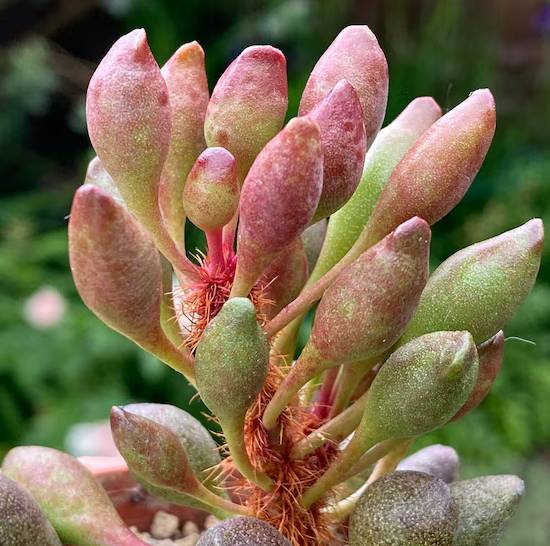
Adromischus Indian Clubs is a South African succulent that immediately draws attention with its thick and unusual leaves. These club-shaped leaves display pale green to grayish tones, sometimes enhanced with spotted or marbled patterns reminiscent of stones polished over time. This distinctive appearance makes it a choice plant for collectors of rare succulents and for anyone wishing to add originality to plant arrangements.

Over time, Adromischus Indian Clubs forms a small compact clump, rarely exceeding 20 cm in height, with fleshy leaves that renew regularly, giving the impression of a living assembly of small pebbles. Each specimen is unique, and its natural variations in shape and color further enhance its decorative interest.

Beyond its aesthetics, this plant is appreciated for its robustness and drought tolerance. Easy to grow, it thrives in pots indoors or outdoors in mild climates. Its slow growth and modest size also make it an excellent choice for open terrariums and miniature gardens.

In its natural habitat, Adromischus Indian Clubs grows in sandy and rocky soils, often exposed to intense sun but benefiting from cool nights. This alternation of heat and coolness contributes to its exceptional drought adaptation.
Adromischus Indian Clubs enjoys light:

🌞 Bright light: Place in full sun or bright partial shade.

🌤️ Indoor culture: Position near a well-exposed window (south or west).

⚠️ Warning: Insufficient light leads to stem and leaf elongation.
Like many succulents, Adromischus Indian Clubs requires moderate watering:

🌱 Spring / summer: Water every 2 to 3 weeks, allowing substrate to dry between waterings.

🍂 Autumn / winter: Reduce significantly, sometimes up to one month without watering.

Tip: Use a mix rich in perlite or pozzolana to prevent moisture retention.
Adromischus Indian Clubs is suited to temperate to warm climates:

🌞 Ideal: Between 20 °C and 28 °C.

❄️ Minimum: Can briefly tolerate 5 °C but must not be exposed to frost.

🏠 Pot culture: Bring indoors in winter in cold regions.
Well-draining soil is essential:

🪨 Ideal substrate: Mix of cactus soil and coarse sand.

💡 Fertilizer: Occasional succulent fertilizer in spring stimulates growth and vigor.
The flowering of Adromischus Indian Clubs is discreet but charming:

🌸 Period: Spring or early summer.

🎨 Color: Small tubular white or pink flowers.

🕑 Duration: A few days to a week.

💡 Feature: Though modest, the flowers add subtle charm to this already decorative plant.
FAQ - Adromischus Indian Clubs

Is Adromischus Indian Clubs easy to grow for beginners?
Yes, it is perfectly suitable for beginners. Simply provide well-draining substrate, plenty of light, and moderate watering for it to thrive easily.
Can Adromischus Indian Clubs live outdoors?
Yes, in mild climates. However, in cold regions, it is better grown in a pot and brought indoors during winter.
How to propagate Adromischus Indian Clubs?
Propagation is done by leaf cuttings. Each leaf taken and placed on special cactus soil can produce a new plant.
What is the lifespan of Adromischus Indian Clubs?
With good care, it can live for several years and easily renew itself through cuttings.
Is Adromischus Indian Clubs toxic?
No, it is not considered toxic to pets, making it safe for the home.
Should Adromischus Indian Clubs be fertilized?
Yes, but lightly. Diluted liquid fertilizer once a month in spring is sufficient.
Does Adromischus Indian Clubs change appearance in the sun?
Yes, its leaves can develop more pronounced tones, sometimes reddish, when exposed to full sun.
Can Adromischus Indian Clubs be combined with other plants?
Absolutely! It pairs well with other small succulents in arrangements, especially those requiring optimal drainage.
Does Adromischus Indian Clubs bloom every year?
Not necessarily; flowering is irregular and depends on the maturity of the plant as well as its growing conditions.
What are the common diseases of Adromischus Indian Clubs?
Overwatering is the main issue, leading to rot. Mealybugs can also attack it, but they are easy to treat.