Adenia Spinosa
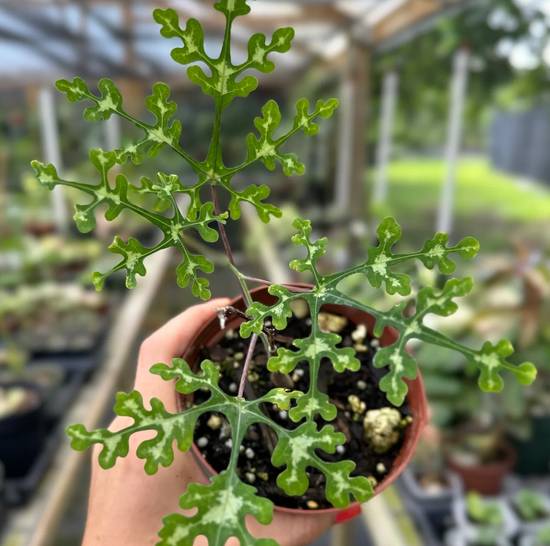
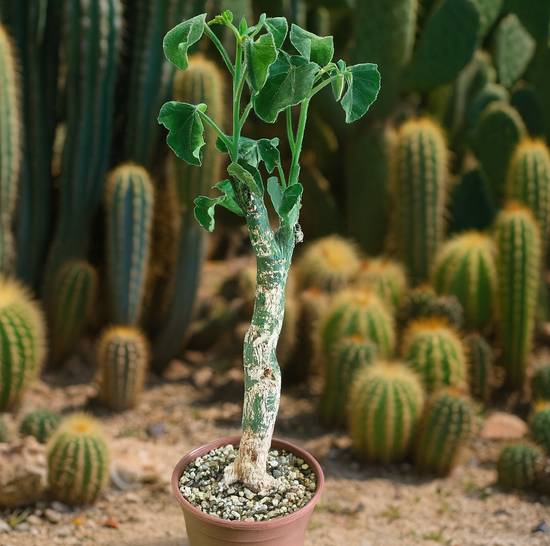
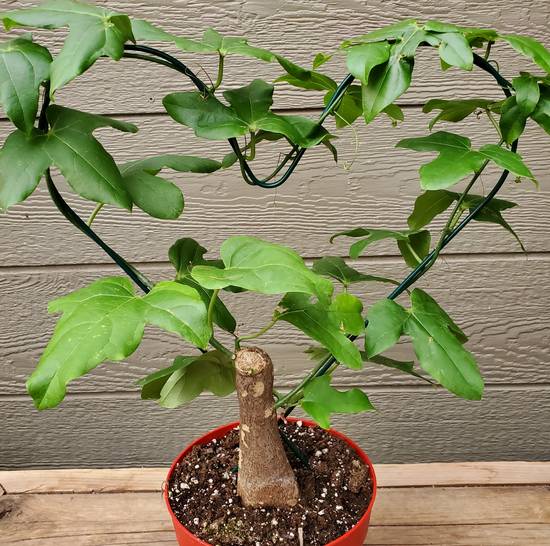
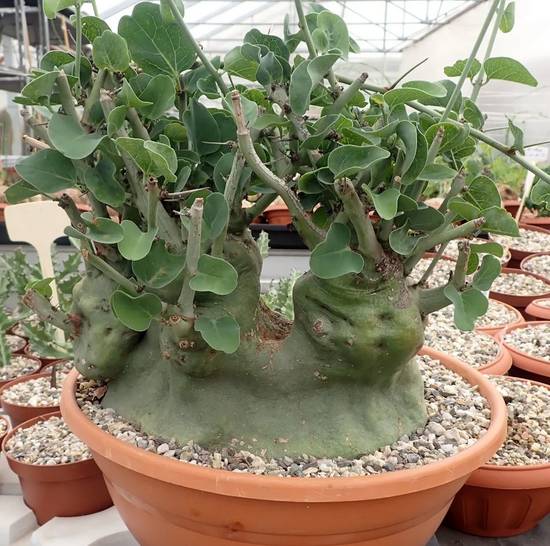
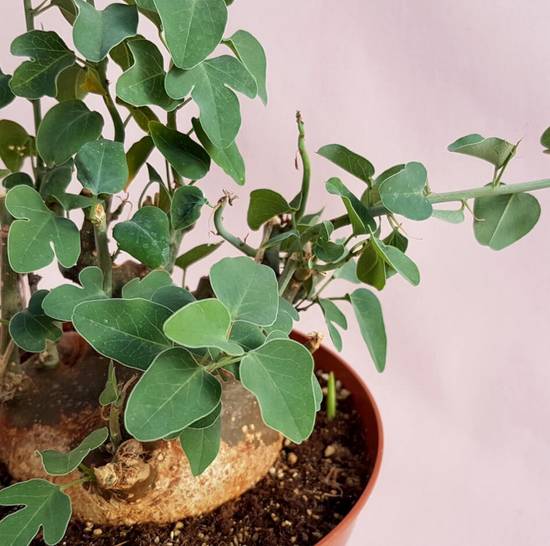
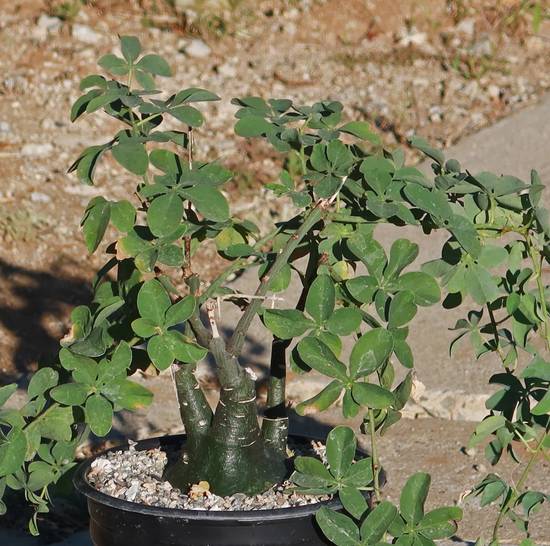
The Adenia Spinosa is an exceptional succulent plant belonging to the Passifloraceae family. It is one of the most impressive species of the Adenia genus, both for its robust habit and its heavily armed caudex. Native to dry regions of southern Africa, this caudiciform plant stands out for its bulbous trunk covered with short to long spines, hence the name “spinosa.” Its almost prehistoric appearance, with a thick, woody caudex often covered in spines, immediately draws attention and gives it a unique place in any collection of rare succulents.
The caudex of Adenia Spinosa can exceed 50 cm in diameter with age, forming a true trunk at the base of the aerial stems. These stems are twining or trailing, sometimes highly branched, and bear lobed or palmate foliage ranging from light to dark green. This is a dioecious plant, meaning male and female flowers appear on separate individuals. Although discreet, the flowering is interesting to observe. This species is extremely well adapted to arid climates and can withstand prolonged drought thanks to the reserves stored in its caudex.
🌞 Outdoor: It tolerates full sun very well, which promotes a dense, well-formed caudex. Gradual acclimation is recommended at the start of the season.
🌤️ Indoor: A position near a south-facing window is ideal. Too much shade slows growth and can cause stem elongation.
🌱 Growth period: Water deeply every 15 to 20 days once the substrate is completely dry. Never allow water to stagnate at the bottom of the pot.
🍂 Dormancy period: In winter, when foliage drops, completely stop watering to prevent rot.
⚠️ Warning: Excess moisture is the most common mistake with this species.
🌡️ Optimal conditions: Ambient temperatures between 24°C and 32°C encourage vigorous growth.
❄️ Tolerance limit: Never drop below 10°C, even during dormancy, as thermal shock can be fatal.
🏠 Winter advice: Keep in a bright, dry location with temperatures between 12 and 15°C.
🪨 Ideal mix: Combine cactus soil with perlite and pumice to ensure maximum drainage.
🗓️ Season: Usually occurs in spring or early summer once the plant is well established.
🎨 Flowers: Small, pale green to yellowish, discreet but typical of the genus.
🔍 Dioecious: Fruit production is rare as two plants of opposite sexes are required.