Adenia Keramanthus

Adenia Keramanthus
Adenia Keramanthus

Adenia Keramanthus

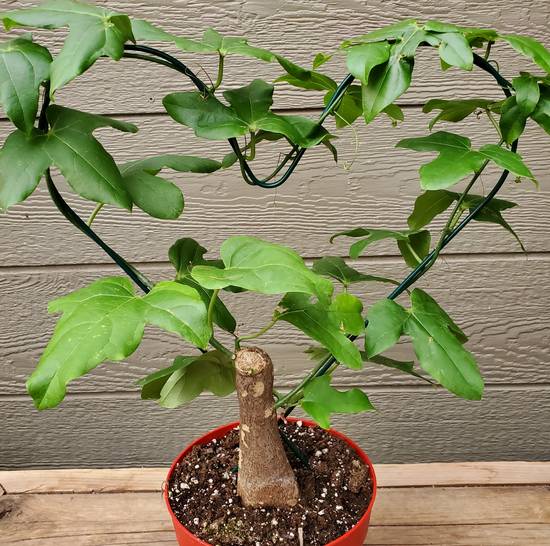
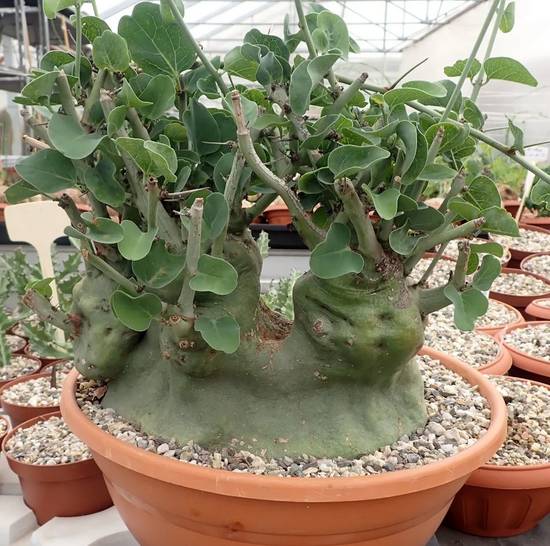
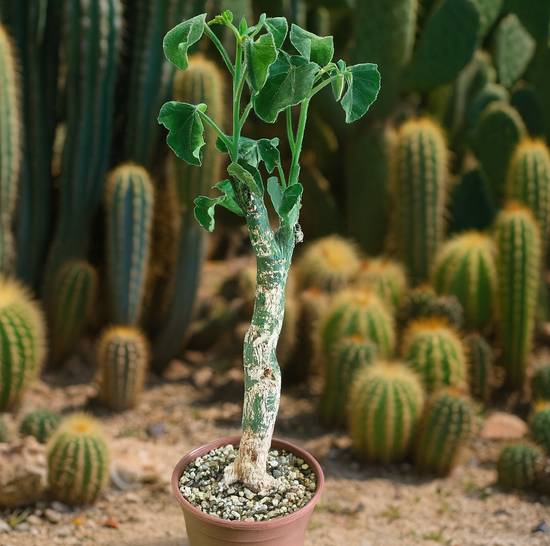
The Adenia Keramanthus is a rare and fascinating succulent plant native to tropical Africa. A member of the Passifloraceae family, this caudiciform species is highly sought after for its bulbous caudex, often globular to oblong, topped with slender, twining, leafy stems. It combines the sculptural appearance of a natural bonsai with the vigorous growth of a climbing plant.

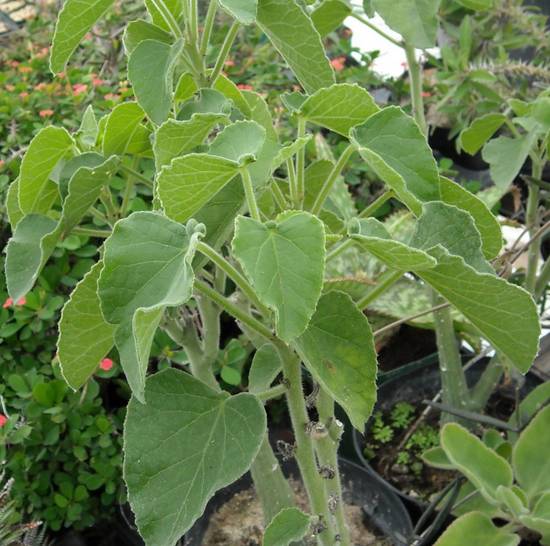
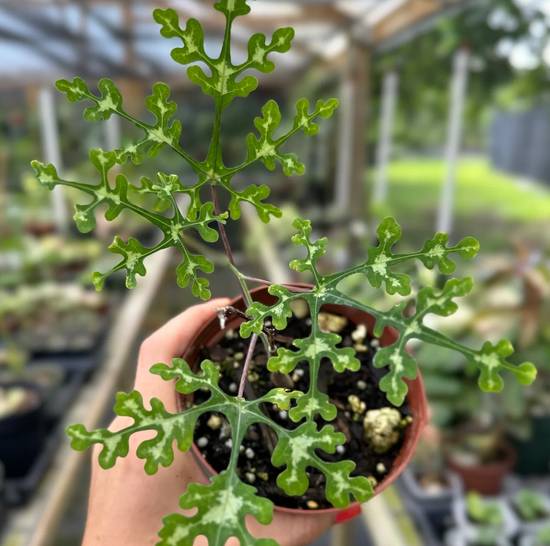
The caudex of Adenia Keramanthus can reach 20 to 30 cm in diameter in cultivation, and sometimes much more in its natural habitat. It stores water and nutrients necessary for survival during long dry periods. From this reservoir emerge slender stems, sometimes woody at the base, which can climb or trail depending on the support provided. Its leaves are lobed, bright green, with pronounced veins, giving the plant highly decorative foliage. In season, it may produce small, discreet flowers, usually greenish or yellowish.

In its natural habitat, Adenia Keramanthus grows in dry to semi-arid areas, often on rocky or sandy, well-drained soils. The climate is marked by very contrasting seasons, with intense daytime heat and long dry periods. Its caudex allows it to survive these extreme conditions by storing water. The plant enters dormancy during the dry season, sometimes losing its leaves, then resumes growth when rains return. This adaptation makes it ideal for pot cultivation with a simulated winter rest.
The Adenia Keramanthus enjoys intense light:

🌞 Outdoor: Full sun or bright partial shade, with gradual acclimation to avoid burns.

🌤️ Indoor: Place near a very bright window, ideally facing south or southwest.

Good sunlight promotes vigorous growth and a well-developed caudex.
This succulent prefers spaced but thorough watering:

🌱 Spring / summer: Water generously when the substrate is completely dry, every 10 to 20 days depending on temperature.

🍂 Autumn / winter: Almost completely stop watering when the plant enters dormancy and loses its leaves.

⚠️ Warning: Always water around the pot without wetting the caudex directly.
The Adenia Keramanthus is a tropical plant:

🌡️ Ideal: Between 22 and 30 °C during the growing season.

❄️ Minimum: Do not expose below 10 °C. Cold combined with humidity can be fatal.

🏠 Tip: Overwinter in a cool (12–16 °C), dry and bright place to respect its natural cycle.
Drainage is essential to prevent caudex rot:

🪨 Recommended mix: 50 % cactus soil + 25 % perlite + 25 % pumice.
Rather discreet but interesting:

🗓️ Period: Summer, sometimes starting in late spring.

🎨 Color: Pale green to light yellow, small flowers borne in the leaf axils.

🔍 Specificity: Adenia keramanthus is dioecious — male and female flowers occur on separate plants.

💡 Tip: Light fertilization during spring supports healthy growth.
FAQ - Adenia Keramanthus

What type of exposure suits Adenia Keramanthus?
It prefers intense light. It can be grown in full sun or bright partial shade, outdoors or indoors, as long as it receives at least 6 hours of light per day.
How should Adenia Keramanthus be watered properly?
It requires spaced but thorough watering during the growing season and almost none in winter. Always allow the substrate to dry completely between waterings.
What substrate should be used for Adenia Keramanthus?
A very well-draining mix is essential. Combine cactus soil with perlite and volcanic rock to optimize drainage.
Is Adenia Keramanthus cold-hardy?
No, it does not tolerate temperatures below 10°C. Bring it indoors or into a greenhouse as soon as nights become cool.
How can the growth of Adenia Keramanthus be stimulated?
Provide warmth, plenty of light, and apply a mild succulent fertilizer every 4 to 6 weeks during the growing season.
When and how does Adenia Keramanthus bloom?
It produces small greenish or yellowish flowers in summer. The flowering is discreet and typical of dioecious species, with male and female flowers on separate plants.
Can Adenia Keramanthus be grown in a pot?
Yes, it is recommended to grow it in a pot. It develops a beautiful caudex and adapts well to bright indoor cultivation or a warm greenhouse.
Should Adenia Keramanthus be pruned?
Pruning is not necessary unless you wish to guide its climbing stems or remove dead parts. Pruning can also encourage secondary branching.
Should the caudex of Adenia Keramanthus remain visible?
Yes, it is best not to bury the caudex completely. Keeping the base exposed improves aeration and reduces the risk of rot.
Is Adenia Keramanthus toxic?
Yes, like many Adenia species, it can be toxic if ingested. Handle with care and keep away from children and pets.