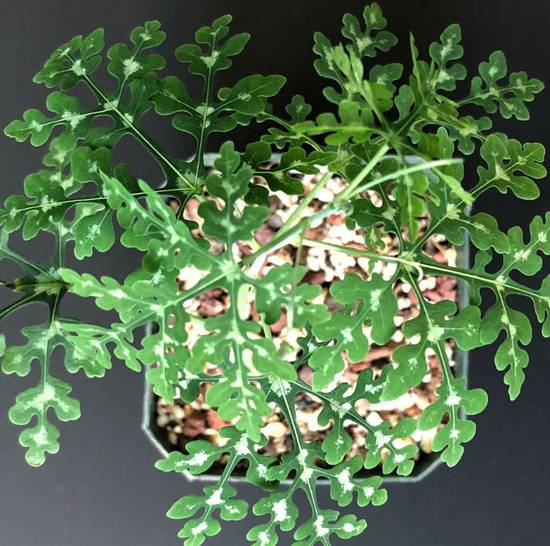
Adenia Perrieri
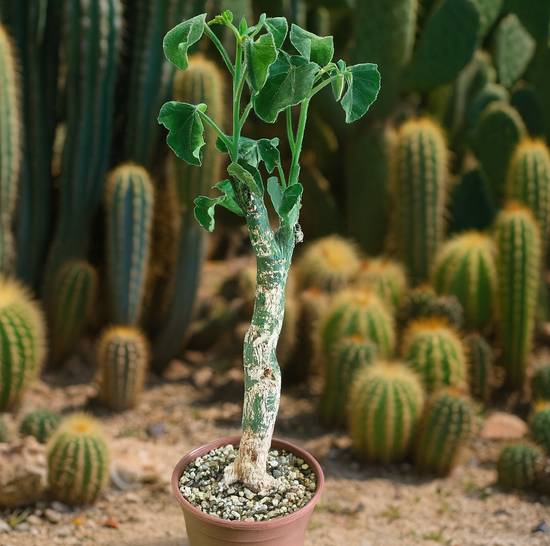
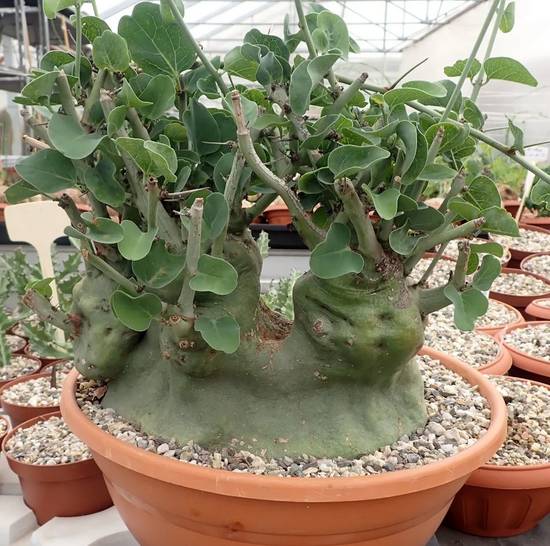
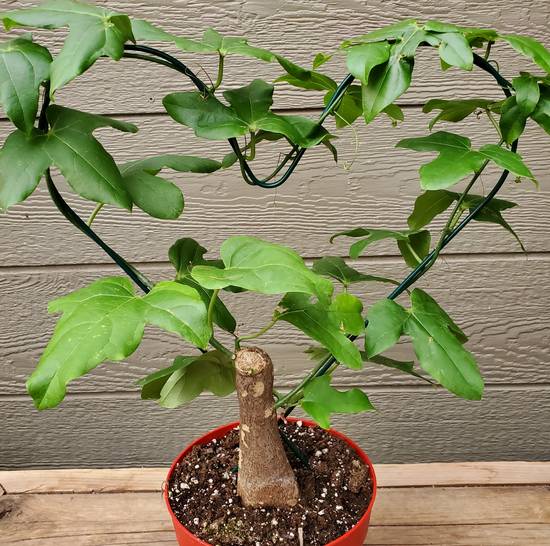
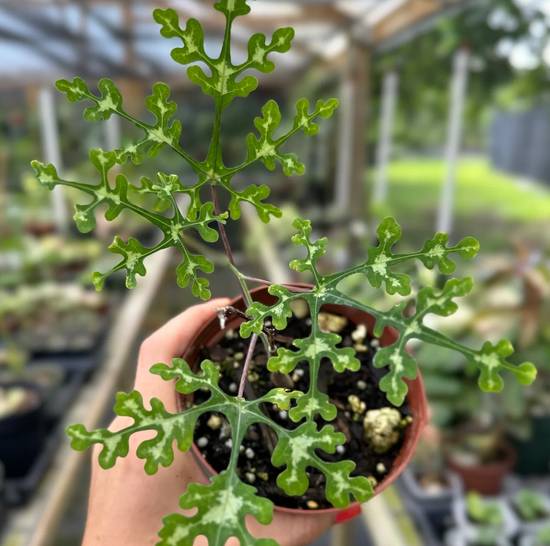
The Adenia Perrieri is a fascinating caudiciform plant native to Madagascar. A member of the Passifloraceae family, this plant with its swollen trunk is highly sought after by collectors of rare succulent plants. Its massive caudex, sometimes globular or ovoid, develops slowly and serves as an essential water reserve for survival in dry environments. It is topped with thin, twining stems bearing decorative leaves, sometimes trilobed. The sculptural appearance of the caudex combined with the elegance of the foliage gives this plant a very graphic look, ideal for decorating a bright corner or a tropical greenhouse.
In cultivation, Adenia Perrieri remains reasonably sized, reaching an average height of 30 to 50 cm, with a caudex that can measure up to 25 cm in diameter depending on conditions. The plant naturally enters dormancy during the dry season, during which it may lose all or part of its foliage. Growth resumes with the return of warmth and humidity. This vegetative alternation makes it a plant with a marked cycle that must be strictly respected to avoid root diseases or water stress.
🌞 Outdoor: Direct sun or partial shade, avoiding the hottest hours if temperatures exceed 35°C.
🌤️ Indoor: Place the plant in front of a south- or southwest-facing window. Insufficient light slows growth and may prevent caudex formation.
🌱 Spring / summer: Water generously every 10 to 20 days, allowing the substrate to dry completely between waterings.
🍂 Autumn / winter: Almost completely stop watering during dormancy, especially if the plant loses its leaves.
⚠️ Tip: Never water directly onto the caudex. Standing water is dangerous for this plant.
🌡️ Ideal temperature: Between 22°C and 30°C during growth.
❄️ Minimum tolerated: 10°C in dry substrate. Frost is fatal.
🏠 Winter care: Keep the plant in a dry, cool (12–15°C) and bright place during winter.
🪨 Recommended mix: 50% cactus substrate + 25% perlite + 25% pumice.
🗓️ Season: Late spring to summer.
🎨 Flowers: Small, light green to greenish, borne in clusters.
🔍 Special feature: This species is dioecious — male and female flowers occur on separate plants.