
Tylecodon Paniculatus

Tylecodon Paniculatus

Tylecodon Paniculatus

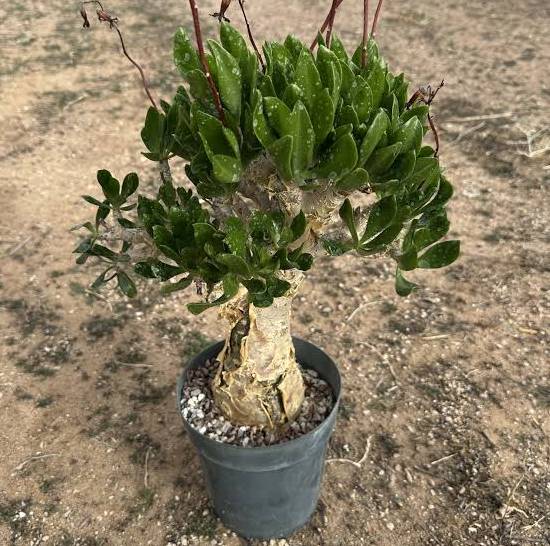
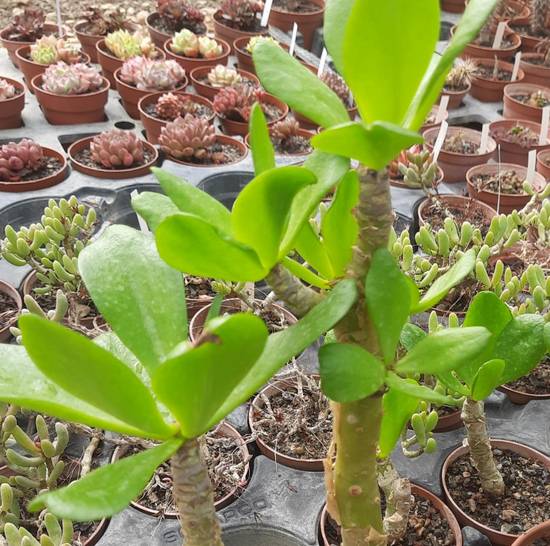
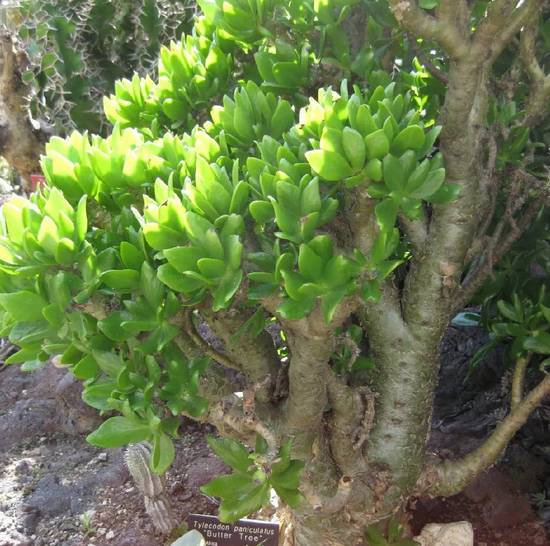
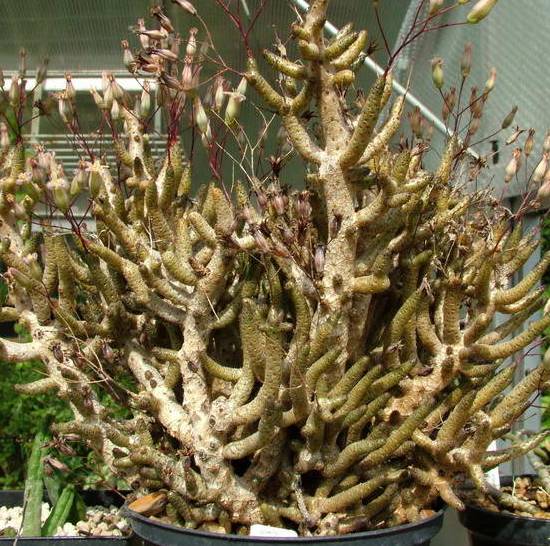
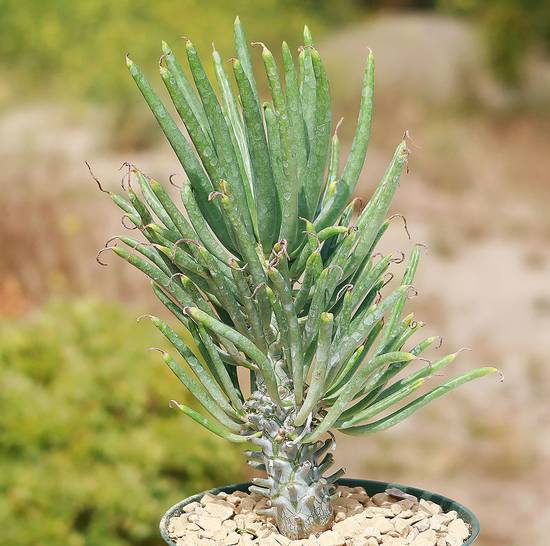
A plant of strong character, Tylecodon Paniculatus develops a swollen trunk (caudex) covered with smooth then papery bark that peels in plates, shifting from olive green to golden brown with age and light. During the growing season, Tylecodon Paniculatus bears a rosette of fleshy, spatulate to obovate leaves; during dormancy it sheds them, revealing a miniature “baobab-like” silhouette highly graphic in pots. Its natural slowness makes it a long-lived plant, ideal for mineral compositions and desert bonsai-style displays in very bright positions.

Unlike desert cacti, Tylecodon Paniculatus is a winter grower: it grows from autumn to spring and rests in summer. From September to April, provide abundant light, thorough but spaced watering and good ventilation; from May to August, keep almost dry when leafless. Handle with care, as the sap may be irritating. Indoors, a bright south/east window is ideal; outdoors in sheltered conditions, gentle morning sun followed by strong brightness gives Tylecodon Paniculatus a compact structure and beautifully tinted bark.

Tylecodon Paniculatus is native to arid and semi-arid regions of southern Africa, growing on rocky slopes and gravel plains with mild, slightly wetter winters and dry summers. In cultivation, reproduce this cycle: autumn–spring growth, bright dry summer rest, mineral substrate and spaced watering.
For a compact structure and well-colored bark, Tylecodon Paniculatus requires strong light without overheating.

🌞 Ideal: gentle morning sun + strong brightness in the afternoon; acclimate in autumn and filter during peak summer heat.

🏠 Indoors: very bright south/east window; rotate weekly.
Winter grower: Tylecodon Paniculatus drinks in the cool season and rests in summer.

🌱 Autumn–Spring: water thoroughly only when the mix is dry at depth, then allow to dry completely.

☀️ Summer (rest): almost dry; occasional minimal watering if the caudex shrivels excessively.
Tylecodon Paniculatus enjoys mild brightness and dislikes damp frost.

🌡️ Ideal: 12–24 °C in growth; moving air.

❄️ Minimum: 5 °C dry (avoid any frost, especially in wet substrate).
To mimic its native screes, Tylecodon Paniculatus requires an ultra-draining mix.

🪨 Base: cactus substrate enriched with minerals + added perlite and pozzolana top dressing.
When the cycle is respected, Tylecodon Paniculatus flowers often on a leafless plant.

🌸 Period: late spring to summer (usually on mature plants, during leaf dormancy).

🎨 Colors: greenish-yellow to orange, tubular flowers in upright panicles.

🕑 Keys: clear alternation watered winter/dry summer, gentle full sun, stable pot and very moderate feeding.
FAQ - Tylecodon Paniculatus

Why does Tylecodon Paniculatus lose its leaves in summer?
It enters summer dormancy: keep almost dry and resume watering in autumn, in a well-mineralized cactus substrate.
Which pot should be chosen for a heavy-caude Tylecodon Paniculatus?
A wide, stable terracotta pot with a layer of drainage granules and clean mineral mulch to protect the crown.
Is LED cultivation suitable for Tylecodon Paniculatus in winter?
Yes, 10–12 hours per day with ventilation and spaced watering; support active growth with very diluted succulent fertilizer.
How to limit mealybugs on Tylecodon Paniculatus?
Use lukewarm showers, gently brush the crown and improve ventilation; maintain clean pumice mulch at the base.
What watering schedule should be adopted for Tylecodon Paniculatus in an apartment?
Autumn–spring: thorough but spaced watering; summer: keep almost dry. Use very well-draining cactus potting soil.
How to shape Tylecodon Paniculatus in a desert bonsai style?
Provide side lighting, a shallow pot and remove spent flower stalks; fertilize lightly with half-dose cactus fertilizer during the season.
Is the latex of Tylecodon Paniculatus irritating?
Yes; handle with gloves, avoid contact with eyes and allow cuts to callus 4–7 days before watering.
Can Tylecodon Paniculatus be moved outdoors into the garden?
Yes, from mid-spring to early autumn, sheltered from rain; mineral mulch such as pumice keeps the crown dry.
How to recognize thirst in Tylecodon Paniculatus during winter?
Slightly drooping leaves and a mildly wrinkled caudex indicate thirst; water thoroughly then let dry completely.
Which propagation method should be favored for Tylecodon Paniculatus?
Seed is reliable and interesting; woody segments can be rooted after long callusing in a very draining mix, then apply micro-doses of liquid cactus fertilizer.