
Sulcorebutia Rauschii
Violacidermis

Sulcorebutia Rauschii Violacidermis

Sulcorebutia Rauschii Violacidermis

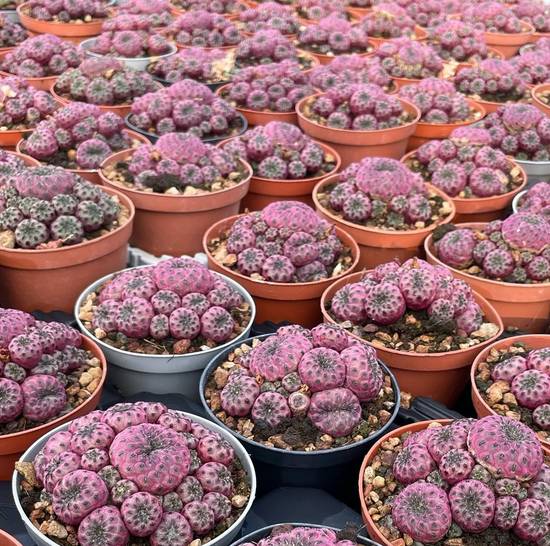
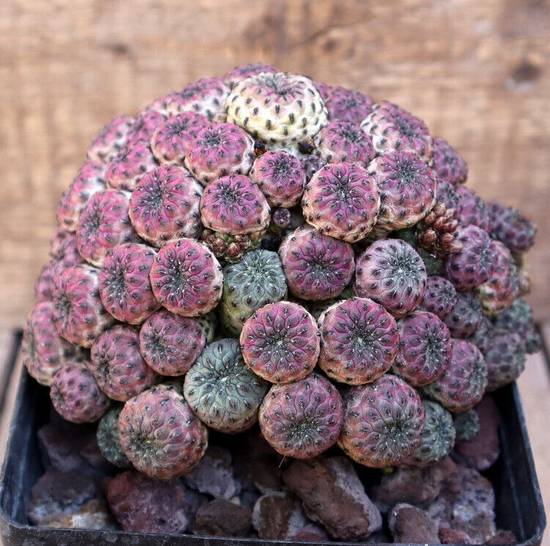
The Sulcorebutia Rauschii Violacidermis is a particularly aesthetic form of Sulcorebutia Rauschii, recognizable by its intensely violet epidermis. It is a miniature cactus native to Bolivia, highly prized for its graphic qualities, rare colors, and its ability to flower abundantly despite its small size.

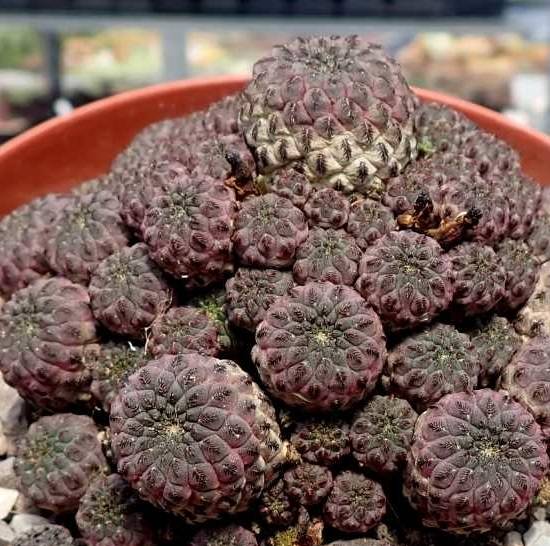
It forms small spherical or slightly flattened heads, grouped into dense cushions. Each head measures between 2 and 4 cm in diameter and displays a spiral pattern of fine, well-defined ribs. The areoles bear short spines, white to pale yellow, which strongly contrast with the violet to purplish epidermis.

This characteristic color intensifies with light or under water stress, making it a remarkable collector’s plant. Like its relatives, this miniature cactus is perfectly suited to small containers and ideal for lovers of graphic and colorful cacti.

The Sulcorebutia Rauschii Violacidermis is a cultivated variety selected for its violet coloration. It originates from the Bolivian highlands, at altitudes around 3,000 meters. The extreme conditions of its natural habitat — alternating warm days and cold nights — make it a robust plant capable of withstanding strong temperature variations.
Good light is essential to reveal its intense coloration and maintain compact growth.

🌞 Bright light: Place it in full sun to enhance the violet pigmentation.

🌤️ Summer protection: Light shading during very hot afternoons helps prevent burns.

⚠️ Tip: Indoors, a south-facing exposure or supplemental grow lighting is recommended.
This mountain cactus is accustomed to alternating periods of drought and brief watering.

🌱 Spring / summer: Water every 2 to 3 weeks, only when the substrate is completely dry.

🍂 Autumn / winter: Stop watering and keep it cool during its dormancy period.

💡 Tip: Excess water causes rot. Water sparingly but deeply, then allow to dry completely.
This cactus tolerates temperature fluctuations well, provided it is kept dry in winter.

🌡️ Optimal range: 15 to 25 °C.

❄️ Cold tolerance: Can withstand down to -2 °C briefly if the substrate is completely dry.

🏠 Wintering: A well-ventilated location at 5–10 °C encourages abundant flowering in spring.
The Sulcorebutia Rauschii Violacidermis requires a well-draining substrate to avoid excess moisture.

🌵 Ideal mix: 50% cactus potting mix + 50% mineral components (pumice, perlite, fine gravel).
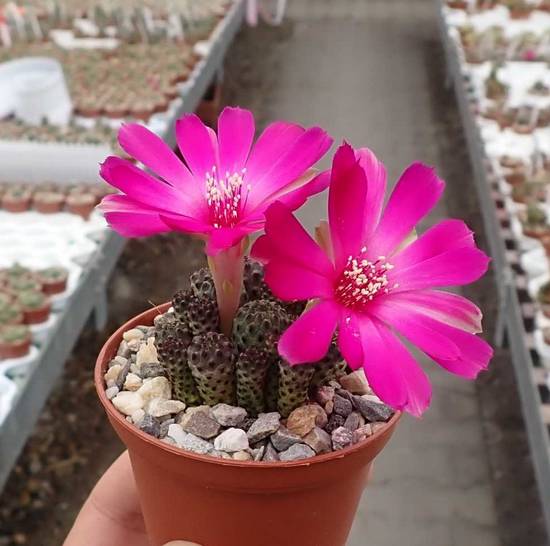
Flowering is spectacular relative to the size of the plant.

🌸 Season: From late spring to early summer.

🎨 Color: Bright yellow or orange depending on the specimen, with a darker center.

💡 Encouraging flowering: Provide a cool winter rest and good light exposure.
FAQ - Sulcorebutia Rauschii Violacidermis

Is Sulcorebutia Rauschii Violacidermis naturally purple?
Yes, this variety develops an intense purple epidermis, especially when exposed to strong light.
How should Sulcorebutia Rauschii Violacidermis be cared for in winter?
It should be kept cool (between 5 and 10°C) and dry, without watering, to respect its dormancy period.
What is the best substrate for this miniature cactus?
A mix of 50% cactus soil and 50% draining materials ensures good root health.
Is flowering frequent in Sulcorebutia Rauschii Violacidermis?
Yes, if conditions are met: cool and dry winter, intense light, and fertilizer in spring.
Should this purple cactus be watered often?
No, water moderately in summer and never in winter. It prefers temporary dryness over excess moisture.
Is this cactus suitable for small spaces?
Absolutely! Its small size makes it ideal for balconies, windowsills, or miniature collections.
Why is my Sulcorebutia Rauschii Violacidermis turning green?
Lack of light can reduce the purple coloration. Place it in full sun or under artificial light.
Can this cactus live indoors?
Yes, but it must receive strong light. A south-facing exposure or grow lighting is necessary.
Should Sulcorebutia Rauschii Violacidermis be repotted often?
Repotting every 2 to 3 years is sufficient. Use a well-draining substrate and a shallow pot.
What is the appeal of the Violacidermis form?
Its spectacular color makes it a centerpiece in a collection. It is a cactus that is both beautiful, hardy, and floriferous.

Other Sulcorebutias