
Strombocactus Disciformis Cristata

Strombocactus Disciformis Cristata

Strombocactus Disciformis Cristata

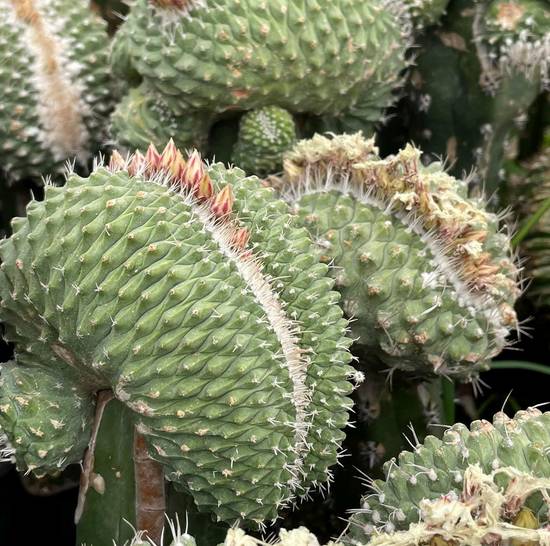
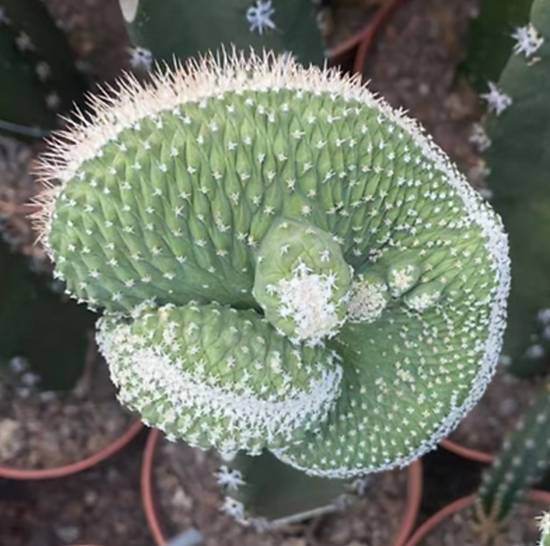
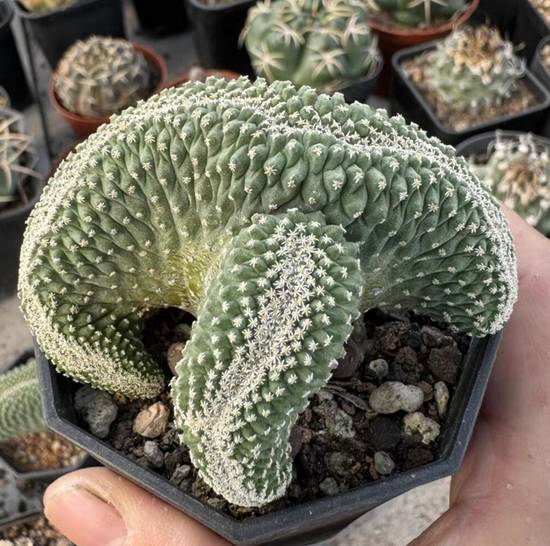
The Strombocactus Disciformis Cristata is a fascinating and highly sought-after form of the classic Strombocactus Disciformis. Its unique feature? Crested growth: instead of forming a rounded rosette, this cactus develops irregular, sinuous crests, giving it the appearance of a miniature plant brain.

With shades ranging from pale green to olive green, sometimes tinged with blue-gray, the Strombocactus Disciformis Cristata is both mysterious and sculptural. It appeals equally to passionate collectors and lovers of botanical curiosities. Its ancient, prehistoric appearance immediately draws the eye.

This plant grows slowly, enhancing its precious character. It is a solitary cactus, generally grafted, as its crested form makes root propagation more delicate. In pots, it rarely exceeds 10 cm in height, but its width may spread over the years.

The Strombocactus Disciformis naturally grows in the semi-desert regions of central Mexico, particularly in the mountainous areas of Querétaro and Hidalgo. It thrives on steep, well-drained limestone soils, often between rocks or in crevices, benefiting from strong sunlight and rare but intense rainfall.

The crested form does not occur stably in nature; it is the result of cultivated mutations propagated through grafting.
The Strombocactus Disciformis Cristata prefers bright but indirect light:

🌞 Abundant light: Near a well-exposed window or in a bright greenhouse.

🌤️ In summer: Avoid prolonged direct full sun that could burn its delicate tissues.

💡 Tip: Insufficient light causes loss of form and compactness.
Like all crested forms, the Strombocactus Disciformis Cristata is extremely sensitive to excess moisture:

🌱 Spring / Summer: Light watering every 3 to 4 weeks. Allow the substrate to dry completely.

🍂 Autumn / Winter: Stop watering completely. The plant enters dormancy.

⚠️ Avoid: Standing water or moisture-retentive substrates.
This cactus enjoys warmth but does not tolerate frost:

🌞 Ideal temperature: between 22°C and 30°C.

❄️ Minimum: 5°C. Below this, there is a risk of rot or stress.

🏠 In winter: Keep indoors in a bright, dry place.
The Strombocactus Disciformis Cristata requires a mineral, well-draining substrate:

🪨 Recommended mix: 30% cactus soil, 35% pozzolana, 35% pumice.

💡 Tip: Use an unglazed terracotta pot to promote moisture evaporation.
Even in crested form, the Strombocactus can produce flowers when well cultivated:

🌼 Season: Spring, sometimes early summer.

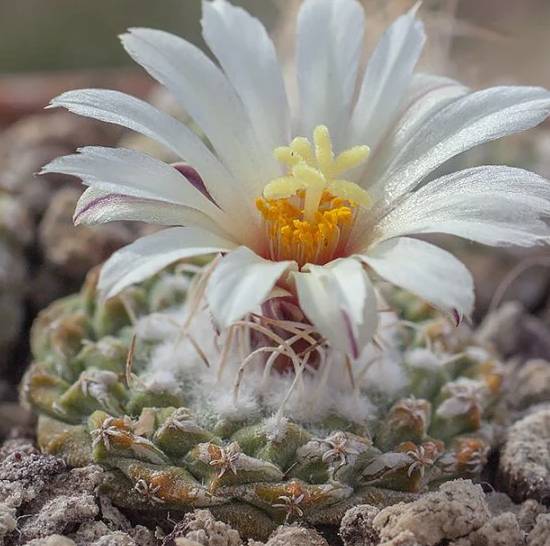
🎨 Flower: White to pale pink, with a yellow center.

🕑 Duration: Generally 2 to 3 days.

Note: Flowering remains rare in crested forms but is possible with light water stress and a mature plant.
FAQ - Strombocactus Disciformis Cristata

What type of pot is recommended for Strombocactus Disciformis Cristata?
A terracotta pot with a drainage hole is ideal. It allows better aeration and reduces the risk of rot.
How can flowering of Strombocactus Disciformis Cristata be stimulated?
Bright light, a proper dry winter rest, and moderate fertilization with a cactus fertilizer can help.
What substrate is suitable for Strombocactus Disciformis Cristata?
A mineral mix with drainage material, pozzolana, and a small amount of cactus potting soil.
Is this crested cactus suitable for beginners?
No, it is best suited for collectors or experienced gardeners due to its sensitivity to moisture.
Should Strombocactus Disciformis Cristata be grafted?
Often yes. Grafting improves vigor and makes cultivation easier, especially in crested form.
How often should a crested Strombocactus be watered?
Once a month in summer, never in winter. Avoid any water stagnation.
Can it be grown outdoors?
Only in summer, sheltered from rain and direct scorching sun. Bring it indoors as soon as temperatures drop below 15°C.
Can Strombocactus Disciformis Cristata be propagated by cuttings?
Very difficult. The crested form often requires grafting; sowing is reserved for the standard form.
Why is my Strombocactus cristata turning brown?
This may indicate sunburn, a fungal attack, or overwatering. Check exposure and substrate.
What fertilizer should be used for Strombocactus Disciformis Cristata?
A diluted liquid cactus fertilizer once in spring is sufficient.

Other Strombocactus