Stenocereus Stellatus
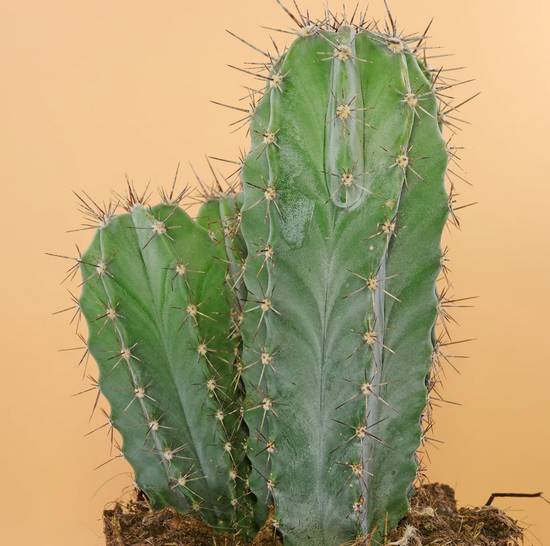
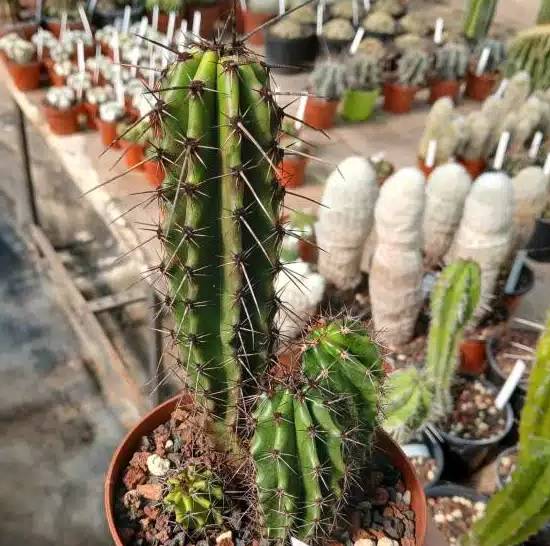
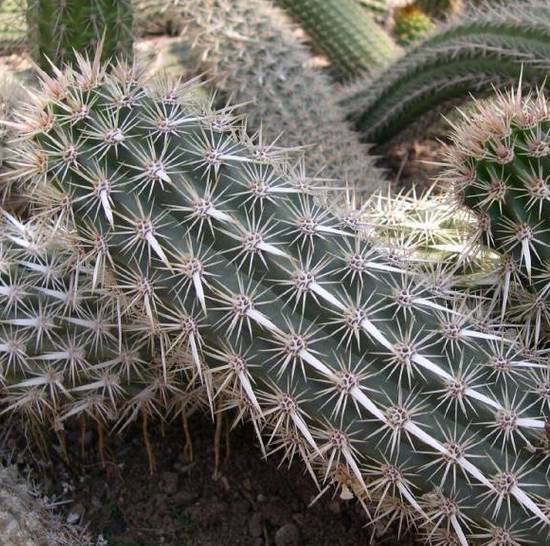
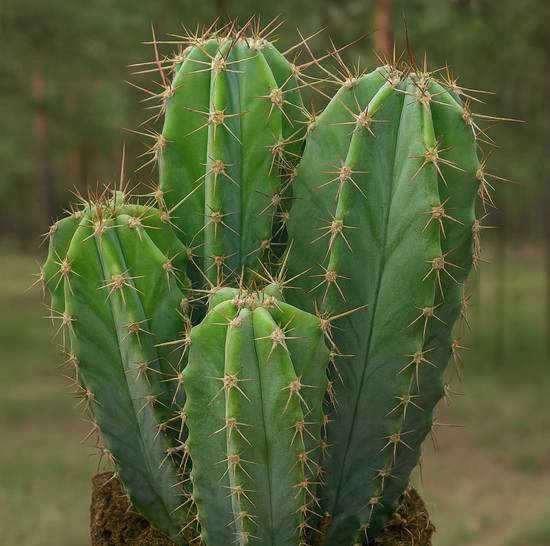
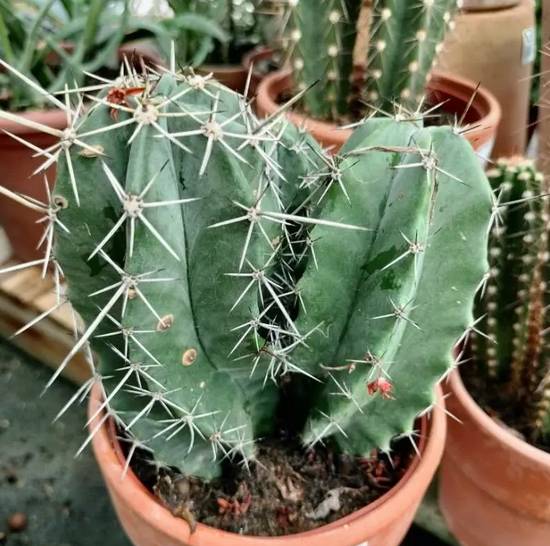
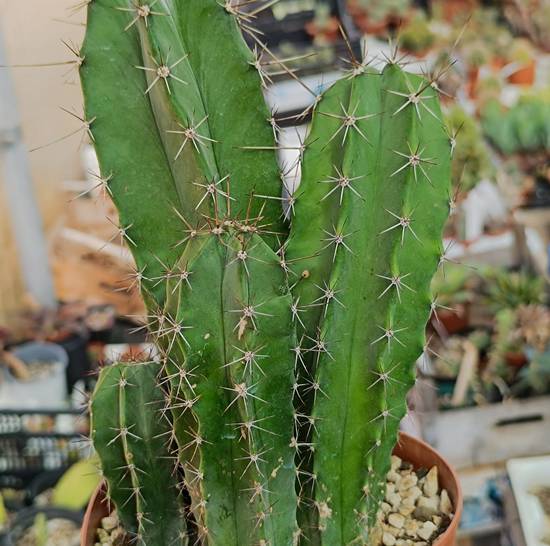
The Stenocereus Stellatus is a columnar cactus native to Mexico, still little known to the general public but highly valued by collectors for its graphic shape and its ability to produce edible fruits. It forms large upright, thick stems with an intense bluish-green color, divided into 6 to 9 deep ribs, with prominent areoles bearing fine to moderately thick spines.
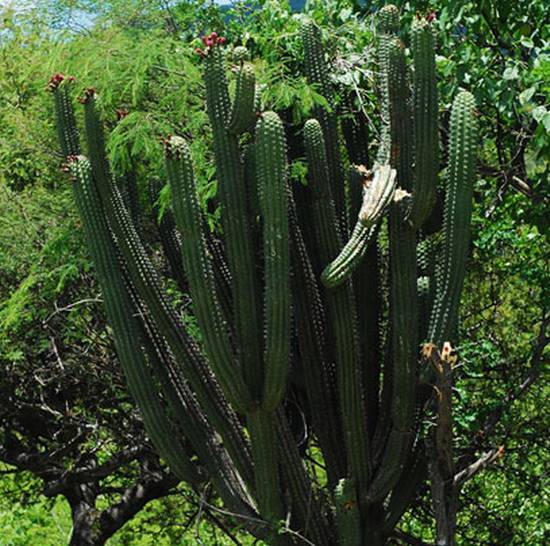
This cactus can reach 3 to 4 meters in height under good conditions, forming a branched candelabra-like silhouette. It is particularly prized in warm regions of Mexico, where its fruits called “pitayas” are eaten fresh or processed.
Hardy, graphic and productive, the Stenocereus Stellatus is also interesting for its generous spring flowering and its ability to adapt to container cultivation with good drainage and proper exposure.
Its habitat is characterized by high temperatures, rare seasonal rains, and poor but well-drained soil.
🌞 Direct sunlight: at least 6 to 8 hours per day.
🌤️ Young plants: introduce gradually to full sun to avoid sunburn.
💡 When grown in shade, it may become etiolated and produce fewer flowers and fruits.
🌱 Spring / summer: every 10 to 20 days, depending on heat. The substrate must dry completely between waterings.
🍂 Autumn / winter: no watering if temperatures drop below 10°C.
⚡ Important: excess water quickly causes root rot.
🌞 Ideal temperature: 20°C to 32°C.
❄️ Minimum resistance: -2°C dry, but avoid humidity at low temperatures.
🏠 Wintering: dry and bright location.
🪨 Recommended mix: 40% cactus soil + 30% pumice + 30% pozzolana.
💡 Use a terracotta pot to improve evaporation.
🌼 Season: spring
🎨 Color: pinkish white to deep pink
🕑 Duration: 1 to 3 days per flower
💡 The plant must be well fed and kept dry during winter to bloom.