
Pedilanthus Macrocarpus

Pedilanthus Macrocarpus

Pedilanthus Macrocarpus

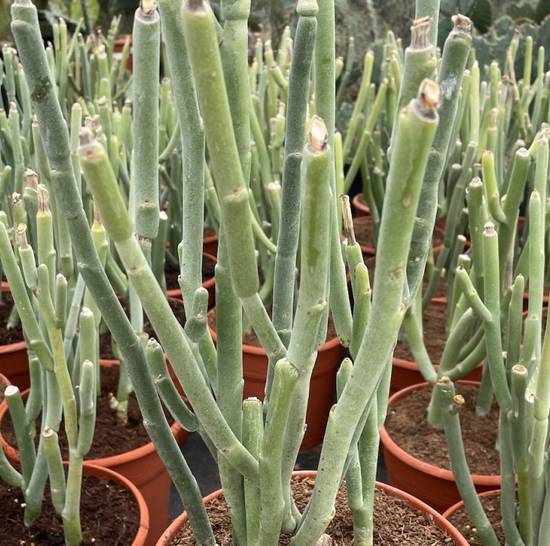
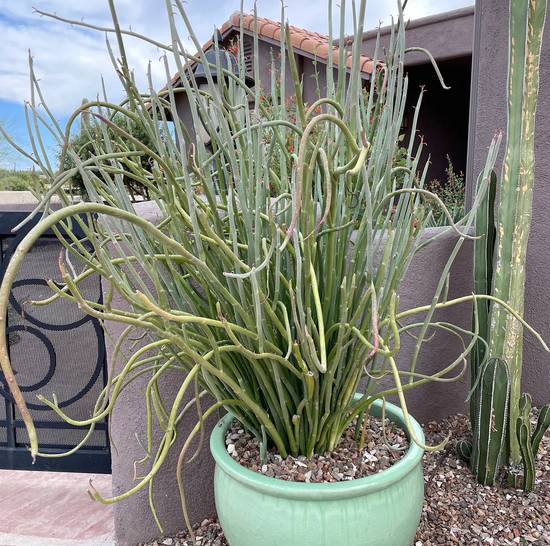
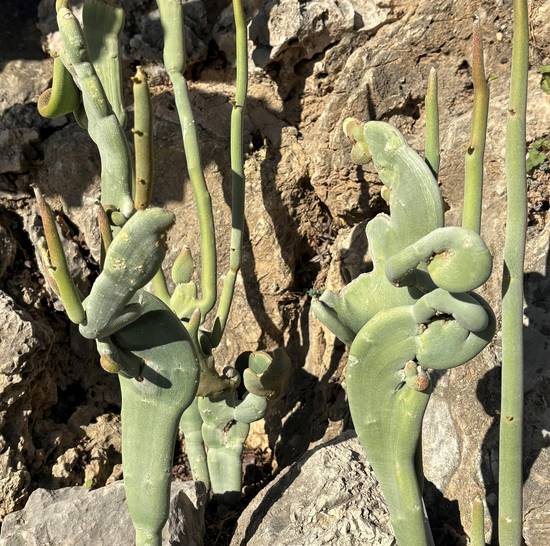
The Pedilanthus Macrocarpus, also known as the "Zigzag Plant" or "Slipper Plant", is a succulent native to northwestern Mexico, particularly the states of Sonora and Baja California. Belonging to the Euphorbiaceae family, this striking plant is distinguished by its minimalist habit, upright stick-like stems that are smooth, cylindrical and almost leafless, and its highly contemporary, architectural silhouette.

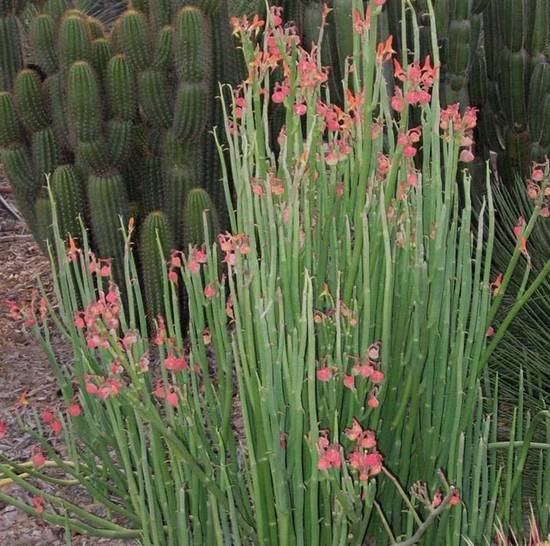
The Pedilanthus Macrocarpus can reach about 60 to 90 cm in height in pots, with a very vertical growth habit. It is perfectly suited to modern interiors, minimalist planters or design pots. Outdoors, in hot and dry climates, it forms attractive clumps with strong architectural interest. Despite its delicate appearance, it is extremely drought-tolerant and requires very little maintenance. In addition to its sculptural form, it may also produce small slipper-shaped flowers, usually orange to red, emerging at the tips of the stems during summer.

The Pedilanthus Macrocarpus grows in desert, dry and rocky environments. It develops in areas exposed to intense sunlight, on sandy or stony soils with excellent drainage. Its tubular form and near absence of leaves are direct adaptations to arid conditions.
The Pedilanthus Macrocarpus is a strong light lover:

🌞 Full sun: It tolerates direct sunlight very well, especially outdoors or in a greenhouse.

🏠 Indoors: Place it near a well-exposed window (south or west). Insufficient light will weaken the stems and slow growth.

💡 Tip: Rotate the pot regularly to ensure straight, even growth.
The Pedilanthus Macrocarpus requires very little water:

🌱 Spring / summer: Water about every 3 weeks, once the substrate is completely dry.

🍂 Autumn / winter: Reduce watering significantly; once a month is sufficient. The plant often enters a resting phase.

⚠️ Warning: Excess water causes stem softening and can lead to rot.
The Pedilanthus Macrocarpus enjoys warmth:

🌡️ Optimal temperature: Between 20°C and 30°C. It thrives in dry atmospheres.

❄️ Critical threshold: Do not expose below 5°C. Frost is fatal to its tender tissues.

🏠 Winter care: Bring indoors in cold regions and place in a bright, dry room.
The Pedilanthus Macrocarpus does not tolerate wet substrates:

🪨 Recommended substrate: A very well-draining mix, such as a cactus potting soil enriched with 30 to 50% mineral components like perlite or pumice.
The flowering of Pedilanthus Macrocarpus is discreet but distinctive:

🌼 Shape: Small slipper- or beak-shaped flowers, orange to red.

📅 Season: Summer, mainly outdoors or in a bright greenhouse.

🎯 Tip: A mature, well-exposed plant grown under dry conditions may flower annually.
FAQ - Pedilanthus Macrocarpus

What exposure is ideal for Pedilanthus Macrocarpus?
It loves full sun. Place it in direct sunlight or near a very bright window to keep it upright and vigorous.
What substrate is suitable for Pedilanthus Macrocarpus?
Use a well-draining soil mix enriched with mineral materials such as perlite or volcanic rock.
How should Pedilanthus Macrocarpus be watered properly?
Water only when the substrate is completely dry. Once every three weeks is sufficient in summer, less in winter.
What is the minimum temperature tolerated by Pedilanthus Macrocarpus?
It does not tolerate temperatures below 5°C. Bring it indoors in autumn.
Can Pedilanthus Macrocarpus grow indoors?
Yes, it grows very well in pots indoors, provided the environment is bright and dry. It makes an excellent houseplant.
When does Pedilanthus Macrocarpus bloom?
It generally blooms in summer, especially outdoors or in a greenhouse, producing small, original reddish-orange flowers.
Should Pedilanthus Macrocarpus be fertilized?
Yes, a cactus fertilizer once a month during the growing season is sufficient.
How can Pedilanthus Macrocarpus be propagated?
Propagate by stem cuttings in spring. Let the cut dry for a few days, then plant it in dry substrate.
Is Pedilanthus Macrocarpus toxic?
Yes, like many euphorbias, it produces an irritating latex sap. Handle with gloves and keep away from children and pets.
When should Pedilanthus Macrocarpus be repotted?
Repot every 2 to 3 years in spring using a suitable well-draining substrate and a pot with good drainage.