Obregonia Denegrii
The Obregonia Denegrii is one of the most unique and rare cacti in the plant kingdom. Often nicknamed the "artichoke cactus" because of its distinctive geometric rosette shape, this botanical jewel is the only species in the genus Obregonia, making it highly sought after by collectors.
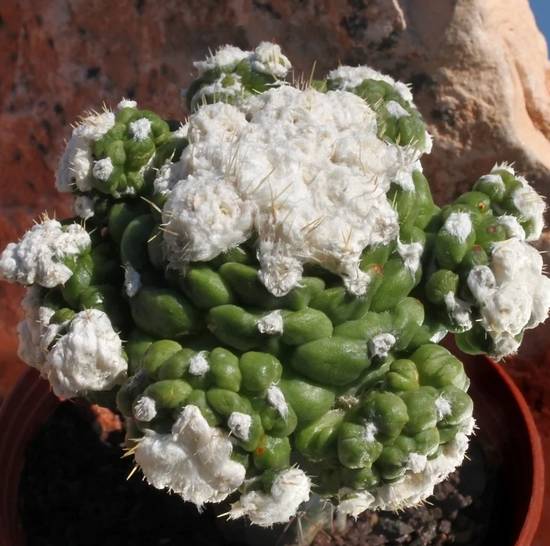
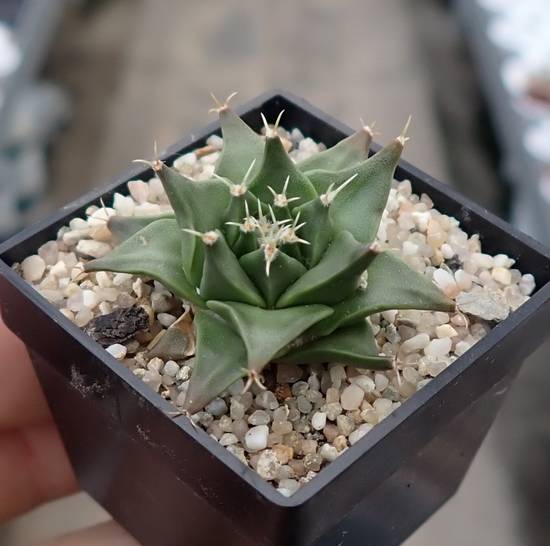
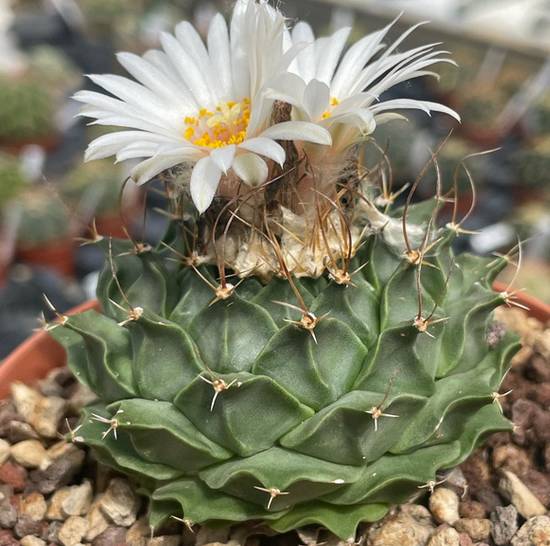
Its appearance resembles a miniature artichoke carved from stone. The stem is flattened and globular, measuring between 5 and 10 cm in diameter. It is composed of triangular tubercles arranged in a spiral, covered with a matte green to slightly bluish epidermis, sometimes adorned with fine white hairs at the tips of the areoles.
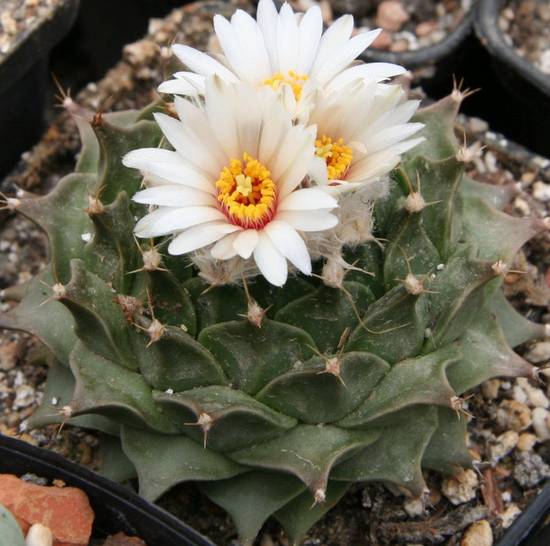
When well established, it can produce small white to pale pink flowers at the top of the rosette, similar to those of some Ariocarpus. These flowers may be followed by elongated fruits containing black seeds, highly valued for propagation by seed.
Growing Obregonia Denegrii requires rigor, patience, and attention: it fears stagnant moisture, needs a highly draining substrate, moderate but constant light, and long periods of winter dormancy.
🌤️ Bright light: Provide strong natural light without direct sun during the hottest hours. Ideally filtered light through a sheer curtain.
☀️ Outdoors: In summer, it can be placed outside in partial shade, with gradual acclimation.
🏡 Indoors: An east- or west-facing window is ideal. In a greenhouse, beware of heat stress.
🌱 Growing season (spring–summer): Water very sparingly. Once every 3 to 4 weeks is sufficient, only when the substrate is completely dry.
🍂 Winter rest: Stop watering completely between October and March, especially if temperatures drop below 15°C.
⚠️ Avoid: Prolonged moisture, water-filled saucers, and compact substrates.
🌡️ Ideal: Between 20°C and 30°C during growth.
❄️ Wintering: It can tolerate drops to 5°C or even 0°C if perfectly dry, but prefers being kept at 10–15°C.
🪨 Recommended mix: 40% cactus potting soil + 30% pozzolan + 30% coarse sand or perlite
💡 Add a drainage layer at the bottom of the pot to maximize drainage.
🗓️ Season: Late spring to early summer
🎨 Color: White-pink to pale pink
💡 Condition: A mature plant, light water stress, and good light exposure are required.