
Obregonia Denegrii
Monstruosa

Obregonia Denegrii Monstruosa

Obregonia Denegrii Monstruosa

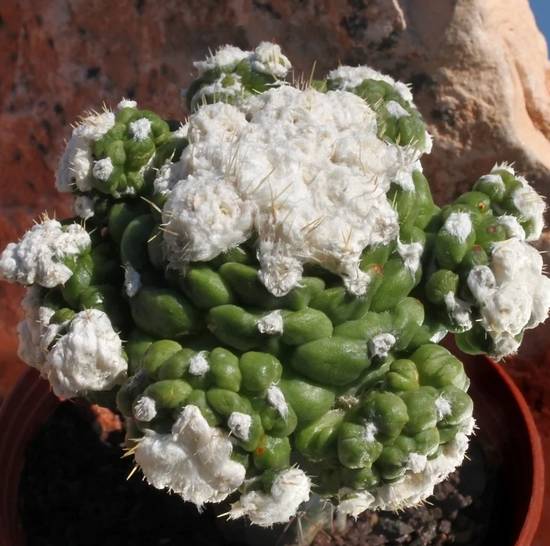
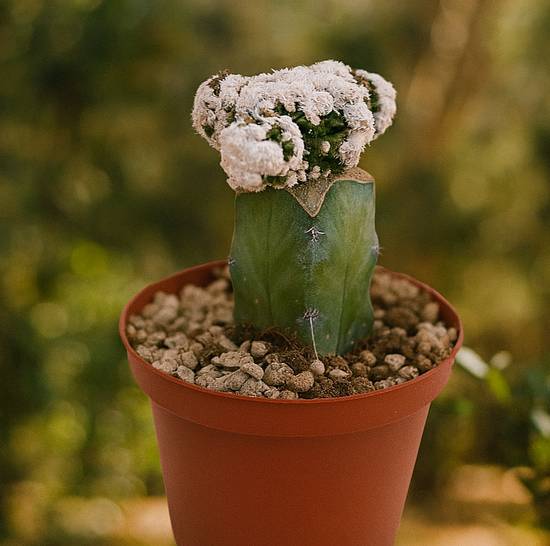
The Obregonia Denegrii Monstruosa is an extremely rare mutant form of Obregonia denegrii, sometimes nicknamed the “desert artichoke.” This “monstruosa” form is characterized by chaotic tubercle growth, creating irregular, almost sculptural patterns that make each specimen unique. Highly sought after by collectors, it is the result of a natural or induced mutation that disrupts the plant’s classic geometric organization.

Unlike the perfectly symmetrical typical form, this variety displays bumps, crests, and fascinating irregularities. Its size remains modest (5 to 8 cm), but its original silhouette draws all eyes. The body is green-gray to dark green, sometimes covered with fine hairs on the areoles.

Like the normal form, it grows extremely slowly, often half-buried in a very mineral, calcareous substrate. It is a plant endemic to Tamaulipas in Mexico, rare in the wild and even rarer in cultivation.

The Obregonia Denegrii Monstruosa is a mutation of the type species native to Tamaulipas, Mexico. It does not occur naturally in the wild, but results from selection and cultivation, sometimes via seed or grafting.

Its sculptural appearance, born of genetic anomalies, has captivated collectors worldwide. It remains rare on the market and highly valuable in cultivation.
Light exposure is fundamental to maintain the cactus’s compactness and coloration:

🌤️ Filtered bright light: Place it in a very bright location without intense direct sunlight. Gentle morning or evening light is ideal.

🏡 Indoor cultivation: Near an east- or west-facing window, or under LED grow lights. Beware of midday sun, which can burn sensitive growths.

🌞 Outdoors: Possible in summer, in partial shade, after acclimation.
The Obregonia Denegrii Monstruosa is extremely sensitive to excess water. Watering must be minimal and perfectly controlled:

🌱 Spring / Summer: Water at most once every 4 weeks, only if the substrate is completely dry.

🍂 Autumn / Winter: No watering at all. The plant enters full dormancy.

⚠️ Tip: Water late in the morning to allow rapid drying. Never leave standing water.
This cactus appreciates dry heat and fears cold moisture:

🔥 Growing temperature: 20°C to 32°C.

❄️ Minimum tolerated: Down to 5°C if the substrate is perfectly dry. Keep dry during winter.
An unsuitable substrate is fatal to this rare cactus. It must be ultra well-draining:

🪨 Recommended mix: 40% cactus potting soil + 30% pozzolan + 30% coarse sand or perlite

Bottom drainage: Add a drainage layer to prevent any water stagnation.
Flowering is rare but possible:

🗓️ Season: Late spring to early summer

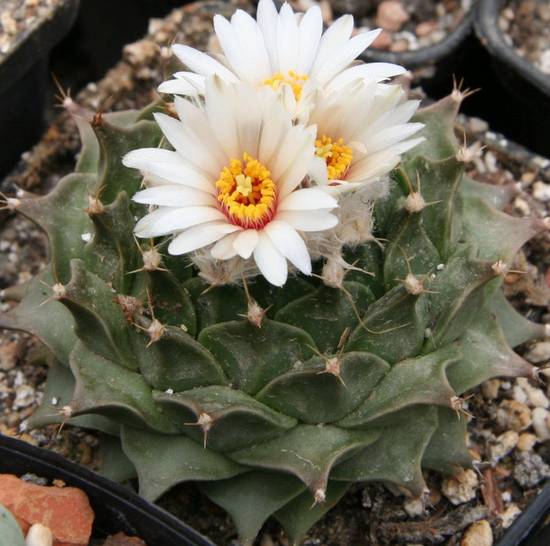
🎨 Flowers: White to pinkish, discreet, at the center areoles

💡 Conditions: Moderate watering, strong light, and above all a proper winter rest without watering
FAQ - Obregonia Denegrii Monstruosa

What is the difference between Obregonia Denegrii and its Monstruosa form?
The Monstruosa version has irregular and unpredictable growth. The tubercles form crests, bumps, or spirals, making it unique and more decorative than the standard form.
Can Obregonia Denegrii Monstruosa be grafted?
Yes, grafting is sometimes used to accelerate its growth. It is often done on Echinopsis or Ariocarpus. However, this slightly alters its appearance.
What is the ideal substrate for Obregonia Denegrii Monstruosa?
A mix of Algoflash cactus potting soil + perlite + Or Brun pozzolana is excellent. Avoid overly compact substrates at all costs.
How should Obregonia Denegrii Monstruosa be watered properly?
Very rarely: every 30 to 40 days in summer, never in winter. Let it dry completely and water lightly. Use a gentle UnderGreen fertilizer in spring.
Can Obregonia Denegrii Monstruosa be grown in a greenhouse?
Yes, provided it is well ventilated. A greenhouse that is too humid in winter is risky. Prefer a cold and dry greenhouse.
Is this cactus suitable for a beginner collector?
No. It requires strict control of watering, substrate, and winter care. It is best reserved for an experienced enthusiast.
What is its growth rate?
Extremely slow. It may take 5 years to grow just a few centimeters. A light fertilizer such as Or Brun special cactus can help in spring.
When should this plant be repotted?
Every 4 or 5 years, in spring. Repot with fresh, well-draining substrate. Add a layer of Algoflash granules to prevent moisture around the collar.
Is Obregonia Denegrii Monstruosa a protected plant?
Yes. Like its classic form, it is listed in Appendix I of CITES. Its sale is legal only if it comes from cultivated sources.
Where can I find suitable substrate for Obregonia Denegrii Monstruosa?
You can create your own mix with Fertiligène potting soil, perlite, and pozzolana for optimal drainage.

Other Obregonias