Myrtillocactus Geometrizans Cristata
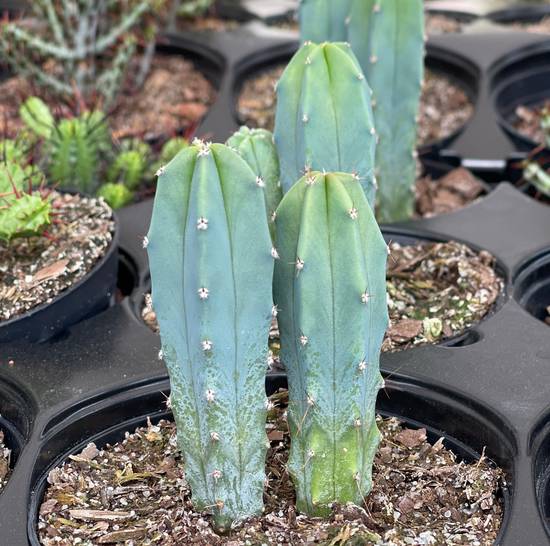
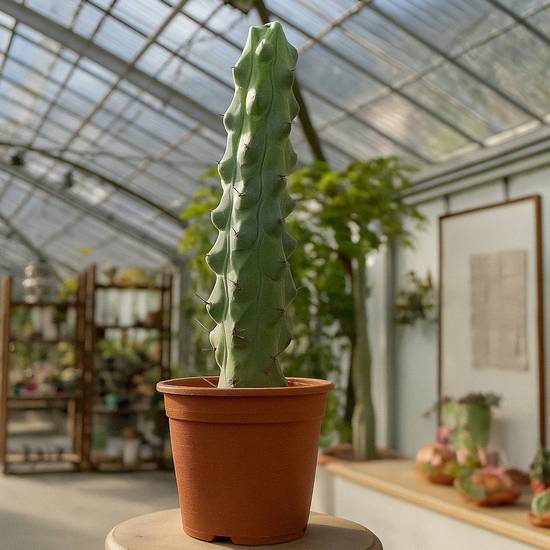
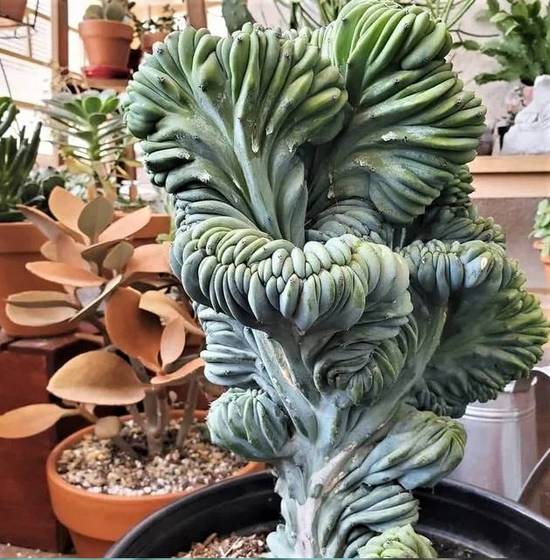
The Myrtillocactus Geometrizans Cristata is one of the most spectacular forms in the world of cacti.
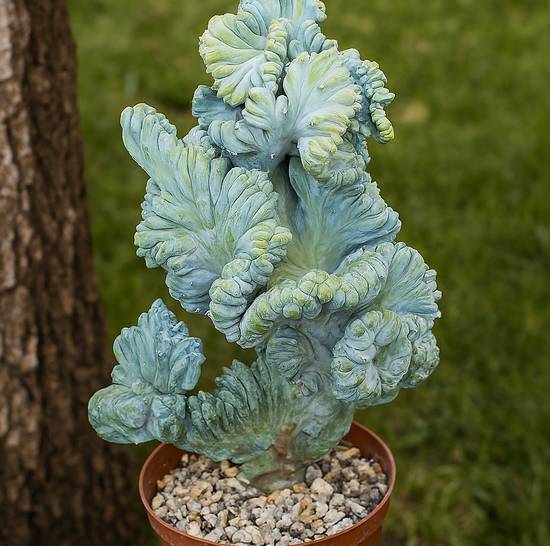
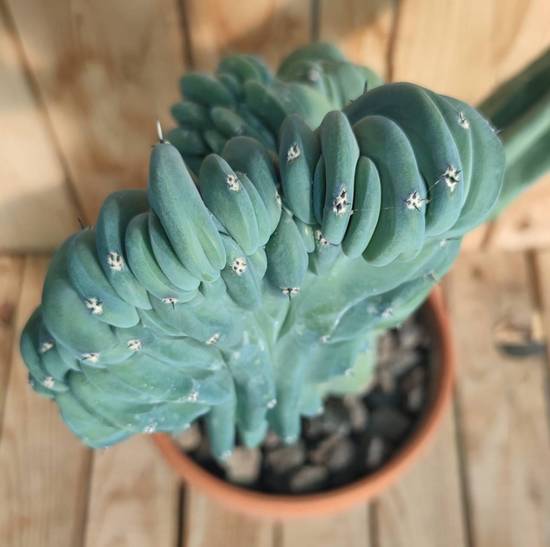
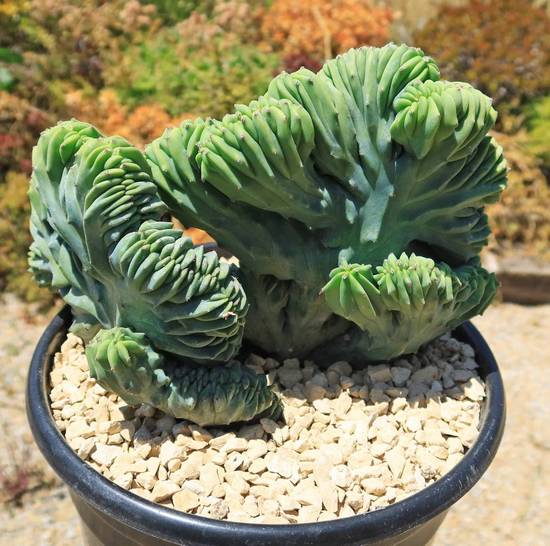
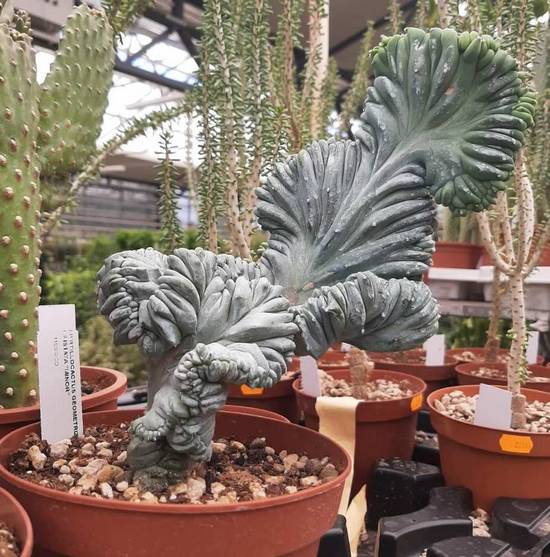
It is a mutation of the classic Myrtillocactus Geometrizans, where the growth of the cactus does not occur in a vertical cylindrical way, but rather in the form of wavy crests, giving a highly sought-after "crested" appearance.
This cactus displays bluish to blue-green shades, sometimes covered with a fine white bloom. Its irregular, almost sculptural shape gives it the appearance of a natural work of art.
Each specimen is unique: no "cristata" looks exactly like another, which makes it a prized collector's item.
As it ages, it can become imposing and form large branched crests, creating miniature landscapes from another world.
When it flowers, which is rare in pots, it produces small pale green to cream flowers, followed by edible fruits resembling blueberries (hence its name "Myrtillo").
In its natural environment, it grows on rocky terrain under a scorching sun, which gives it this incredible resistance and this spectacular crest-shaped growth.
🌞 Full sun: Minimum 6 hours of direct light per day
🌤️ Protection in summer: During intense heatwaves, provide light shade to avoid burns
⚠️ A lack of sunlight can slow its growth and alter its beautiful bluish shade.
🌱 Spring / summer: Moderate watering, allowing the substrate to dry completely between two waterings. Once every 3 weeks, depending on heat and substrate
🍂 Autumn / winter: Drastic reduction of watering, or no watering at all, to prevent rot
⚡ Golden rule: Better too little water than too much water. Excess moisture is the number one enemy of this magnificent crested cactus!
🌞 Optimal growth temperature: between 20°C and 30°C
❄️ Minimum tolerance: Can withstand drops down to 5°C occasionally, but does not tolerate frost
🏠 Wintering: If the temperature drops below 10°C, bring your cactus indoors, ideally to a bright and cool place
🪨 Very draining substrate: mixture of cactus potting soil + 50% pumice or pozzolana
🌸 Season: late spring to summer
🎨 Color: pale green to cream flowers, small in size
🕑 Duration: short-lived, but followed by small blue-violet fruits
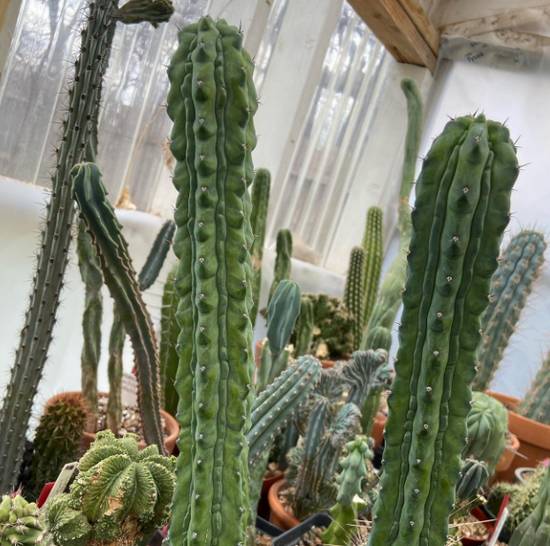
💡 Flowering is rare in pots but more frequent on old specimens in greenhouses