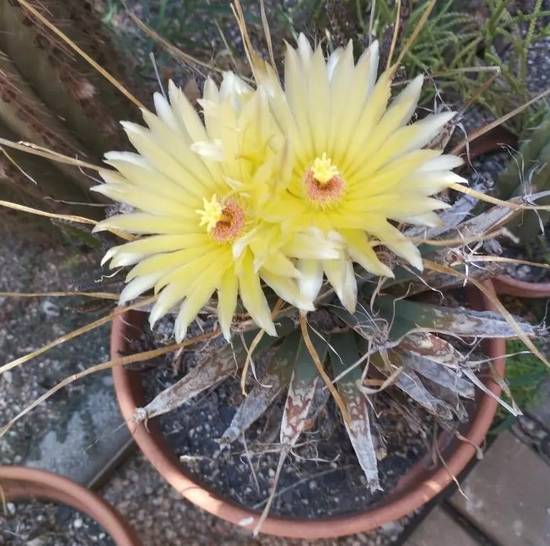
Leuchtenbergia Principis
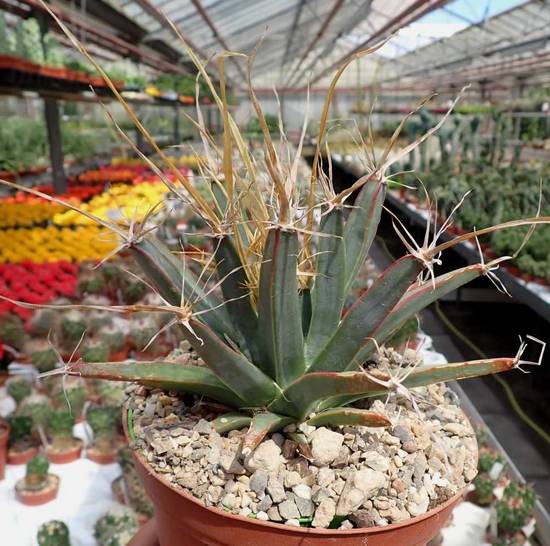
Leuchtenbergia principis, often nicknamed the “agave cactus,” is a unique species in the cactus world, instantly recognizable for its singular shape and sculptural appearance.
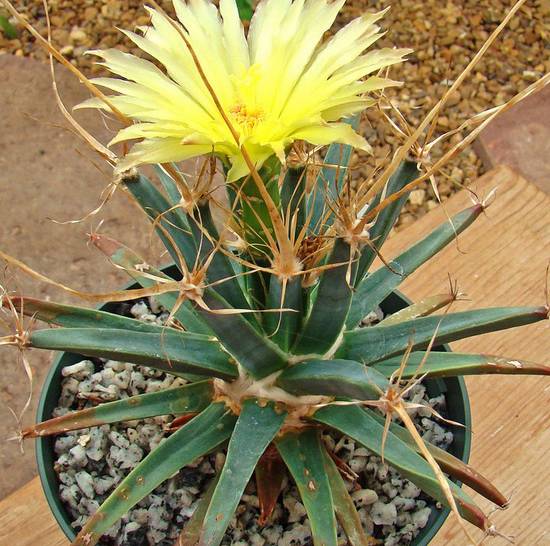
Its body is formed by long triangular projections called tubercles, which resemble agave leaves. These bluish-green to gray-green tubercles can reach up to 15 cm in length and end in areoles bearing long, fine, flexible spines, yellowish to brownish in color. With age, the base becomes woody, forming a short thick trunk that enhances its “mini desert tree” appearance.
In cultivation, Leuchtenbergia principis is appreciated for its exotic aesthetic and its flowering: large bright yellow funnel-shaped flowers appear in summer, often after several years of patient growth.
In its natural habitat, it grows on rocky limestone hills, often in full sun, sometimes alongside other cacti and agaves. The soil is extremely well-draining, mainly composed of gravel, sand, and limestone rock.
🌞 Direct sun: minimum 6 to 8 hours per day.
🌤️ Acclimation: young plants must be gradually introduced to full sun to prevent burns.
⚠️ Lack of light causes elongated tubercles and loss of color.
🌱 Spring / summer: water every 3 to 4 weeks, only when the substrate is dry.
🍂 Autumn / winter: greatly reduce or stop watering, especially if temperatures are below 10°C.
⚡ Tip: light watering at the end of winter may stimulate summer flowering.
🌞 Ideal: 20 to 32°C.
❄️ Minimum: 5°C if soil is dry, avoid freezing temperatures.
🏠 Overwintering: dry, bright, and preferably cool to encourage flowering.
🪨 Recommended substrate: cactus mix with 50% mineral materials such as perlite or pozzolana.
🌸 Period: summer.
🎨 Color: bright yellow, sometimes with orange shades in the center.
🕑 Duration: each flower lasts a few days.
💡 To stimulate: full sun, cool dry winter, and cactus fertilizer in spring.