Echinofossulocactus Coptonogonus
The Echinofossulocactus Coptonogonus is a striking Mexican cactus species, still little known to the general public but highly appreciated by enthusiasts for its sinuous ribs and decorative spines. This cactus, whose name may seem complex, is also sometimes classified in the genus Stenocactus under the name Stenocactus coptonogonus, due to the close morphological similarity between the two genera.
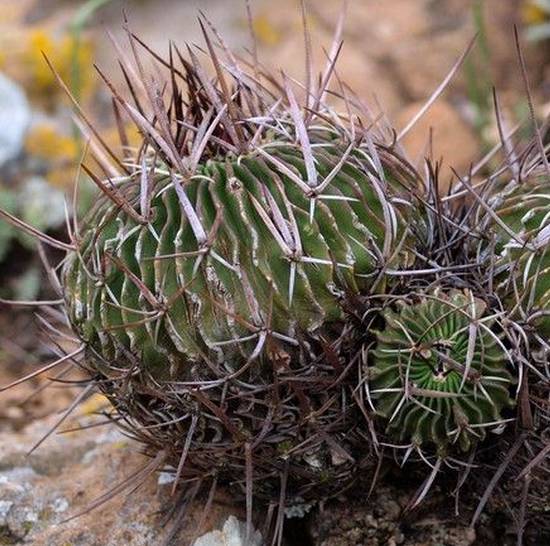
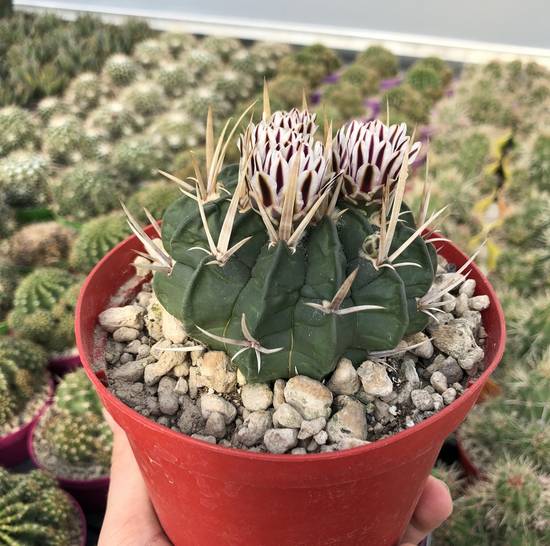
Its shape is globular to slightly cylindrical with age, rarely exceeding 10 to 15 cm in height, but it can form a dense rosette over time. Its body is bright green, crossed by numerous very fine and wavy ribs, giving it a unique ribbed appearance. The areoles bear fine radial spines, straight or slightly curved, generally beige to light brown.
This cactus is native to the states of San Luis Potosí and Zacatecas in Mexico, where it grows between 1,200 and 2,000 meters in altitude. It settles on rocky slopes, often in full sun, in mineral soils rich in limestone. Its scientific name comes from the Greek fossulus (small groove) and cactus, referring to its numerous sinuous ribs.
The Echinofossulocactus Coptonogonus enjoys light and thrives in bright conditions:
🌞 Outdoor: Direct sun for 4 to 6 hours per day. In summer, light shade during the hottest hours can prevent burns.
🏡 Indoor: Near a well-exposed window (south or west), or under a grow light if natural light is insufficient.
🌞 Outdoor: Direct sun for 4 to 6 hours per day. In summer, light shade during the hottest hours can prevent burns.
🏡 Indoor: Near a well-exposed window (south or west), or under a grow light if natural light is insufficient.
Properly controlled watering is crucial to keep this cactus healthy:
🌱 Spring / Summer: Water generously once every 2 to 3 weeks, allowing the substrate to dry completely.
🍂 Autumn / Winter: Gradually reduce and then stop watering. Excess water during this period is dangerous.
💡 Tip: Never let water stagnate in the saucer.
🌱 Spring / Summer: Water generously once every 2 to 3 weeks, allowing the substrate to dry completely.
🍂 Autumn / Winter: Gradually reduce and then stop watering. Excess water during this period is dangerous.
💡 Tip: Never let water stagnate in the saucer.
This cactus is quite resilient, but certain precautions are necessary:
🔥 Ideal: Between 20 and 30°C during growth.
❄️ Wintering: Tolerates drops to 5°C if kept dry. Does not tolerate cold humidity.
🔥 Ideal: Between 20 and 30°C during growth.
❄️ Wintering: Tolerates drops to 5°C if kept dry. Does not tolerate cold humidity.
A well-draining substrate is essential:
🪨 Recommended mix: 50% cactus potting soil + 25% pozzolana + 25% perlite or coarse sand
🪨 Recommended mix: 50% cactus potting soil + 25% pozzolana + 25% perlite or coarse sand
The Echinofossulocactus Coptonogonus offers abundant flowering:
🗓️ Period: March to June
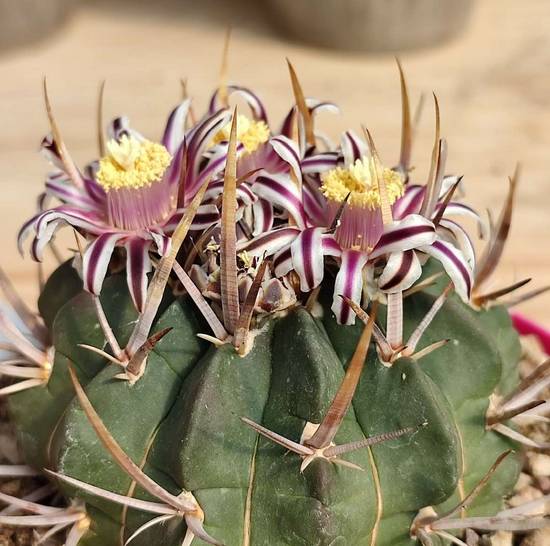
🎨 Flowers: Light pink, magenta, sometimes white with stripes
💡 Tip: To stimulate flowering, respect a winter dormancy period and apply a mild fertilizer in spring.
🗓️ Period: March to June
🎨 Flowers: Light pink, magenta, sometimes white with stripes
💡 Tip: To stimulate flowering, respect a winter dormancy period and apply a mild fertilizer in spring.
FAQ - Echinofossulocactus Coptonogonus
What is the best location to grow an Echinofossulocactus Coptonogonus?
Bright light is essential, indoors near a well-exposed window or outdoors under filtered sun. Too much shade elongates the stems and reduces flowering.
What is the ideal watering frequency for Echinofossulocactus Coptonogonus?
Water every 2 to 3 weeks in summer, never while the substrate is still moist. In winter, stop completely. Use a well-draining substrate such as Algoflash potting soil.
Can Echinofossulocactus Coptonogonus be fertilized?
Yes, every 30 to 45 days from March to August. Choose a gentle fertilizer such as Or Brun cactus.
How large does an adult Echinofossulocactus Coptonogonus grow?
It generally reaches 10 to 15 cm in height and width at maturity, forming a beautiful dense rosette.
Can Echinofossulocactus Coptonogonus be grown in a pot for its entire life?
Yes, it thrives in a pot. Repot every 3 to 4 years with Fertiligène special cactus substrate.
Is this cactus suitable for beginners?
Absolutely. It is undemanding if watering and exposure guidelines are respected.
What is the lifespan of an Echinofossulocactus Coptonogonus?
Several decades in cultivation if properly cared for. It may produce lateral offsets with age.
What summer exposure prevents sunburn?
Place it outdoors with light shade in the early afternoon, especially during heatwaves. It appreciates bright mornings.
Can Echinofossulocactus Coptonogonus be combined with other plants?
Yes, especially with other Mexican cacti such as Thelocactus or Mammillaria. Ensure a shared well-draining substrate.
Where can I buy suitable products for this cactus?
You can use Or Brun pozzolana mulch to improve drainage, or complement your substrate with Algoflash granules.