Cyphostemma Uter
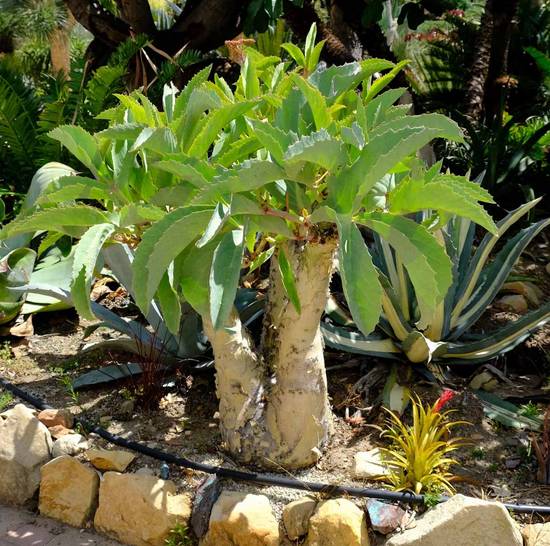
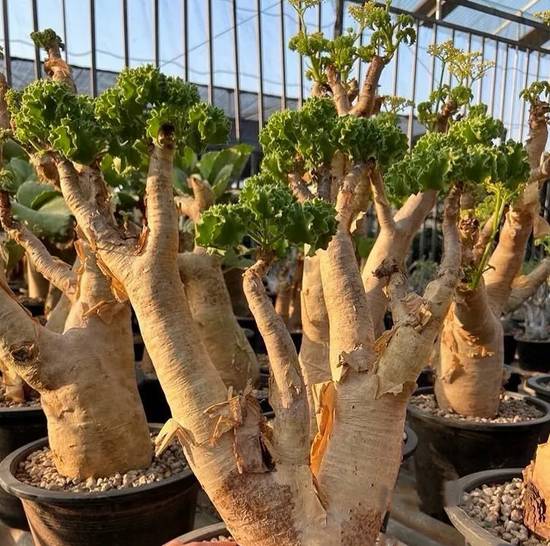
The Cyphostemma Uter is a spectacular succulent plant, still relatively rare but highly valued by collectors. It belongs to the Vitaceae family and is characterized by a thick, swollen trunk known as a caudex, which serves as a water reserve during dry periods.
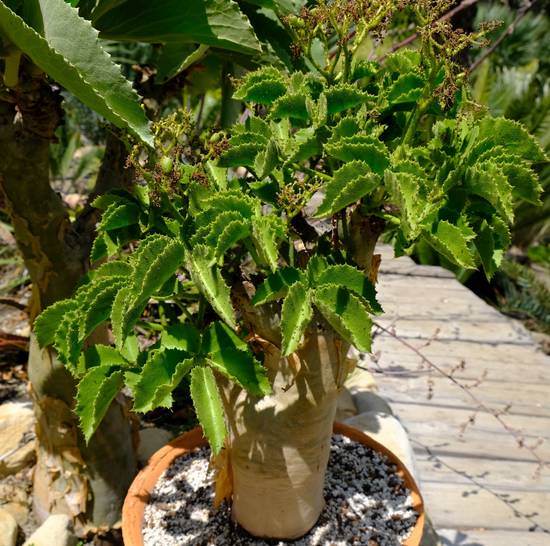
Its unique, almost sculptural appearance makes it a prime choice for caudiciform plant enthusiasts. The caudex can be rounded to ovoid, with corky, gray-brown bark. During the growing season, long leafy stems emerge, bearing large, bright green leaves, often trilobed, which fall during the dormant period.
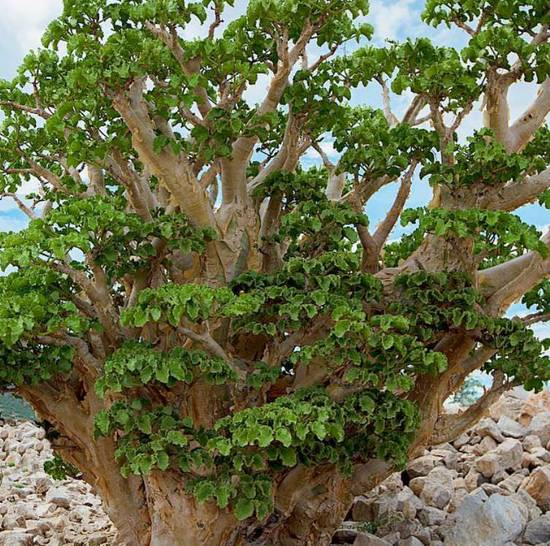
The Cyphostemma Uter is native to southern Africa, particularly Namibia and northern South Africa. It grows in arid to semi-arid regions, often in rocky, well-drained areas, where it benefits from strong sunlight and significant temperature fluctuations. These conditions have allowed it to develop excellent drought resistance.
For proper development, the Cyphostemma Uter requires bright light for much of the day.
🌤️ Outdoors: Prefers full sun or light partial shade in very hot regions.
🏡 Indoors: Place near a south- or southwest-facing window. Insufficient light results in pale foliage or slowed growth.
🌤️ Outdoors: Prefers full sun or light partial shade in very hot regions.
🏡 Indoors: Place near a south- or southwest-facing window. Insufficient light results in pale foliage or slowed growth.
Like all caudex plants, the Cyphostemma Uter requires moderate, well-spaced watering.
💦 Spring / summer: Water only when the substrate is completely dry. Generally, watering every 10 to 15 days is sufficient.
❄️ Autumn / winter: When it sheds its leaves, it enters dormancy. Stop watering completely to prevent caudex rot.
💦 Spring / summer: Water only when the substrate is completely dry. Generally, watering every 10 to 15 days is sufficient.
❄️ Autumn / winter: When it sheds its leaves, it enters dormancy. Stop watering completely to prevent caudex rot.
The Cyphostemma Uter prefers warm climates but can tolerate slight drops in temperature.
🌡️ Ideal: Between 18 and 30 °C.
❄️ Lower limit: Tolerates down to 5 °C occasionally if the substrate is completely dry. It is best overwintered indoors when temperatures fall below 10 °C.
🌡️ Ideal: Between 18 and 30 °C.
❄️ Lower limit: Tolerates down to 5 °C occasionally if the substrate is completely dry. It is best overwintered indoors when temperatures fall below 10 °C.
A very well-draining soil is essential to avoid excess moisture around the caudex.
🪨 Recommended mix: 40% cactus potting soil, 30% perlite, and 30% pozzolana or coarse sand.
⛏️ Tip: Add a drainage layer at the bottom of the pot to protect roots and the caudex.
🪨 Recommended mix: 40% cactus potting soil, 30% perlite, and 30% pozzolana or coarse sand.
⛏️ Tip: Add a drainage layer at the bottom of the pot to protect roots and the caudex.
The flowering of the Cyphostemma Uter is discreet but charming.
📅 Period: Summer, starting in June.
🌼 Flowers: Small, greenish to pale yellow, in loose clusters.
🍒 Fruits: Small red berries, decorative but not edible.
📅 Period: Summer, starting in June.
🌼 Flowers: Small, greenish to pale yellow, in loose clusters.
🍒 Fruits: Small red berries, decorative but not edible.
FAQ - Cyphostemma Uter
How should Cyphostemma Uter be watered without damaging its caudex?
Water only when the soil is completely dry at depth. In summer, watering every two weeks is sufficient. In winter, stop watering entirely to prevent caudex rot.
What substrate is best suited for Cyphostemma Uter?
It prefers a very well-draining soil. A mix of cactus soil, perlite, and pumice ensures proper aeration and drainage.
Why is my Cyphostemma Uter losing its leaves?
Leaf drop is normal in autumn or winter. The plant enters dormancy to better withstand dry conditions. Stop watering during this period.
Can Cyphostemma Uter live indoors?
Yes, it can be grown indoors if provided with very good light. Place it near a well-exposed window and avoid excess humidity.
How should Cyphostemma Uter be fertilized in a pot?
During the growing season, add a monthly dose of succulent fertilizer to support development.
Does Cyphostemma Uter produce fruit?
Yes, it can produce small decorative red berries after summer flowering. However, these fruits are not edible.
Should Cyphostemma Uter be pruned?
Pruning is not essential. Simply remove damaged leaves or dry stems to maintain a clean shape and support the plant’s health.
What is the difference between Cyphostemma Uter and Cyphostemma Juttae?
Cyphostemma Juttae has a more elongated trunk and a more upright silhouette, while Cyphostemma Uter develops a more compact, globular caudex with lower branching.
Can Cyphostemma Uter be easily propagated?
Propagation is usually done by seed and requires patience. Cuttings are difficult and rarely practiced because the caudex does not easily reform.
My Cyphostemma Uter is becoming soft, what should I do?
A soft caudex is often a sign of overwatering. Place the plant in a warm, dry, bright location and stop watering completely for several weeks to allow recovery.