Cyphostemma Juttae
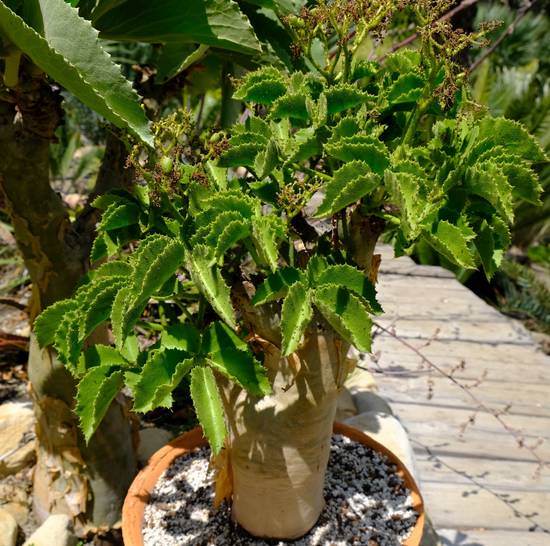
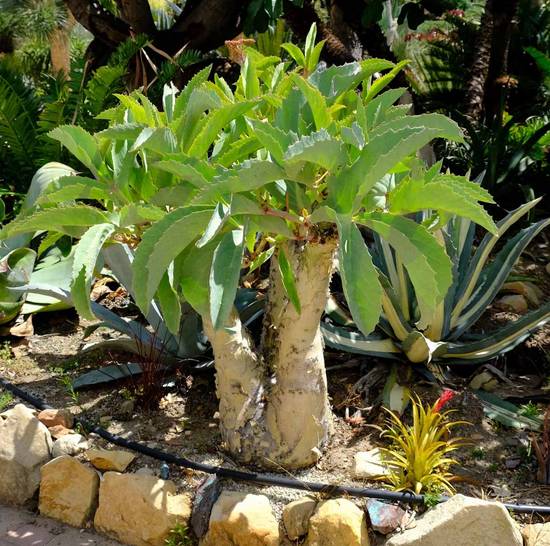
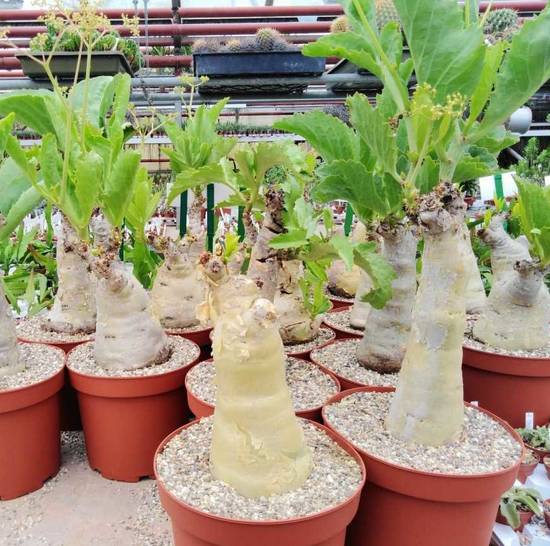
The Cyphostemma Juttae — also known as the "Namibian Grape" — is an exceptional succulent plant prized for its thick trunk and prehistoric appearance. Native to southern Africa, this caudiciform plant (with a swollen trunk base) belongs to the Vitaceae family, the same family as grapevines. It adds an exotic, sculptural touch to any dry garden or rare plant collection.
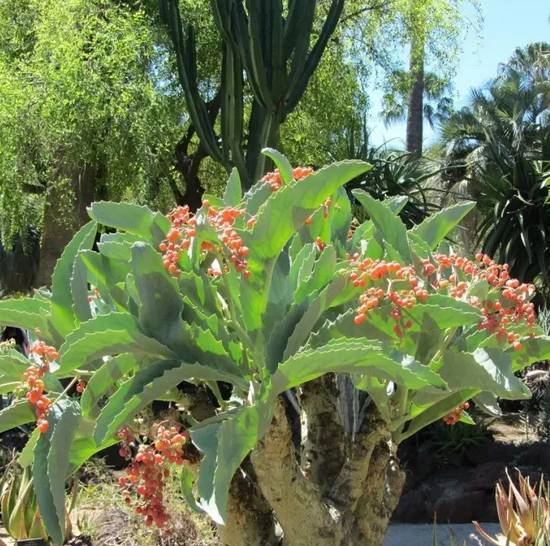
This plant develops a thick, sometimes massive trunk, covered with bark that flakes with age. Its deciduous leaves, light green with bluish tones, are large, fleshy, and palmate. In summer, it may produce small, inconspicuous yellow flowers, followed by clusters of very decorative red fruits (but toxic). Growth is slow, but over the years each specimen becomes a true living sculpture.
In nature, it benefits from intense daytime heat and cooler nights. This thermal contrast stimulates its metabolism and strengthens its caudex. It is perfectly adapted to dry climates with a clearly defined rainy season.
☀️ Outdoors: Full sun or bright partial shade in very hot regions. It tolerates intense direct sunlight but appreciates some shade during the hottest summer hours.
🏠 Indoor cultivation: Place it in front of a south- or west-facing window. It thrives in a veranda or greenhouse.
💦 Spring / summer: Water about every 3 weeks, only when the substrate is completely dry. Gradually resume watering after winter dormancy.
❄️ Autumn / winter: Stop watering during leaf drop. The plant enters full dormancy.
⚠️ Important: Too much water is fatal. Excess moisture causes caudex rot. Drier is always better than too wet!
🌡️ Ideal: 20 to 35 °C during the growing season.
❄️ Minimum: Can tolerate 5 to 7 °C if kept completely dry, but does not tolerate frost.
🛑 Tip: Bring it indoors as soon as temperatures drop below 10 °C.
🪨 Ideal mix: 40% cactus potting soil, 30% perlite, and 30% pozzolana.
🪴 Tip: Slightly elevate the pot to further improve water drainage.
📅 Period: Late summer to early autumn on mature specimens.
🌺 Flowers: Small, yellow-green.
🍇 Fruits: Round red berries, very decorative but toxic. Do not consume.
💡 Tip: Good light and a dry winter period encourage abundant flowering.