Copiapoa Krainziana
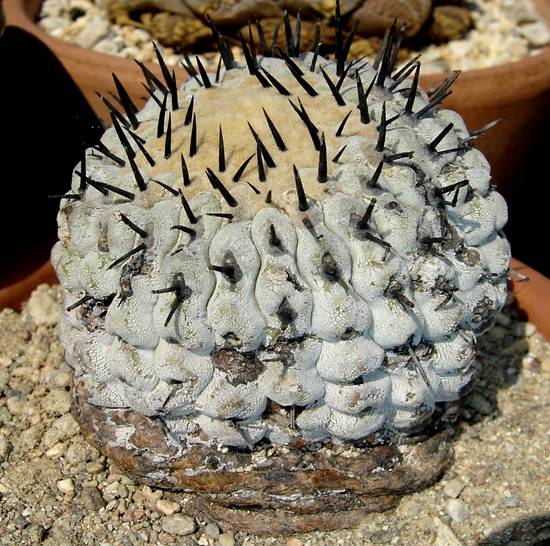
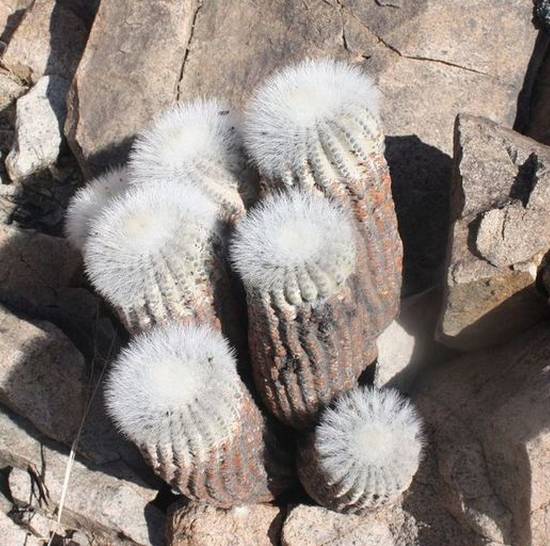
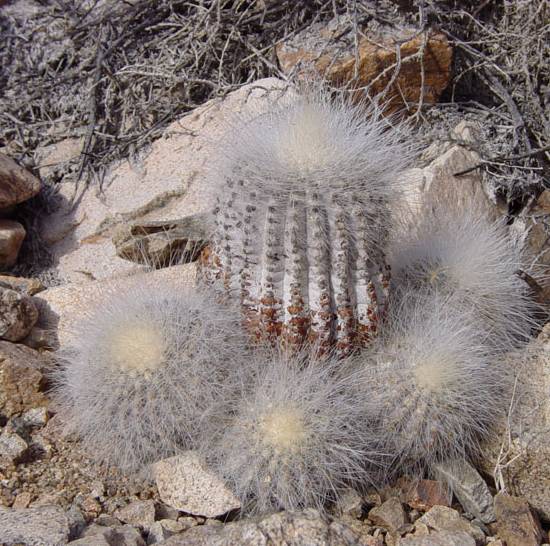
The Copiapoa Krainziana is a remarkable cactus with a globular body tinted bluish grey and covered with a protective waxy bloom. Native to the desert regions of northern Chile, it is perfectly adapted to the arid and windy conditions of coastal cliffs near the Pacific Ocean.
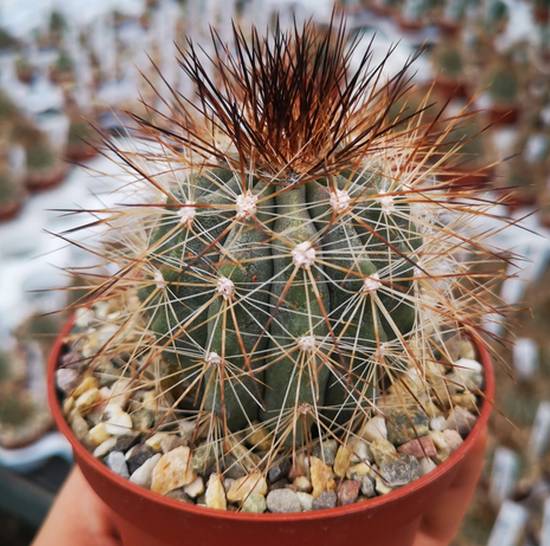
Its ribs are deep and marked with fine woolly areoles that produce strong black to grey spines, sometimes slightly curved. With age, it can reach 15 to 30 cm in diameter and may produce offsets at the base.
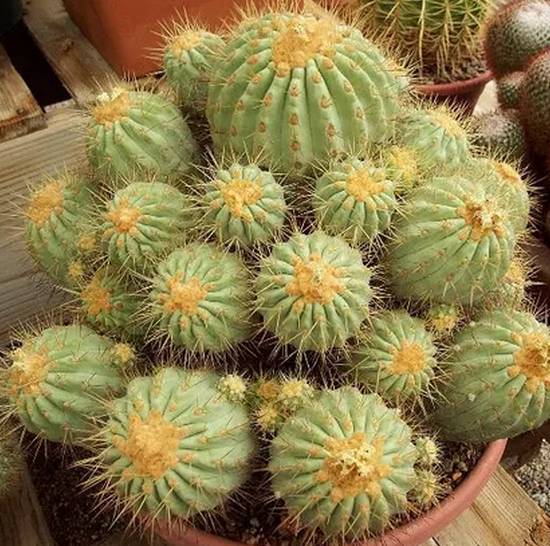
This cactus produces yellow flowers at the apex, creating a striking contrast with its silvery body. Its rarity in cultivation makes it highly sought after by collectors.
The Copiapoa Krainziana is endemic to the Atacama Desert, in the Coquimbo region of Chile.
It grows under extreme conditions on poor, rocky soils exposed to dry winds and intense sunlight. Coastal fog (camanchaca) provides the minimal moisture required for its survival.
It grows under extreme conditions on poor, rocky soils exposed to dry winds and intense sunlight. Coastal fog (camanchaca) provides the minimal moisture required for its survival.
Good light is essential for its slow but steady growth:
🔆 Bright light to full sun: At least 6 hours of direct sunlight per day.
⛱️ Protection: Light midday shade in summer can prevent sunburn, especially on young plants.
🏠 Indoors: Place near a south- or west-facing window.
🔆 Bright light to full sun: At least 6 hours of direct sunlight per day.
⛱️ Protection: Light midday shade in summer can prevent sunburn, especially on young plants.
🏠 Indoors: Place near a south- or west-facing window.
This cactus is extremely sensitive to stagnant moisture:
🌱 Spring / summer: Water every 3 to 4 weeks, allowing the substrate to dry completely.
❄️ Winter: Almost no watering. Cold moisture must be avoided.
🌱 Spring / summer: Water every 3 to 4 weeks, allowing the substrate to dry completely.
❄️ Winter: Almost no watering. Cold moisture must be avoided.
The Copiapoa Krainziana enjoys dry heat and tolerates cool temperatures if kept dry:
🌡️ Optimal range: 20 to 30°C.
❄️ Minimum tolerance: 2 to 5°C if completely dry. Frost is not tolerated.
🏠 Tip: A cool, bright winter rest at 8–10°C encourages flowering.
🌡️ Optimal range: 20 to 30°C.
❄️ Minimum tolerance: 2 to 5°C if completely dry. Frost is not tolerated.
🏠 Tip: A cool, bright winter rest at 8–10°C encourages flowering.
A mineral, airy and poor substrate is essential:
🪴 Ideal mix: 50% cactus soil + 30% perlite + 20% gravel or coarse sand.
🪴 Ideal mix: 50% cactus soil + 30% perlite + 20% gravel or coarse sand.
Rare but possible, the flowering of this cactus is always a special event:
📅 Season: Spring to early summer, depending on sunlight.
🌼 Flower: Bright yellow, small, bell-shaped, emerging from the apex.
📅 Season: Spring to early summer, depending on sunlight.
🌼 Flower: Bright yellow, small, bell-shaped, emerging from the apex.
FAQ - Copiapoa Krainziana
What is the origin of Copiapoa Krainziana?
This cactus is native to the Atacama Desert in Chile, in the Coquimbo region. It grows on rocky terrain exposed to coastal fog.
Can Copiapoa Krainziana be grown indoors?
Yes, provided it receives intense light: preferably full south exposure. In winter, a grow light can compensate for the lack of natural light.
How often should Copiapoa Krainziana be watered?
Water every 20 to 30 days in summer, and not at all in winter. Use a very mineral substrate to prevent stagnant moisture.
What is the best type of soil for Copiapoa Krainziana?
A poor, dry, mineral soil. Mix cactus potting soil, perlite, and gravel or pumice. Add a layer of drainage at the bottom.
How can I encourage Copiapoa Krainziana to bloom?
Respect a cool winter rest period (5–10°C) and provide a cactus fertilizer in spring.
Can Copiapoa Krainziana tolerate frost?
No. It can tolerate 2 to 5°C if the substrate is dry, but it does not survive wet frost.
Is this a cactus for beginners?
Not really. It requires very controlled watering, strong light, and proper wintering. It is an ideal cactus for experienced growers.
When should Copiapoa Krainziana be repotted?
Every 4 to 5 years. Repot in spring with a mineral substrate. Do not water immediately after repotting.
What are the common diseases of Copiapoa Krainziana?
Root rot if the soil is too wet. Best prevention: well-draining substrate and a pot with drainage holes.
Can Copiapoa Krainziana be propagated?
Yes, by seed or sometimes by basal offsets. Seeds germinate slowly but produce robust plants in the long term.