Cereus Peruvianus Monstruoso

Cereus Peruvianus Monstruoso

Cereus Peruvianus Monstruoso

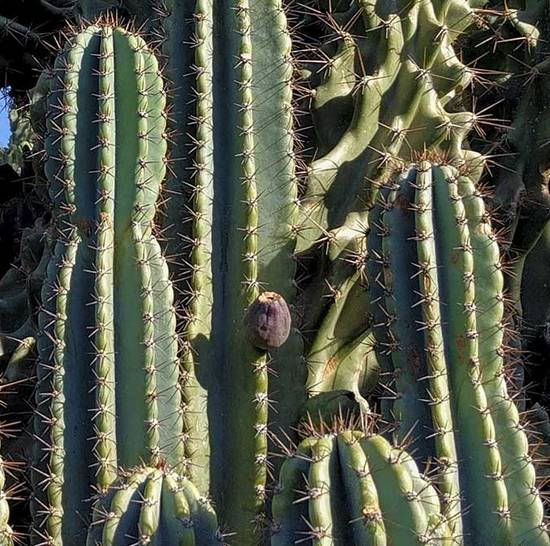
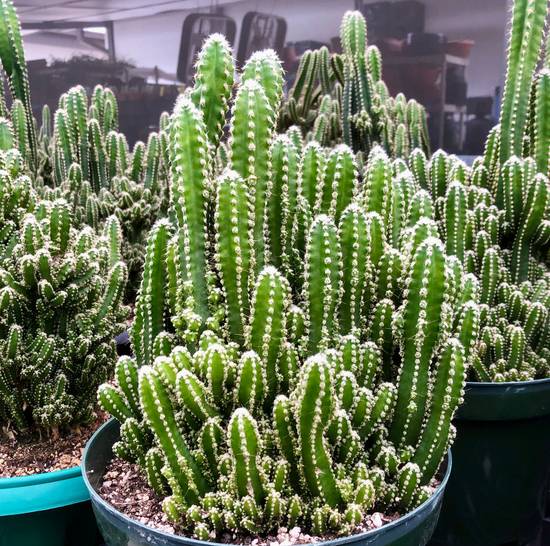
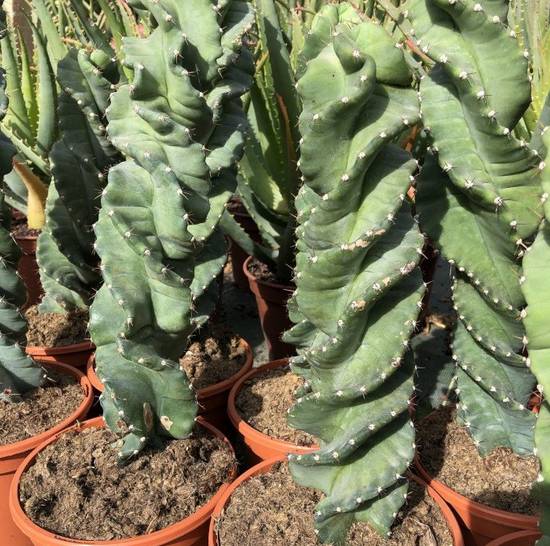
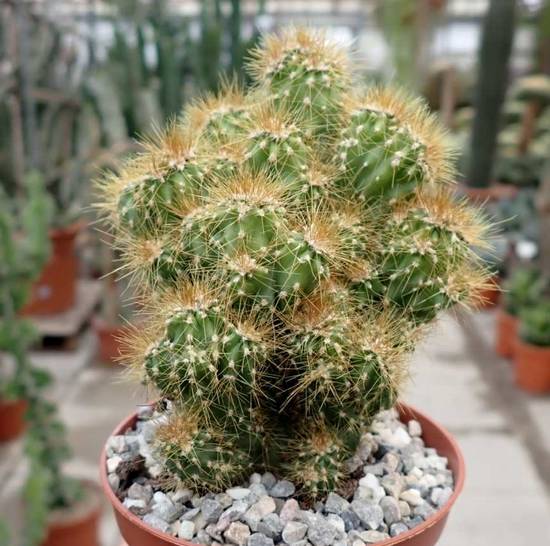
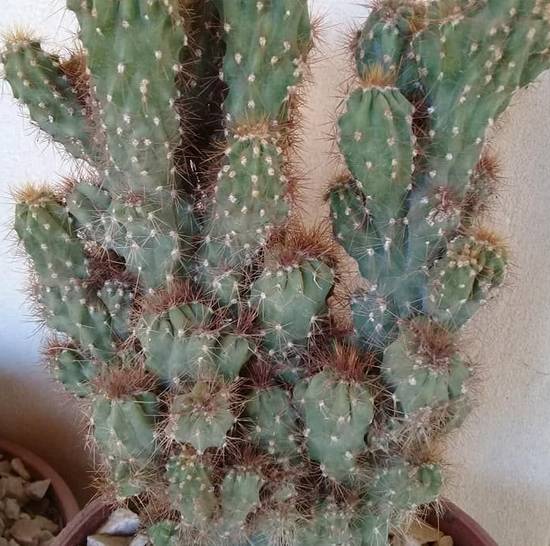
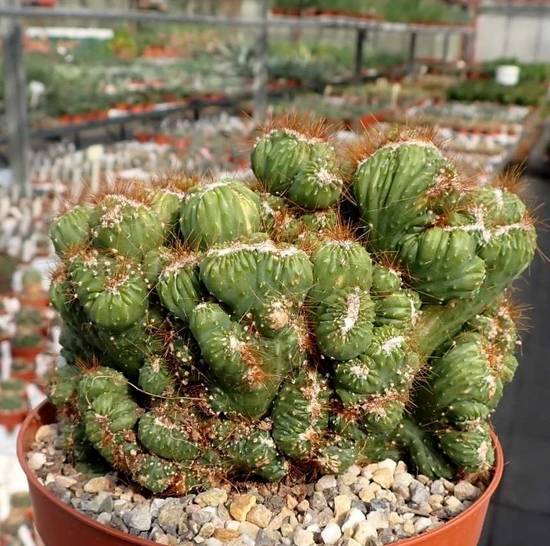
The Cereus Peruvianus Monstruoso is a fascinating form of the famous South American candelabra cactus. This monstrous variant is distinguished by its irregular and chaotic growth, giving it a twisted, sculptural silhouette that is highly appreciated by collectors.

Unlike the classic form, whose columns are straight and regular, the Monstruoso develops stems with unpredictable curves, forming bumps, folds and excrescences that make each specimen unique. Its color ranges from bluish green to dark green, often topped with fine white areoles bearing small, non-aggressive spines.

It is a relatively fast-growing plant for a cactus, especially when conditions are right. It can reach several meters outdoors, while maintaining a controlled size in a pot. Its striking stature and almost extraterrestrial appearance make it a centerpiece in any collection.

The Cereus Peruvianus is native to the arid regions of South America, mainly in Brazil, Paraguay and Uruguay. The monstrous form is a cultivated mutation propagated in nurseries, selected for its spectacular ornamental appearance.
The Cereus Peruvianus Monstruoso loves light:

🌞 Outdoors: Full direct sun, ideally more than 6 hours per day.

🌤️ Indoors: Place it in front of a very bright south- or west-facing window.

⚠️ Protection: During heatwaves, light shading during the hottest hours can prevent burns on new growth.
This cactus, although monstrous, is not demanding when it comes to watering.

💦 Spring / summer: Water every 15 to 20 days, allowing the substrate to dry completely between waterings.

❄️ Autumn / winter: Almost completely stop watering. Keeping it dry promotes proper dormancy.
It is a relatively tolerant cactus that enjoys warmth.

🌡️ Optimal range: Between 20°C and 30°C.

❄️ Limit: Can tolerate short periods at 2 to 5°C if completely dry.

🏠 Wintering: A bright, frost-free location is essential when temperatures drop below 8°C.
An airy substrate is essential for this variety.

🪨 Ideal mix: 50% cactus soil + 25% perlite + 25% pumice or coarse sand.
The flowering of the Cereus Peruvianus Monstruoso is impressive but rarely observed in pots.

🌼 Flowers: Large, white, nocturnal and very fragrant.

🕑 Period: In summer, only on mature, vigorous plants.
FAQ - Cereus Peruvianus Monstruoso

How should I water a Cereus Peruvianus Monstruoso in summer?
During summer, water your Cereus Peruvianus Monstruoso every 15 to 20 days. Make sure the substrate dries completely between waterings to prevent root rot.
Can Cereus Peruvianus Monstruoso live indoors?
Yes, provided it is placed in a very bright space, ideally near a south-facing window. Supplemental artificial lighting may be useful in winter.
Should Cereus Peruvianus Monstruoso be repotted often?
Repotting every 2 to 3 years is sufficient, using a well-suited substrate and a drainage layer at the bottom of the pot.
Does Cereus Peruvianus Monstruoso bloom often in a pot?
Very rarely. The large white flowers mainly appear on mature plants grown in the ground or in large pots, with good sunlight and a marked winter rest.
What is the maximum height of Cereus Peruvianus Monstruoso?
In the ground, it can reach 2 to 4 meters. In a pot, its size is limited, but its growth remains vigorous under good conditions.
How should I fertilize Cereus Peruvianus Monstruoso?
Use a suitable fertilizer in spring and summer, at low doses, every 4 to 6 weeks.
Is Cereus Peruvianus Monstruoso cold-hardy?
It tolerates temperatures down to 2–5°C if the substrate is perfectly dry. Below 5°C, it is best to bring it indoors.
How can I recognize a Cereus Peruvianus Monstruoso?
Its twisted and irregular shape is characteristic. It has bumpy stems, crests, outgrowths, with white areoles and small spines.
What pot should I choose for a Cereus Peruvianus Monstruoso?
Choose a wide and deep pot with good drainage. A terracotta pot helps remove excess moisture.
Can I grow it with other cacti?
Yes, especially with other species that enjoy light and dry conditions. Just make sure to space the plants sufficiently to avoid root competition.