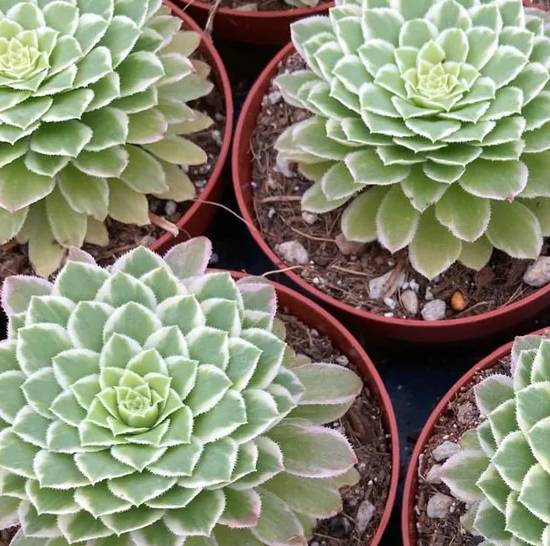
Aeonium Emerald Ice

Aeonium Emerald Ice
Aeonium Emerald Ice
Aeonium Emerald Ice

Aeonium Emerald Ice

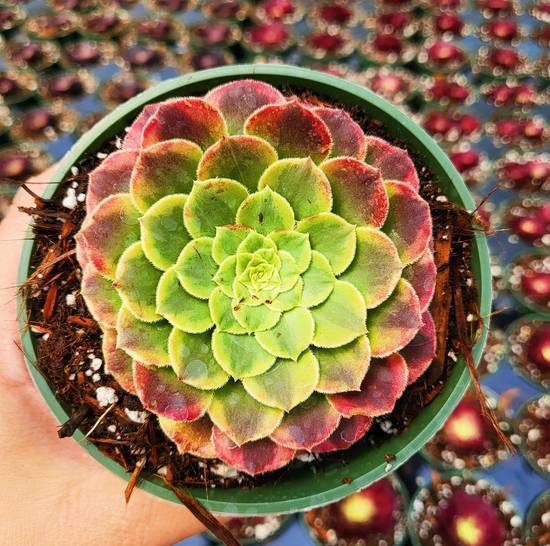
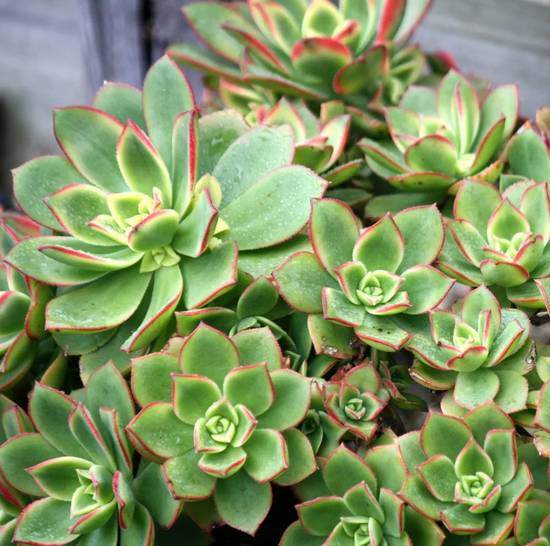
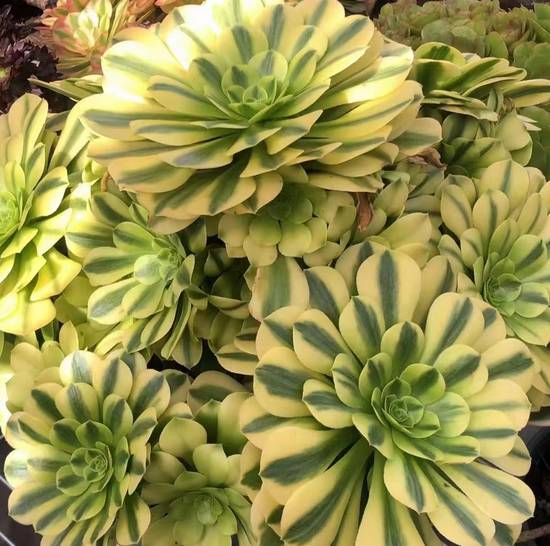
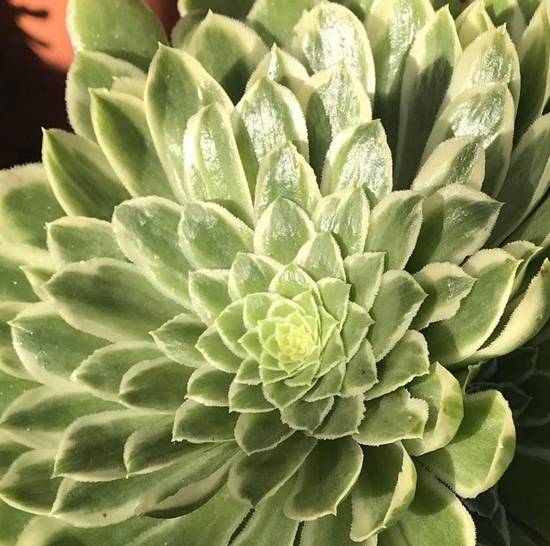
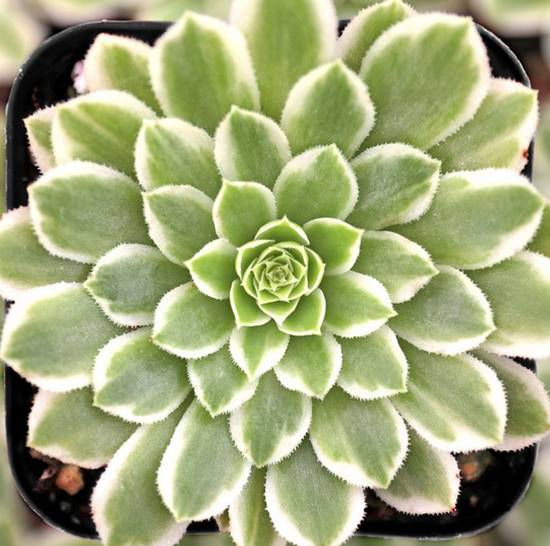
The Aeonium Emerald Ice is a fascinating succulent that immediately draws attention with its exceptional color contrast. This rare horticultural variety features compact rosettes with fleshy bright green leaves delicately edged in creamy white. This pale, almost pearly margin enhances the perfect geometry of its rosettes and gives the plant a luminous, almost frosted appearance — hence its name "Emerald Ice".

Highly appreciated for its orderly growth and graphic habit, the Aeonium Emerald Ice is ideal for potted gardens, rockeries, or even as a houseplant in a bright environment. It forms branched clumps that can reach 30 to 50 cm in diameter depending on growing conditions. Its elegant appearance makes it a perfect candidate for contemporary or Mediterranean arrangements.

Easy to care for, it is nevertheless sensitive to excess water and prefers a well-draining substrate. During hot periods, it may slow its growth to protect itself. It offers superb visual contrast when paired with dark or purple-toned plants.

The Aeonium Emerald Ice is a recent horticultural selection chosen for the exceptional beauty of its variegated leaves. It likely descends from Aeonium Haworthii or similar hybrids. These plants originate from the Canary Islands, North Africa and Macaronesia, where they thrive in semi-arid areas with intense sunlight.
To reveal its full decorative potential, bright light is essential:

🌞 Bright light to gentle direct sun: Place outdoors in full sun (avoid peak summer burn) or behind a well-exposed window.

🌤️ Bright indoors: It adapts well if it receives at least 5 to 6 hours of light per day.
Like most Aeoniums, this variety requires thoughtful watering:

💧 Spring / autumn: Active growth period. Water when the substrate is dry several centimeters deep.

☀️ Summer: It may enter summer dormancy. Greatly reduce watering, especially if rosettes begin to close.

❄️ Winter: Moderate watering depending on temperature. If kept cool, stop completely.
Aeonium Emerald Ice enjoys warmth but fears frost:

🌡️ Ideal range: 18 to 25 °C.

❄️ Minimum: Do not expose below 2 to 5 °C.
🪨 A light and well-draining soil is essential:

Use cactus substrate mixed with 30–50% perlite. A top layer of pumice stone ensures optimal drainage.
Aeonium Emerald Ice rarely flowers indoors, but blooms are remarkable:

🌼 Season: Late winter to early spring on mature plants.

🌸 Form: Pale yellow or cream star-shaped panicles. The mother rosette dies after flowering, but offsets replace it.
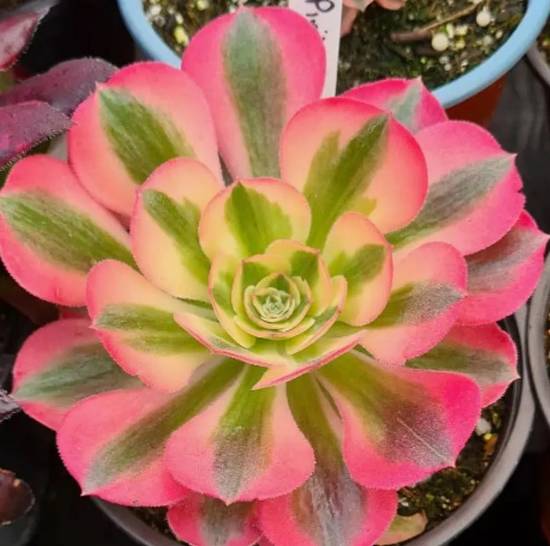
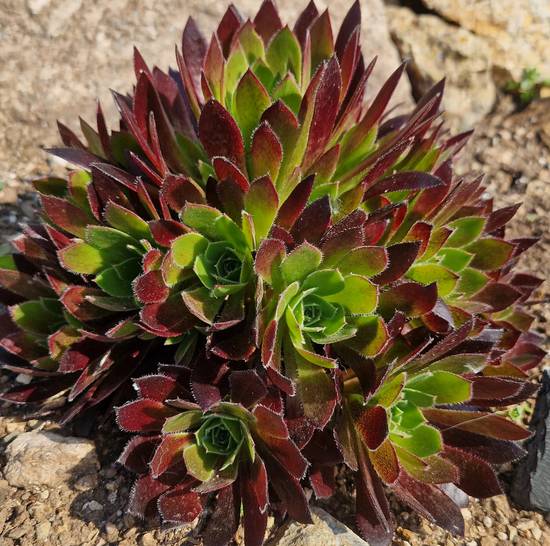
FAQ - Aeonium Emerald Ice

How should Aeonium Emerald Ice be cared for indoors?
Place it in a bright location near a well-exposed window. Avoid dark rooms to preserve its compact shape and vibrant colors.
What type of substrate is best for Aeonium Emerald Ice?
A cactus substrate mixed with perlite and topped with pumice ensures perfect drainage.
Does Aeonium Emerald Ice tolerate frost?
No, this variety is sensitive to cold. Bring it indoors as soon as temperatures fall below 5 °C.
When should Aeonium Emerald Ice be repotted?
Repot in spring, about every two years, to refresh the substrate and encourage healthy growth.
How should Aeonium Emerald Ice be watered in summer?
During hot periods, the plant may slow its growth. Reduce watering to a strict minimum, especially if the rosettes begin to close.
Is flowering frequent in Aeonium Emerald Ice?
Flowering is relatively rare and usually occurs on mature plants, generally in spring.
Can Aeonium Emerald Ice be easily propagated?
Yes, by taking cuttings from offsets or stems. Let the cut dry for a few days before planting.
What should you do if Aeonium Emerald Ice turns green?
A lack of light can reduce its variegation. Move it to a brighter location to restore the contrast.
Should Aeonium Emerald Ice be fertilized?
Yes, once a month during the growing season with a suitable fertilizer.
How can you prevent overwatering Aeonium Emerald Ice?
Use a pot with drainage holes, well-draining substrate, and water only when the soil is dry deep down.