Stapelia Hirsuta
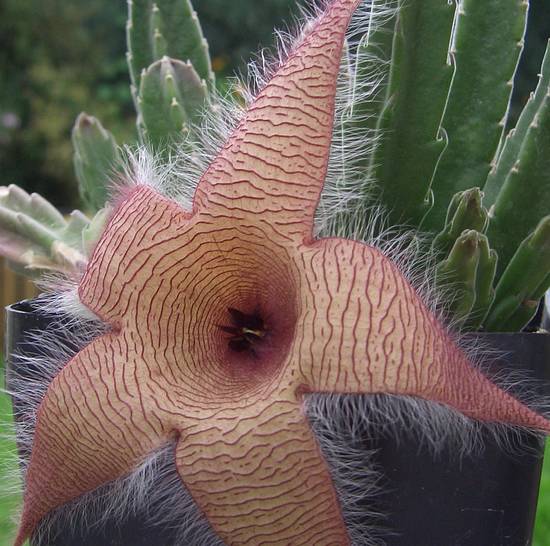
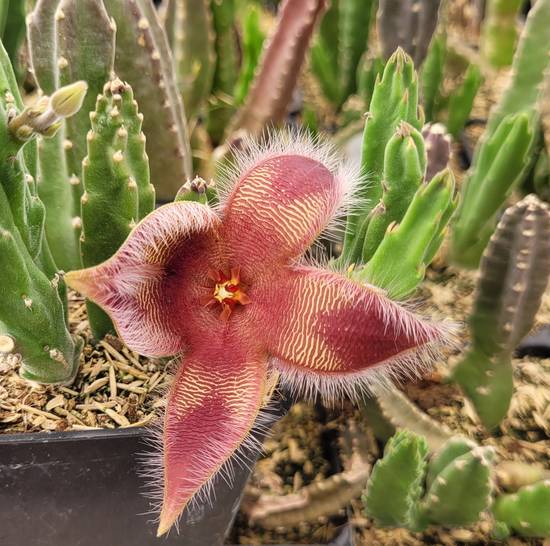
The Stapelia Hirsuta is a fascinating succulent belonging to the Apocynaceae family, famous for its spectacular and atypical flowering. Native to southern Africa, this plant intrigues as much as it attracts, notably thanks to its star-shaped flowers covered with hairs, earning it the nickname “starfish flower” or “carrion flower”.
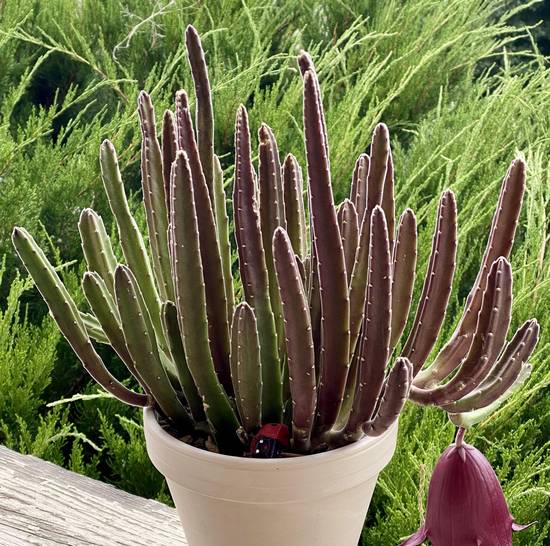
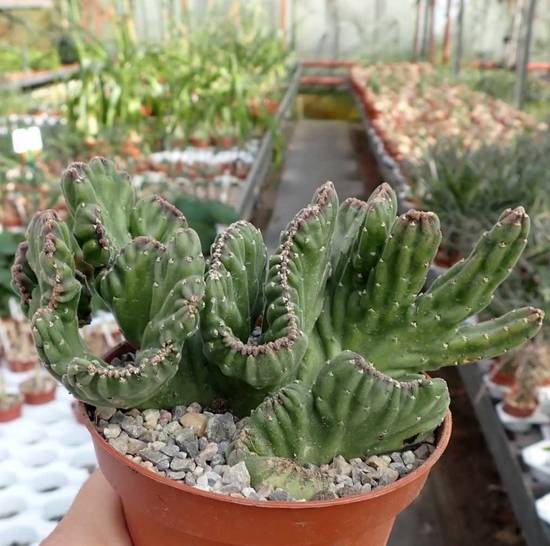
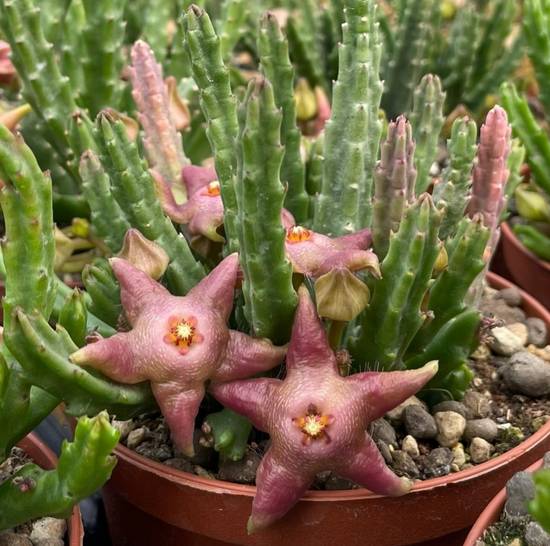
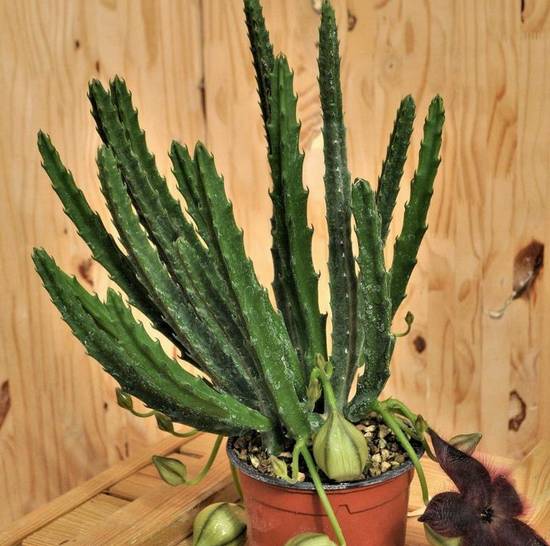
The Stapelia Hirsuta stands out with its fleshy stems, upright to slightly trailing, with a quadrangular section. These green to grey-green stems are equipped with small soft teeth along the edges, but do not have aggressive spines, making it easy to handle.
Unlike many succulents, this plant does not have leaves. It performs photosynthesis directly through its stems, a typical adaptation of arid environments.
The Stapelia Hirsuta is native to southern Africa, notably South Africa.
It grows in arid areas, on rocky and very draining soils, often exposed to strong sunlight.
It grows in arid areas, on rocky and very draining soils, often exposed to strong sunlight.
The Stapelia Hirsuta appreciates abundant but slightly filtered light, close to its natural conditions:
🌞 Bright light to indirect sun: ideal to promote compact growth and stimulate flowering.
🌤️ Moderate direct sun: tolerated in the morning or late in the day, beneficial for flower bud formation.
🏠 Indoor cultivation: place it near a south or west-facing window with filtered light.
🌞 Bright light to indirect sun: ideal to promote compact growth and stimulate flowering.
🌤️ Moderate direct sun: tolerated in the morning or late in the day, beneficial for flower bud formation.
🏠 Indoor cultivation: place it near a south or west-facing window with filtered light.
The Stapelia Hirsuta is a succulent plant that requires very controlled watering:
🌱 Spring / summer (active growth): water moderately when the substrate is completely dry, about every 2 weeks depending on heat.
🍂 Autumn: gradually space out watering.
❄️ Winter (rest): very rare watering, or even complete stop if the plant is kept cool.
🌱 Spring / summer (active growth): water moderately when the substrate is completely dry, about every 2 weeks depending on heat.
🍂 Autumn: gradually space out watering.
❄️ Winter (rest): very rare watering, or even complete stop if the plant is kept cool.
The Stapelia Hirsuta is adapted to hot and dry climates:
🌞 Ideal temperature: between 20°C and 30°C for optimal growth.
🔥 Heat resistance: tolerates high temperatures well if the substrate is dry and draining.
🌡️ Thermal amplitude: tolerates day/night variations.
❄️ Minimum temperature: 10°C, below which the plant may enter stress.
🏠 Wintering: prefer a bright and dry environment.
🌞 Ideal temperature: between 20°C and 30°C for optimal growth.
🔥 Heat resistance: tolerates high temperatures well if the substrate is dry and draining.
🌡️ Thermal amplitude: tolerates day/night variations.
❄️ Minimum temperature: 10°C, below which the plant may enter stress.
🏠 Wintering: prefer a bright and dry environment.
The Stapelia Hirsuta requires an extremely draining substrate, close to desert soils:
🪨 Key principle: very mineral substrate with fast drainage.
🔬 Recommended mix: 20 to 30% special cactus soil + 40 to 50% perlite + 20 to 30% pouzzolane
🪨 Key principle: very mineral substrate with fast drainage.
🔬 Recommended mix: 20 to 30% special cactus soil + 40 to 50% perlite + 20 to 30% pouzzolane
The flowering of the Stapelia Hirsuta is spectacular and constitutes its main attraction:
🌸 Period: summer to early autumn, often after a period of heat
🎨 Color: reddish brown, purple, sometimes yellow with patterns
🌼 Shape: large star-shaped flowers with five branches, often hairy
🌸 Period: summer to early autumn, often after a period of heat
🎨 Color: reddish brown, purple, sometimes yellow with patterns
🌼 Shape: large star-shaped flowers with five branches, often hairy
FAQ - Stapelia Hirsuta
How to care for a Stapelia Hirsuta indoors?
Place your Stapelia Hirsuta in a bright location and use a draining substrate like this cactus soil to avoid excess moisture.
How often should you water a Stapelia Hirsuta?
Water your Stapelia Hirsuta only when the substrate is completely dry, about every 2 weeks during the growing period and very little in winter.
Why is my Stapelia Hirsuta becoming soft?
Excess water is generally the cause. Improve drainage with pozzolana and space out watering.
What is the ideal exposure for a Stapelia Hirsuta?
Stapelia Hirsuta appreciates bright light with some direct sun, especially in the morning or late in the day.
Why is my Stapelia Hirsuta not flowering?
A lack of light, heat, or the absence of a winter rest period can prevent flowering.
What substrate to use for a Stapelia Hirsuta?
A very well-draining substrate is essential, like this cactus substrate enriched with perlite.
How to easily propagate a Stapelia Hirsuta?
Take a stem, let it heal for a few days then plant it in dry substrate to obtain a new plant.
Is Stapelia Hirsuta an easy plant to grow?
Yes, Stapelia Hirsuta is a hardy succulent provided its drainage and light needs are respected.
Can a Stapelia Hirsuta be grown outdoors?
Yes in a warm and dry climate. Otherwise, prefer indoor cultivation in bright light.
Should you fertilize a Stapelia Hirsuta?
Yes, occasionally with a suitable fertilizer like this cactus fertilizer during the growing period.