Sansevieria
The Sansevieria, now often classified in the genus Dracaena, is one of the most popular houseplants in the world. Known as "mother-in-law's tongue", it is particularly appreciated for its exceptional robustness, graphic aesthetic and ease of care.
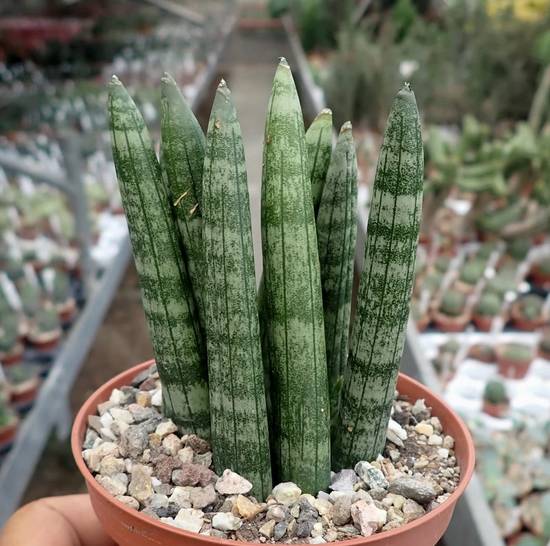
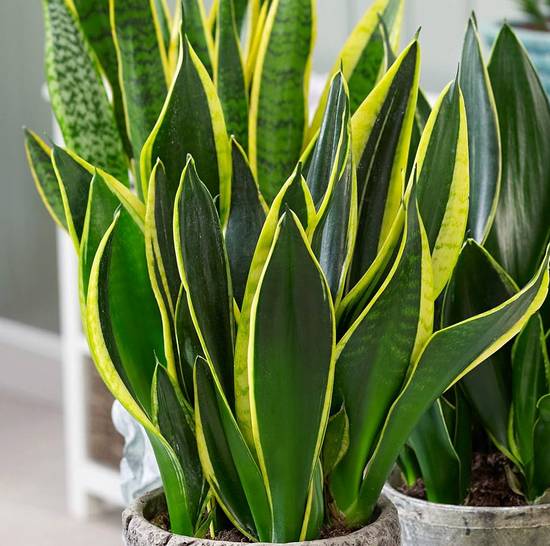
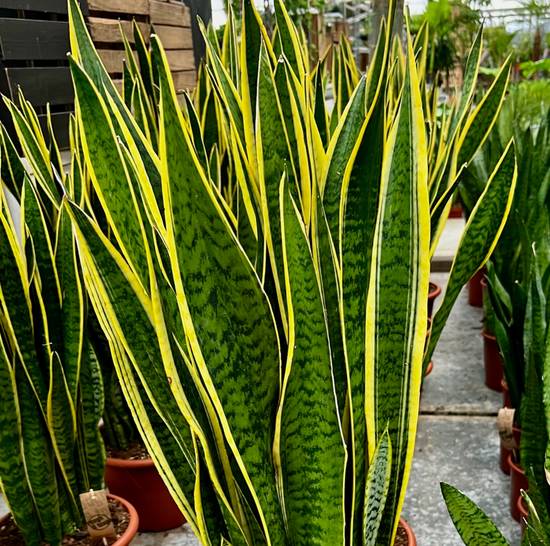
The Sansevieria stands out with its long, rigid and upright leaves, forming very structured vertical clumps. Depending on the varieties, the leaves can be dark green, variegated with yellow, or marbled with grey and green patterns. This diversity makes it a decorative plant adaptable to all interior styles, from the most classic to the most contemporary.
Its vertical habit also makes it an excellent plant for optimizing space, especially in small interiors. It can reach from 20 cm to more than one meter in height depending on species and growing conditions.
The Sansevieria is particularly renowned for its resistance. It tolerates varied growing conditions, withstands watering neglect and adapts both to bright environments and more shaded areas. It is one of the most recommended plants for beginners.
It naturally grows in dry to semi-arid environments, often on poor and well-drained soils.
🌞 Bright light to indirect sun: ideal to stimulate growth and intensify leaf patterns (variegation, marbling).
🌤️ Partial shade to shade: well tolerated, but growth will be slower and colors less pronounced.
🏠 Indoors: place the plant near an east, west or south-facing window with filtered light.
🌱 Spring / summer: water moderately only when the substrate is completely dry, on average every 2 to 3 weeks.
🍂 Autumn / winter: greatly reduce watering (every 4 to 6 weeks or less).
⚡ Essential rule: better too little water than too much water.
💧 Technique: water directly the substrate, avoiding the center of the plant to limit the risk of rot.
🌞 Ideal temperature: between 18°C and 30°C for optimal growth.
🌡️ Tolerance: tolerates temperature variations, but prefers a stable environment.
❄️ Minimum temperature: 10°C, below which the plant may suffer.
🏠 Advice: avoid cold drafts and thermal shocks.
🔬 Recommended mix: 50% cactus substrate + 30% perlite + 20% pouzzolane
🌸 Period: generally in spring or summer
🎨 Color: white to pale green
🌼 Shape: small tubular flowers grouped along a flower stalk