
Pseudolithos Cubiformis
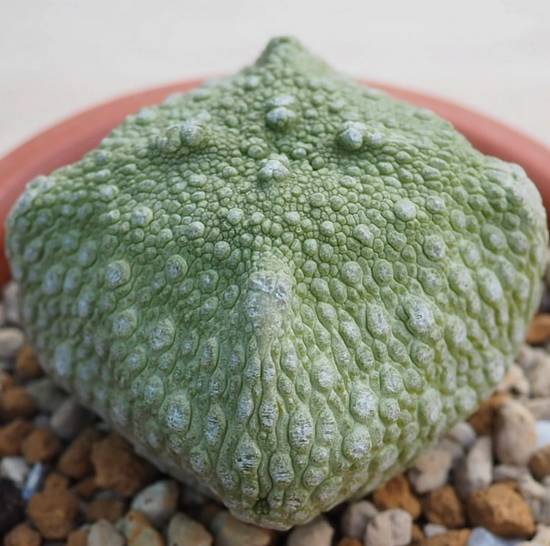
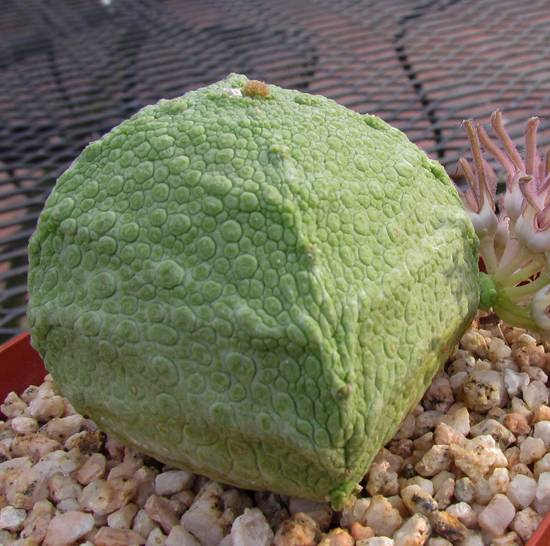
The Pseudolithos Cubiformis is one of the strangest jewels in the world of succulents. With its perfectly cubic shape, color ranging from olive green to stone brown, and mineral appearance, it intrigues and fascinates alike. This plant literally appears sculpted from rock.
Few plants spark such curiosity: its cubic form is so perfect that it could be mistaken for an artificial object. It is often confused with a stone by beginners. Yet the Pseudolithos Cubiformis is very much alive, and its cultivation requires precision and rigor.
This botanical gem grows very slowly, reaching between 2 and 6 cm per side, and usually remains solitary, without offsets. Its extremely slow growth rate and high sensitivity to moisture make it a plant reserved for experienced growers, but well worth the effort.
This natural camouflage is the origin of its scientific name, “pseudo-lithos”, meaning “false stone”. In the wild, it benefits from a mineral, poor, and perfectly draining soil, with very intense light exposure.
🌞 Bright indirect light: ideally placed near a bright window without direct sun during the hottest hours
🌤️ Avoid full direct sun in summer, which may cause burns on the sensitive epidermis of the cube
A lack of light will cause unattractive etiolation and discoloration
🌱 Spring / summer: extremely spaced watering, only when the substrate is completely dry deep down. On average once every 3 to 4 weeks
🍂 Autumn / winter: no watering at all. Total dormancy is vital to prevent rot
⚡ Golden rule: it is better to forget to water than to water once too often. Excess moisture is fatal
🌞 Optimal growing temperature: between 25°C and 35°C
❄️ Minimum tolerance: never expose below 10°C. It will die quickly below this threshold
🏠 Wintering: indoors, dry and bright, at a constant temperature between 15°C and 25°C
🪨Highly mineral substrate: mix 1 + 50% 1 + 1
💡 You may add coarse sand or perlite for extra aeration
🌸 Season: late summer to early autumn
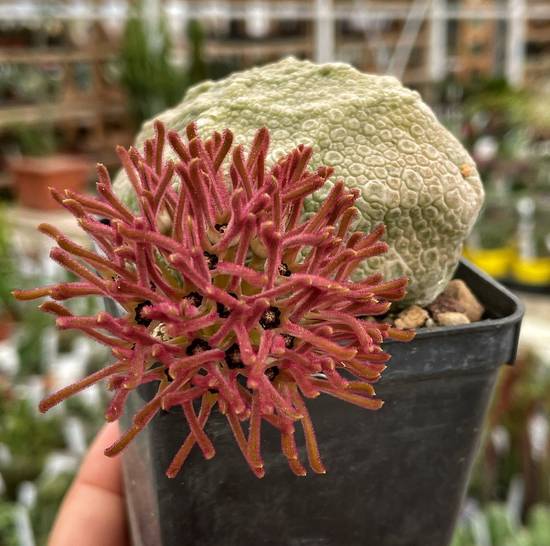
🎨 Color: star-shaped flowers, reddish-brown to purple, often malodorous
🕑 Duration: 2 to 4 days
💡 Like many Asclepiadaceae, the flowers may smell like rotting meat to attract pollinating flies