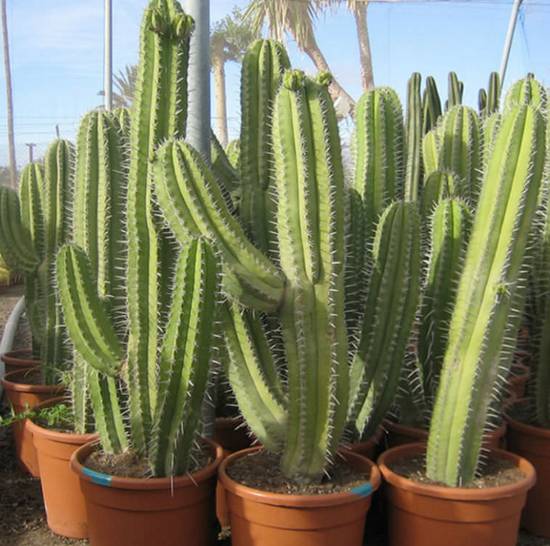
Polaskia Chichipe
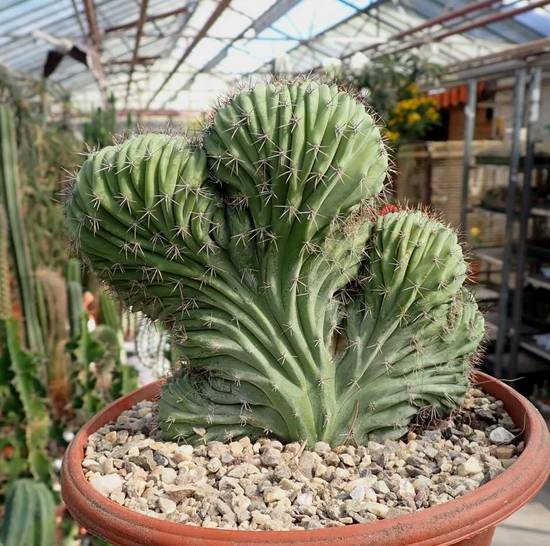
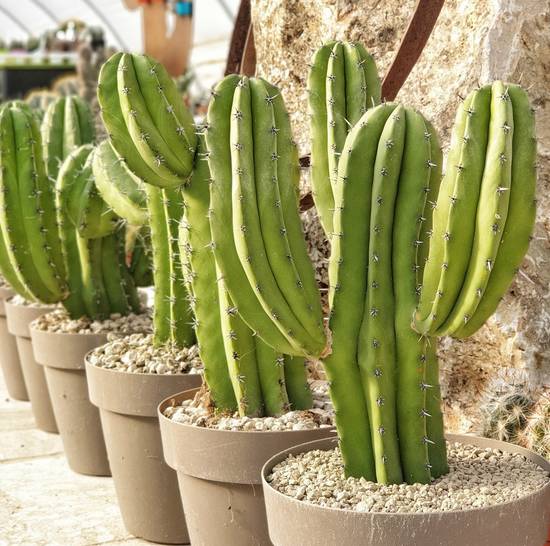
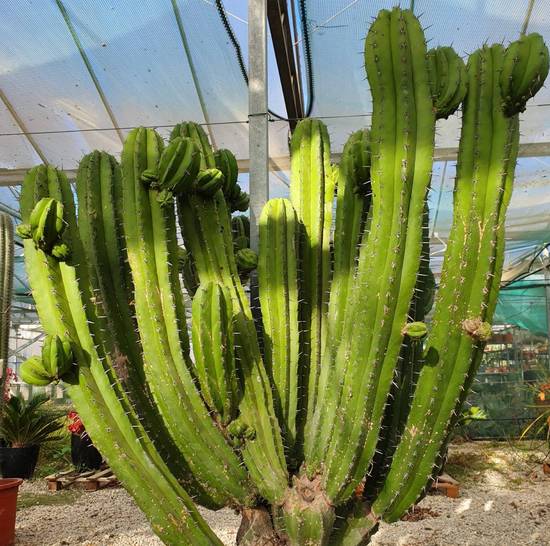
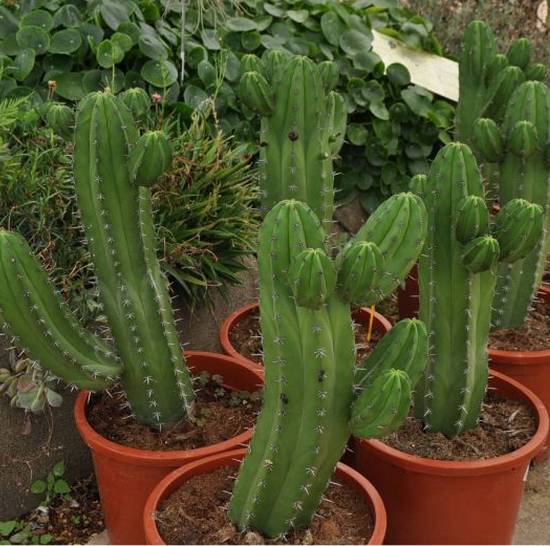
The Polaskia Chichipe is a majestic columnar cactus native to the semi-desert regions of Mexico. It immediately stands out with its upright, branching stems, elegant candelabra-like shape, and discreet spines, making it an excellent choice for cactus lovers looking to add a graphic and sculptural touch to their collection.
With relatively fast growth, the Polaskia Chichipe is one of the rare cacti capable of becoming a true tree in its natural habitat. When grown in a pot, it maintains a reasonable size while preserving its slender and graceful appearance.
This cactus also produces small nocturnal flowers with creamy greenish tones, often followed by edible red fruits called “chichipes”, from which it gets its name.
The Polaskia Chichipe naturally grows in the Mexican states of Puebla and Oaxaca, at altitudes ranging from 1,600 to 2,300 meters. It is found on arid hillsides among other cacti and agaves, where it sometimes forms entire forests of green columns.
This exposure to extreme conditions (heat, drought, poor soils) makes it a particularly hardy plant, well suited to pot cultivation or dry gardens in warm climates.
This exposure to extreme conditions (heat, drought, poor soils) makes it a particularly hardy plant, well suited to pot cultivation or dry gardens in warm climates.
🌞 Direct sunlight: It requires at least 6 hours of direct sunlight per day to ensure compact growth and good health.
🏖️ Light summer protection: During extreme heat (>35°C), light shade can help prevent burns, especially on young plants.
🏠 Indoor cultivation possible: A position behind a well-exposed south-facing window is recommended.
🏖️ Light summer protection: During extreme heat (>35°C), light shade can help prevent burns, especially on young plants.
🏠 Indoor cultivation possible: A position behind a well-exposed south-facing window is recommended.
🌱 Growing season (spring / summer): Water moderately every 15 to 25 days. The substrate must be completely dry before watering again.
🍂 Dormant period (autumn / winter): Stop watering or space it out significantly. Excess moisture can cause root rot.
⚠️ Warning: Always use a well-draining substrate with 1 or 1 to limit the risk of rot.
🍂 Dormant period (autumn / winter): Stop watering or space it out significantly. Excess moisture can cause root rot.
⚠️ Warning: Always use a well-draining substrate with 1 or 1 to limit the risk of rot.
🌞 Ideal range: Between 20°C and 35°C during the growing season.
❄️ Cold tolerance: Tolerates light frosts (down to -2°C if the soil is dry), but prefers wintering indoors once temperatures drop below 5–7°C.
🏠 Winter care: A bright, unheated space (such as a veranda) is ideal.
❄️ Cold tolerance: Tolerates light frosts (down to -2°C if the soil is dry), but prefers wintering indoors once temperatures drop below 5–7°C.
🏠 Winter care: A bright, unheated space (such as a veranda) is ideal.
The Polaskia Chichipe requires perfectly draining soil to prevent water stagnation around the roots.
🪨 Recommended mix: 50% 1 + 25% 1 + 25% 1
🪨 Recommended mix: 50% 1 + 25% 1 + 25% 1
🌼 Flowering period: In summer, usually between June and August.
🎨 Colors: Small white to greenish flowers.
🍓 Fruits: Edible red berries called “chichipes”, sweet and slightly tangy.
🎨 Colors: Small white to greenish flowers.
🍓 Fruits: Edible red berries called “chichipes”, sweet and slightly tangy.
FAQ - Polaskia Chichipe
How to prevent excess moisture for Polaskia Chichipe?
Use a substrate composed of cactus potting soil mixed with pozzolana or pumice. Never let water stagnate in the saucer.
What signs indicate that Polaskia Chichipe needs water?
Slightly wrinkled or drooping stems? It is time to water. During hot periods, check the substrate every 2 weeks.
Should Polaskia Chichipe be fertilized?
Yes, use a liquid cactus fertilizer every month in spring and summer to optimally stimulate growth.
Is Polaskia Chichipe suitable for beginners?
Absolutely. Very drought-tolerant and easy to grow.
Can Polaskia Chichipe be grown outdoors?
Yes in Mediterranean regions, provided it is protected in winter.
Does Polaskia Chichipe produce flowers every year?
Yes, if conditions are met: sun, winter rest, little water.
Can Polaskia Chichipe be propagated easily?
Yes, by stem cuttings or sowing.
Is Polaskia Chichipe toxic?
No, the fruits are even edible and sweet.
What is the growth rate of Polaskia Chichipe?
It can grow 10 to 15 cm per year under good conditions.