
Phyllanthus Mirabilis

Phyllanthus Mirabilis

Phyllanthus Mirabilis

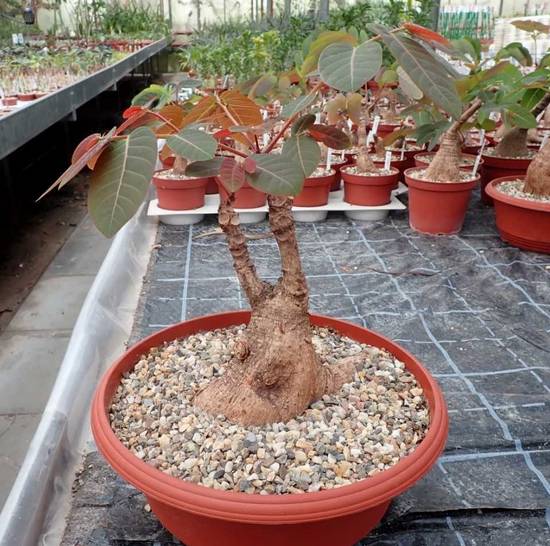
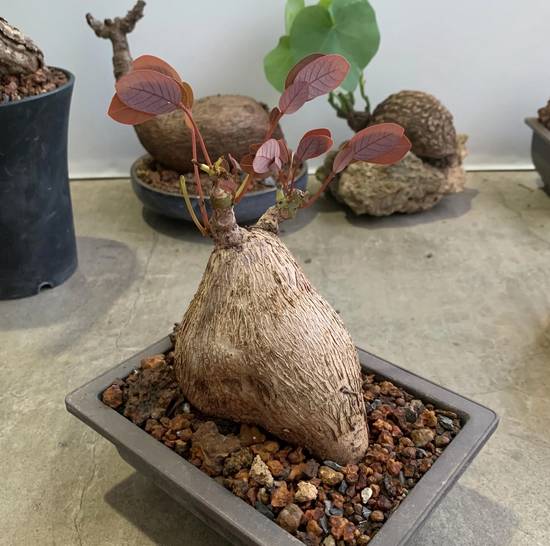
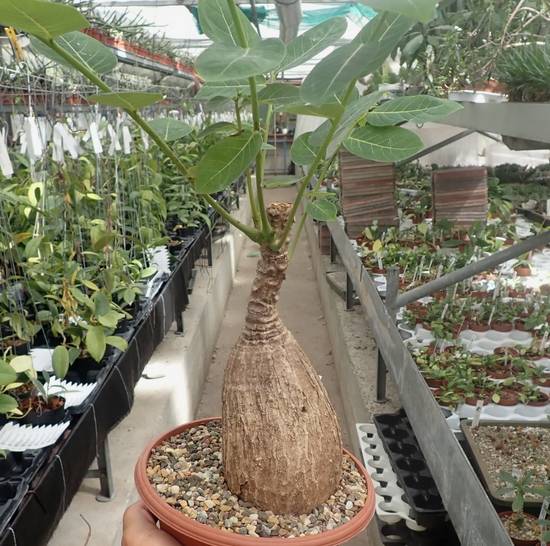
Phyllanthus Mirabilis is an exceptional caudiciform plant, highly appreciated by collectors for its unique appearance and surprising seasonal cycle. Native to Southeast Asia, this phyllanthus fascinates both with its sculptural caudex and its delicate foliage that reacts to changes in light.

Its thick, woody and rounded caudex allows it to store the water and nutrients necessary to survive long periods of drought. It forms the solid base of the plant, almost resembling a miniature tree trunk. From this caudex emerge slender stems bearing elegant, finely divided foliage similar to small ferns.

What makes Phyllanthus Mirabilis particularly fascinating is the movement of its leaves. They fold at nightfall or during intense heat, a nyctinastic mechanism that immediately draws attention. This characteristic gives the plant a sense of liveliness and sensitivity, enhancing its ornamental appeal.

In its natural habitat, Phyllanthus Mirabilis grows in dry and rocky areas, often at altitude, where it benefits from an intense rainy season followed by a prolonged dry season. This alternation has shaped its particular life cycle, based on energy storage in its caudex.
Phyllanthus Mirabilis appreciates abundant light:

🌤️ Bright indirect light: Ideal indoors near a large window.

🌞 Gentle sun: Can be grown outdoors in spring and summer, provided it is protected from scorching sun.

⚠️ Tip: Too much shade slows growth and reduces foliage density.
The watering schedule of Phyllanthus Mirabilis must follow its vegetative cycle:

🌱 Spring / summer: Water regularly (every 7 to 10 days), allowing the substrate to dry slightly between waterings.

🍂 Autumn / winter: Almost completely stop watering when it enters dormancy and loses its leaves.

Tip: Use a well-draining substrate enriched with perlite or pozzolana.
Phyllanthus Mirabilis is a tropical plant:

🌞 Ideal: Between 22 °C and 30 °C.

❄️ Minimum: Does not tolerate temperatures below 12 °C.

🏠 Tip: Bring it indoors during winter if grown in a temperate region.
The substrate must be light and well-draining:

🪨 Recommended substrate: Mix of cactus soil, coarse sand and mineral components.

💡 Fertilizer: During the growing season, apply liquid succulent fertilizer every 3 to 4 weeks.
The flowering of Phyllanthus Mirabilis is discreet but interesting:

🌸 Period: Summer.

🎨 Color: Small greenish, inconspicuous flowers.

🕑 Duration: Short-lived, but still a curiosity for enthusiasts.

FAQ - Phyllanthus Mirabilis

Can Phyllanthus Mirabilis be grown indoors?
Yes, it is perfect for pot cultivation, as long as it benefits from good light and well-draining substrate.
Why does Phyllanthus Mirabilis fold its leaves at night?
It is a natural mechanism called nyctinasty, which allows it to protect itself from nighttime coolness and limit water loss.
Does Phyllanthus Mirabilis lose its leaves?
Yes, it is deciduous: it loses its foliage in winter when it enters dormancy.
How to wake up Phyllanthus Mirabilis in spring?
Gradually resume watering and place it in a bright and warm location.
What size does Phyllanthus Mirabilis reach?
Its caudex can reach 30 cm in diameter and its stems can exceed 1.5 m.
Is Phyllanthus Mirabilis toxic?
No, unlike some tropical plants, it is not considered toxic.
Is Phyllanthus Mirabilis suitable for beginners?
Yes, provided its seasonal cycle is respected and it is not overwatered during its resting period.
How to propagate Phyllanthus Mirabilis?
By seed, in light and warm substrate.
Can Phyllanthus Mirabilis be grown outdoors?
Yes, but only in warm and frost-free climates. Elsewhere, it must be grown in a pot.
What is the lifespan of Phyllanthus Mirabilis?
Several decades, its caudex strengthening and thickening over the years.