Pachycereus Pringlei
Pachycereus Pringlei, often nicknamed the “candelabra cactus” or “giant cardón,” is the largest cactus in the world, capable of reaching over 20 meters in height in its natural habitat.
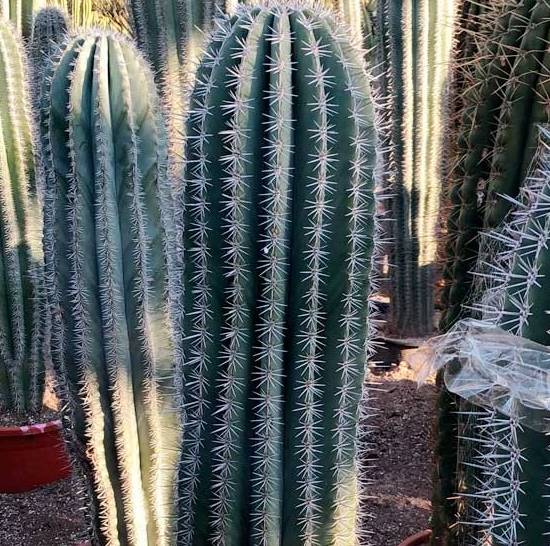
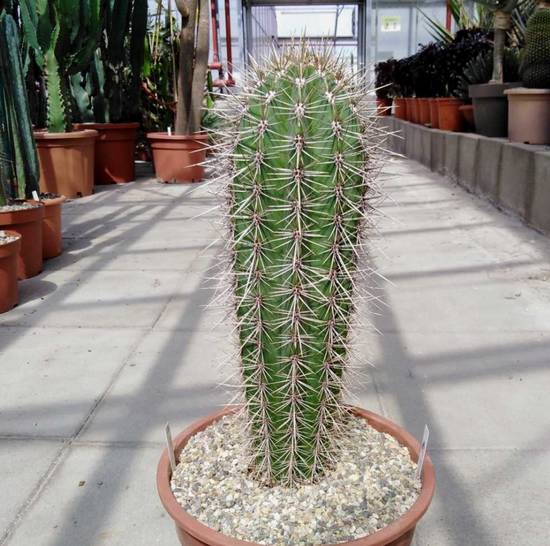
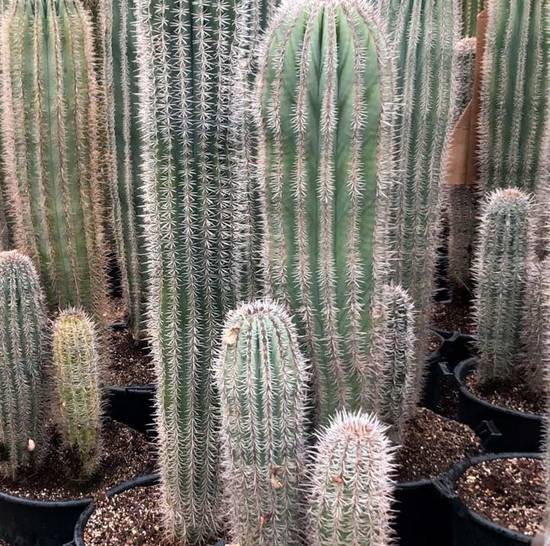
Native to the desert regions of northwestern Mexico, particularly Baja California, it impresses with its majestic habit and branched columnar stems rising skyward like natural chandeliers. Each column, covered with a deep green epidermis, features 10 to 15 well-defined ribs lined with woolly areoles bearing sturdy spines.
Pachycereus Pringlei is a symbol of the Mexican desert, often photographed in arid landscapes alongside rocky mountains and blazing sunsets. Its longevity is exceptional: some specimens are estimated to be over 200 years old.
Pachycereus Pringlei is native to the coastal areas and arid valleys of Baja California and Sonora.
It grows on sandy or rocky soils, often limestone-based, sometimes alongside other desert icons such as ocotillo and agave. Its deep root system allows it to withstand prolonged drought and capture moisture from coastal fog.
It grows on sandy or rocky soils, often limestone-based, sometimes alongside other desert icons such as ocotillo and agave. Its deep root system allows it to withstand prolonged drought and capture moisture from coastal fog.
For Pachycereus Pringlei to develop fully:
🌞 Direct sun: at least 6 to 8 hours per day.
🌤️ Young plants may benefit from light protection during extreme heat.
⚠️ Lack of light causes etiolation and weakens the plant’s structure.
🌞 Direct sun: at least 6 to 8 hours per day.
🌤️ Young plants may benefit from light protection during extreme heat.
⚠️ Lack of light causes etiolation and weakens the plant’s structure.
Pachycereus Pringlei is extremely drought-resistant:
🌱 Spring / summer: watering every 4 to 5 weeks is sufficient, allowing the substrate to dry completely.
🍂 Autumn / winter: outdoors in dry conditions, reduce to a strict minimum; in pots and cool climates, stop watering.
⚡ Too much water is far more dangerous than too little.
🌱 Spring / summer: watering every 4 to 5 weeks is sufficient, allowing the substrate to dry completely.
🍂 Autumn / winter: outdoors in dry conditions, reduce to a strict minimum; in pots and cool climates, stop watering.
⚡ Too much water is far more dangerous than too little.
Pachycereus Pringlei loves heat:
🌞 Ideal: 22 to 35°C.
❄️ Minimum tolerated: around 5°C when dry.
🏠 In pots, overwinter in a dry and bright place if temperatures fall below 10°C.
🌞 Ideal: 22 to 35°C.
❄️ Minimum tolerated: around 5°C when dry.
🏠 In pots, overwinter in a dry and bright place if temperatures fall below 10°C.
Perfect drainage is crucial for Pachycereus Pringlei:
🪨 Recommended mix: cactus soil mixed with 40% perlite or pozzolana.
Use a stable and deep container to support its mass.
🪨 Recommended mix: cactus soil mixed with 40% perlite or pozzolana.
Use a stable and deep container to support its mass.
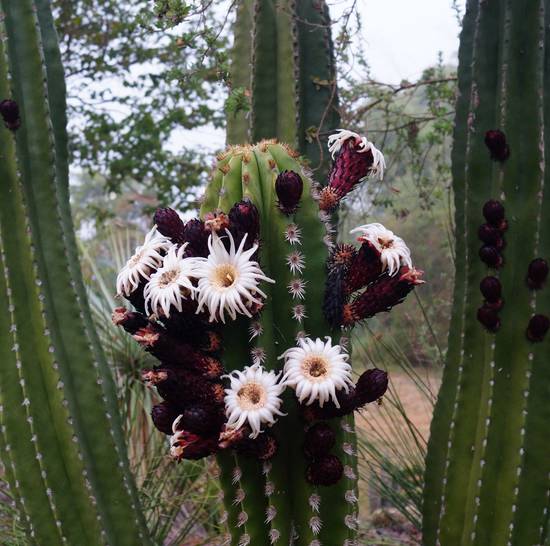
The flowering of Pachycereus Pringlei is nocturnal and fragrant:
🌸 Season: spring.
🎨 Color: pure white inside, greenish or pinkish tones outside.
🕑 Duration: 1 to 2 nights.
💡 A dry and sunny winter increases the chances of flowering.
🌸 Season: spring.
🎨 Color: pure white inside, greenish or pinkish tones outside.
🕑 Duration: 1 to 2 nights.
💡 A dry and sunny winter increases the chances of flowering.
FAQ - Pachycereus Pringlei
Is Pachycereus Pringlei really the tallest cactus in the world?
Yes, it can exceed 20 m in height, even surpassing the famous saguaro.
Can Pachycereus Pringlei be grown in a pot?
Yes, with a deep pot and a well-draining substrate such as cactus potting soil and pumice.
What fertilizer should be used for Pachycereus Pringlei?
A cactus fertilizer low in nitrogen is ideal in spring.
What cold tolerance does Pachycereus Pringlei have?
Down to 5°C in dry conditions, but no frost.
How to stimulate flowering of Pachycereus Pringlei?
Full sun, a dry winter, and application of cactus fertilizer.
Does Pachycereus Pringlei grow quickly?
Very slow at first, faster once well established.
Can Pachycereus Pringlei be planted in the ground?
Yes, in a warm and dry climate, in well-draining soil enriched with perlite.
Which animals pollinate Pachycereus Pringlei?
Mainly bats and moths.
Are the fruits of Pachycereus Pringlei edible?
Yes, they are sweet and consumed locally.
Where can you find Pachycereus Pringlei and suitable cultivation products?
From nurseries or online, with cactus substrate and pumice.