
Oreocereus Celsianus

Oreocereus Celsianus

Oreocereus Celsianus

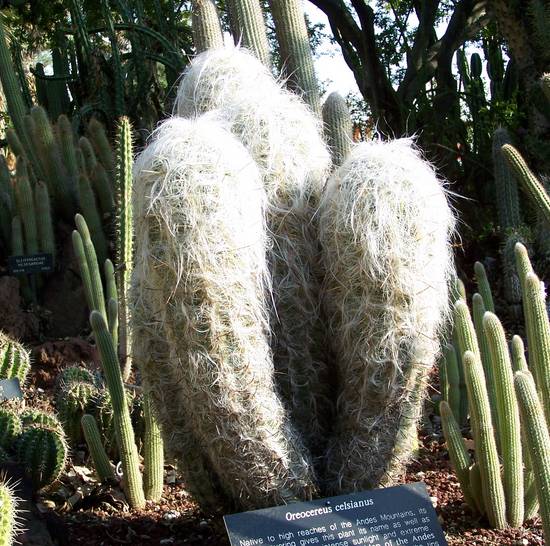
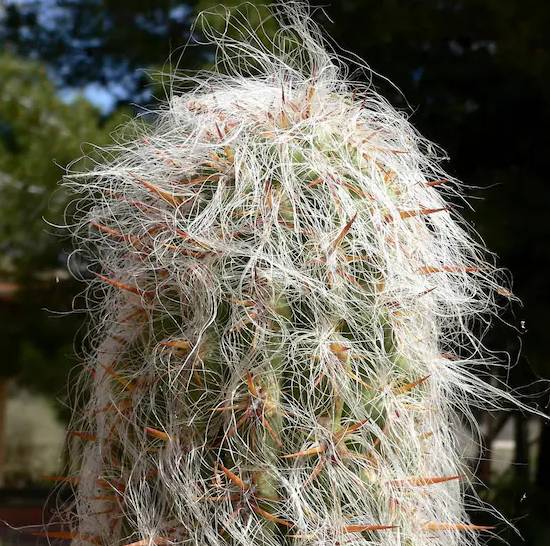
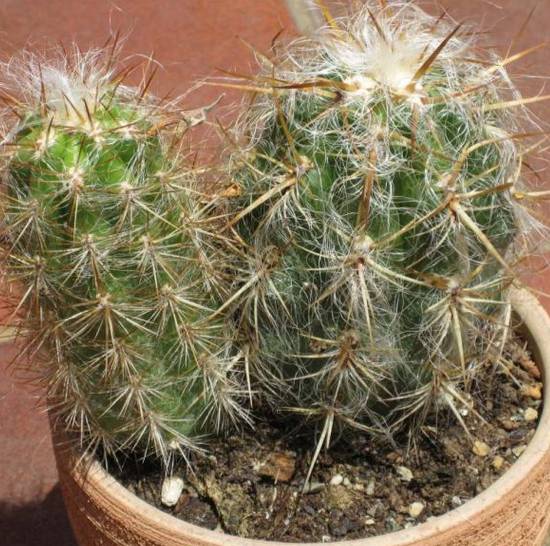
Nicknamed the “Old Man of the Andes,” Oreocereus Celsianus is a mountain columnar cactus wrapped in long white wool that protects its bluish-green epidermis from UV and wind. The stems, upright to slightly arched, bear marked ribs and woolly areoles from which yellowish to reddish-brown spines emerge. In deep containers or terracotta pots, Oreocereus Celsianus forms graphic columns that capture light; its wool thickens over the years, giving a highly sought-after sculptural appearance.

Compact growth depends primarily on light and ventilation. Placed in bright morning sun followed by strong light, Oreocereus Celsianus keeps short internodes and dense spination; in shade, the column elongates and the wool thins. Water deeply only when the mix is dry at depth, then allow complete drying. This rhythm hardens tissues, protects the collar and prepares flowering.

A high-altitude Andean species, Oreocereus Celsianus grows on rocky slopes and well-drained outcrops exposed to strong radiation and dry winds. Reproducing this gradient — abundant light, mineral mix, spaced watering, dry winter rest — ensures stable cultivation.
To densify the wool and maintain firm ribs, Oreocereus Celsianus requires strong, well-managed light.

🌞 Ideal: gentle full morning sun (4–6 h) + strong brightness in afternoon; acclimate after winter and avoid magnifying-glass effect behind glass in summer.

🏠 Indoors: south/east exposure or bright veranda; rotate weekly.
Adapted to rare rains, Oreocereus Celsianus prefers thorough but spaced watering.

🌱 Spring/Summer: water deeply only if the root ball is fully dry, then allow complete drying.

🍂 Winter: almost dry, bright and cooler to prevent cold rot.
A hardy mountain species, Oreocereus Celsianus tolerates short frosts if dry.

🌡️ Ideal: 18–30 °C in warm season with good ventilation.

❄️ Minimum: about −6/−8 °C dry depending on strain; protect from winter rains.
To mimic its Andean screes, Oreocereus Celsianus requires a poor, very draining mix.

🪨 Base: heavily mineralized cactus soil or substrate + perlite and clean pozzolana top dressing.
When the cycle is respected, Oreocereus Celsianus produces warm-toned daytime blooms.

🌸 Period: late spring to summer on well-established plants.

🎨 Colors: orange-red to salmon pink, woolly floral tube; decorative hairy buds.

🕑 Keys: full sun, dry winter rest, tight pot and very moderate feeding.

FAQ - Oreocereus Celsianus

How to densify the wool of an Oreocereus Celsianus in a pot?
Provide strong morning sun, good airflow and spaced watering; a quality cactus substrate keeps the column compact.
Which pot should be chosen for a tall-growing Oreocereus Celsianus?
Choose a heavy, deep terracotta pot, well-drained base with drainage granules and clean mineral mulch at the crown.
Does Oreocereus Celsianus tolerate wind?
Yes if in a heavy pot with solid rooting; the wool protects against dry gusts, but avoid persistent humid winds.
How to successfully propagate Oreocereus Celsianus without rot?
Make a clean cut on a lignified stem, let callus 10–14 days, plant shallowly; first waterings very sparing, then very diluted succulent fertilizer.
What fertilizer schedule for a compact Oreocereus Celsianus?
From late spring to summer, monthly half-strength applications of cactus fertilizer, never on dry substrate.
Why is my Oreocereus Celsianus becoming leggy?
Insufficient light or pot too large; move closer to sun and repot snugly in mineral-rich cactus potting soil.
Can Oreocereus Celsianus overwinter outdoors in a mild climate?
Yes if kept dry under rain shelter down to short frosts; protect the crown with pumice mulch and bring inside if wet frost is forecast.
How to clean the wool of an Oreocereus Celsianus without damaging it?
Use a soft dry brush or gentle blower; avoid sprays that mat fibers and encourage mealybugs.
What LED lighting suits an Oreocereus Celsianus in winter?
10–12 hours per day with ventilation; add very light doses of liquid cactus fertilizer at spring restart.
Which plant combinations enhance an Oreocereus Celsianus?
Dwarf Agaves, Echinocereus and light gravel; plant in an airy cactus substrate.