
Neoraimondia Herzogiana

Neoraimondia Herzogiana

Neoraimondia Herzogiana

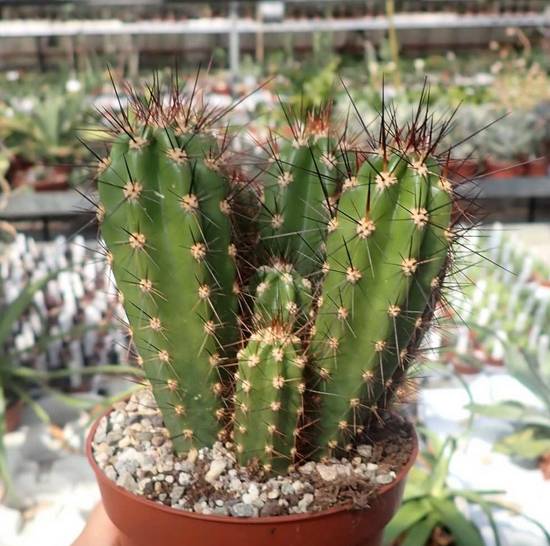
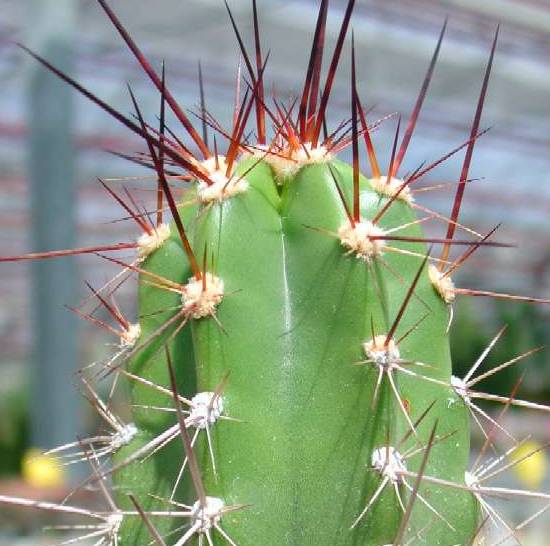
A large Andean columnar cactus, Neoraimondia Herzogiana raises massive upright stems with broad ribs and woolly areoles armed with robust spines, blond to honey-brown depending on the strain. When young, Neoraimondia Herzogiana grows as a single glaucous-green column; mature plants branch from the base and form impressive architectural clumps in deep containers or well-drained ground in mild climates. Its almost sculptural silhouette enhances minimalist mineral settings and well-ventilated south-facing terraces.

Light and ventilation dictate compact growth. In gradually acclimated full sun, Neoraimondia Herzogiana keeps short internodes, dense spination and firm ribs; in shade, it elongates and weakens. Water deeply only when the mix is dry at depth, then allow complete drying. This rhythm hardens tissues, protects the collar and prepares flowering.

Native to semi-arid valleys and foothills of Bolivia, Neoraimondia Herzogiana colonizes gravel cones, slopes and rocky outcrops with rapid drainage under intense sun and strong thermal amplitudes. Reproducing this gradient — mineral substrate, spaced watering, dry winter rest — stabilizes cultivation.
For firm ribs and dense spination, Neoraimondia Herzogiana requires strong, progressive light.

🌞 Ideal: gentle full morning sun (4–6 h) + strong brightness in the afternoon; acclimate after winter.

🏠 Indoors: south/east exposure or bright veranda; weekly rotation.
Adapted to rare rains, Neoraimondia Herzogiana prefers thorough but spaced watering.

🌱 Spring/Summer: every 2–3 weeks in pots if fully dry; little water in well-drained ground after establishment.

🍂 Winter: almost dry, bright and cooler.
Built for dry heat, Neoraimondia Herzogiana tolerates brief cool spells if dry.

🌡️ Ideal: 20–32 °C in warm season; strong ventilation.

❄️ Minimum: about −2/0 °C dry depending on strain; protect from winter rains.
To mimic its Andean screes, Neoraimondia Herzogiana requires a poor, very draining mix.

🪨 Base: heavily mineralized cactus soil or substrate + perlite and pozzolana at the collar.
When the cycle is respected, Neoraimondia Herzogiana produces large fragrant nocturnal flowers.

🌸 Period: late spring to summer on established plants.

🎨 Colors: creamy white, sometimes pink-edged; decorative ovoid fruits after pollination.

🕑 Keys: full sun, dry winter rest, tight pot and very moderate feeding.

FAQ - Neoraimondia Herzogiana

How to keep Neoraimondia Herzogiana upright without a permanent stake?
Choose a heavy terracotta pot, rotate weekly and use an airy mix; cactus substrate stabilizes the root ball.
What spacing should be planned for two Neoraimondia Herzogiana in a planter?
Allow 40–60 cm; drain the base with drainage granules and keep clean mulch at the crown.
Does Neoraimondia Herzogiana tolerate short dry cold spells?
Yes, around 0/-2 °C if kept dry; protect from rain and mulch the crown with pumice.
How to successfully propagate Neoraimondia Herzogiana?
Make a clean cut, let callus 10–14 days, plant shallowly; first waterings sparing then very diluted succulent fertilizer.
What type of water should be used for Neoraimondia Herzogiana in pots?
Preferably low-lime water; quality cactus potting soil helps stabilize pH.
How to densify the spination of Neoraimondia Herzogiana?
Provide full sun and good airflow, space watering; prefer light half-strength applications of cactus fertilizer.
Can Neoraimondia Herzogiana bloom in a veranda?
Yes if very bright with a dry winter rest; in spring, lightly support with liquid cactus fertilizer.
Which pot best showcases a mature Neoraimondia Herzogiana?
A tall, heavy terracotta pot; minimalist mineral décor with well-aerated cactus substrate.
What to do if Neoraimondia Herzogiana becomes leggy?
Increase light, reduce watering, repot snugly in a suitable mix; complement with low doses of liquid cactus fertilizer.
Which plant combinations enhance Neoraimondia Herzogiana?
Dwarf Agaves, Echinocereus and ornamental grasses; very diluted succulent nutrients during the growing season.