Monvillea Spegazzinii Cristata
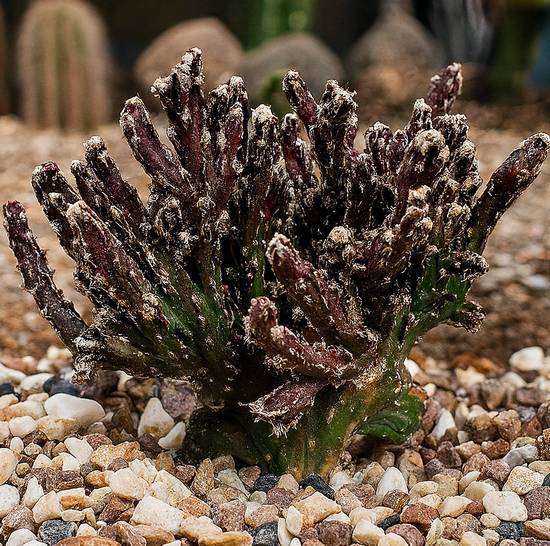
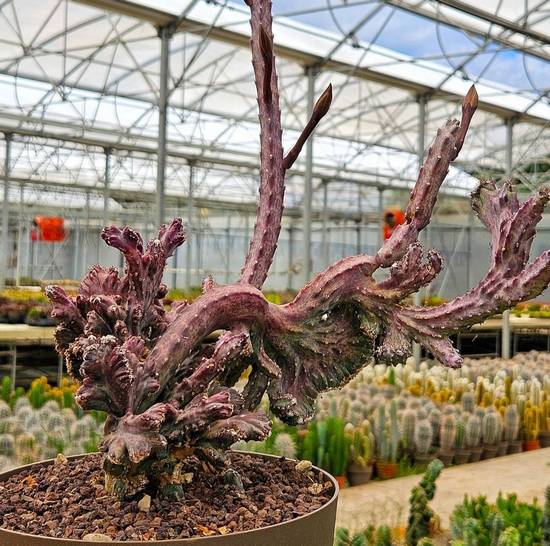
The Monvillea Spegazzinii Cristata is one of the most fascinating jewels of the world of crested cacti. This rare mutation transforms the classic columnar structure of the Monvillea Spegazzinii into an entanglement of crests, waves and folds that seem frozen in an artistic movement shaped by nature.
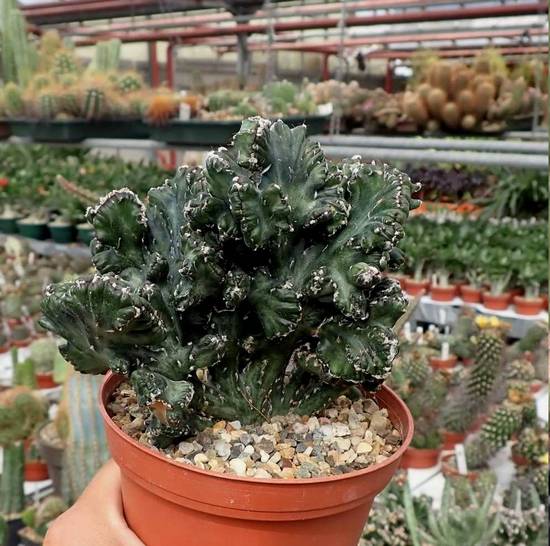
Its irregular, almost abstract form makes each specimen a unique work. The stems, which should have grown vertically and smoothly, develop into wide flat fans, crenellated and sometimes spiral. This stable genetic mutation offers a spectacular aesthetic that draws all eyes in a collection.
Often dark green to bluish, its surface may show matte or slightly powdery reflections. Some specimens display marbling or natural scars that further enhance the sculptural aspect. In cultivation, this crested cactus can live for several decades and form impressive masses over time.
The Cristata form, however, is extremely rare in nature. It is mostly propagated by cuttings in cultivation to preserve this fascinating mutation. Cresting is a random natural phenomenon that blocks the cactus growth apex and transforms it into a wavy growth line.
🌞 Filtered sun: direct exposure 4 to 6 h/day
🌤️ Ideal: bright but filtered light (light shading during the hottest hours)
In greenhouse or indoor cultivation, avoid direct heat through glass, especially in summer. Light protection helps preserve the integrity of the crests.
🌱 Spring / summer: watering about every 3 weeks, when the substrate is well dry
🍂 Autumn / winter: no watering necessary unless the environment is very dry
⚠️ Warning: stagnant water in the crevices can promote fungal diseases. Water preferably at the base, in the morning, and avoid direct spraying.
🌡️ Ideal: 20 to 32°C
❄️ Minimum: 8 to 10°C when dry
🏠 Wintering: bright, dry, and well ventilated
🪨 Recommended composition: 50% pumice + 30% pozzolana + 20% cactus potting soil
🌸 Season: summer, mainly at night
🎨 Color: white to cream, sometimes pinkish
🕑 Duration: 1 to 2 nights per flower
💡 Note: it appears only on areas where the mutation leaves a few functional areoles