
Hoodia Gordonii
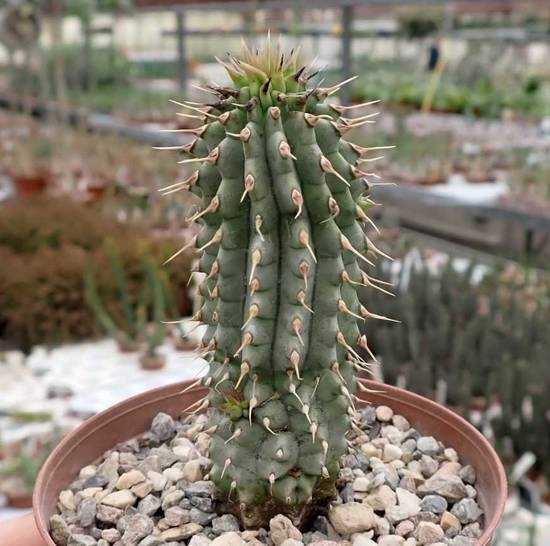
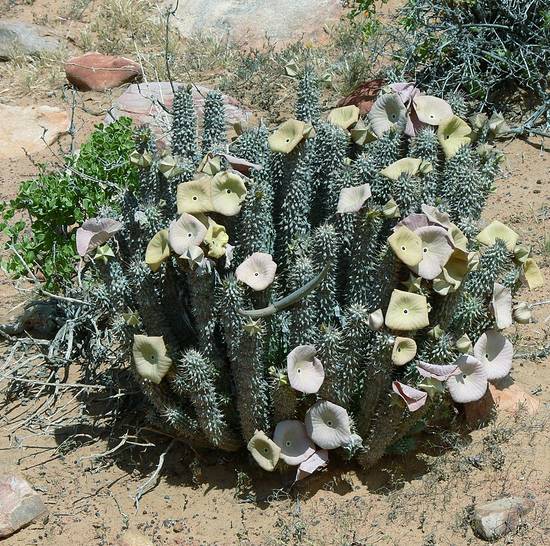
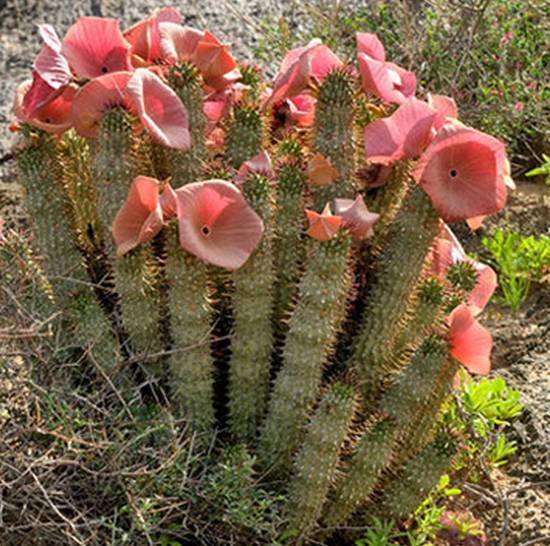
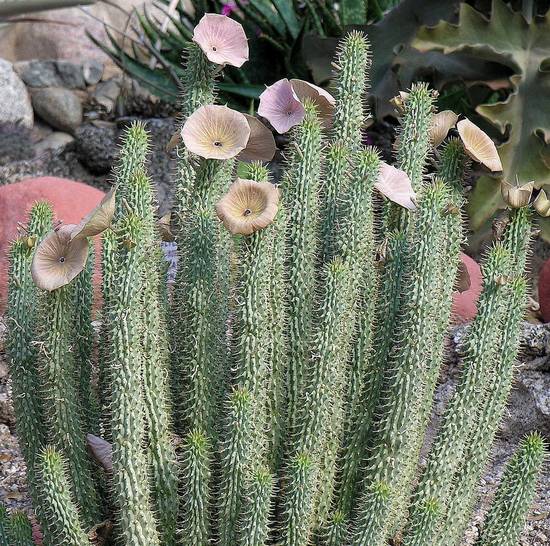
The Hoodia Gordonii is a succulent plant native to the arid regions of southern Africa, famous both for its unusual appearance and its traditional medicinal uses. Belonging to the Apocynaceae family, it develops an erect, columnar cactus-like form, although it is not a true cactus. Its thick green to brownish stems are segmented and dotted with small, soft spines. In cultivation, they can reach up to 1 meter in height, forming a sculptural, prehistoric-looking clump.
The Hoodia Gordonii is particularly known for containing a molecule called P57, which was studied for its appetite-suppressing potential. Traditionally used by the San people of the Kalahari Desert to reduce hunger during long hunts, this plant attracted scientific interest in the early 2000s. Beyond this aspect, the Hoodia is above all a resilient, original, and fascinating ornamental plant.
🌞 Ideal exposure: At least 6 to 8 hours of direct sunlight per day.
🌤️ Indoor cultivation: Place near a south-facing window. Outdoors, avoid shade or partial shade.
Excess shade causes etiolation, soft stems, and prevents flowering.
🌱 Growing season (spring–summer): Water every 15 to 20 days, only when the substrate is completely dry.
🍂 Winter rest: Almost completely stop watering once temperatures fall below 15°C.
⚠️ Warning: Excess water is the main cause of death in cultivation. Always favor sparse watering.
🔥 Ideal: 25 to 35°C during active growth. Tolerates peaks above 40°C.
❄️ Minimum: Down to 5°C if the substrate is perfectly dry. Never expose to frost.
🏠 In winter: Keep in a bright, dry place, protected from drafts.
🪨 Recommended mix: 40% cactus potting soil, 30% perlite, and 30% pumice or volcanic gravel.
🗓️ Season: Summer, often after several years of cultivation.
🎨 Color: Dark purple to brownish red, star-shaped and fleshy.
😷 Special feature: Unpleasant odor (rotting flesh) to attract pollinating flies.
💡 Tip: Successful flowering requires a mature plant, strong light, and proper growing conditions.