
Fockea Edulis

Fockea Edulis
Fockea Edulis
Fockea Edulis

Fockea Edulis

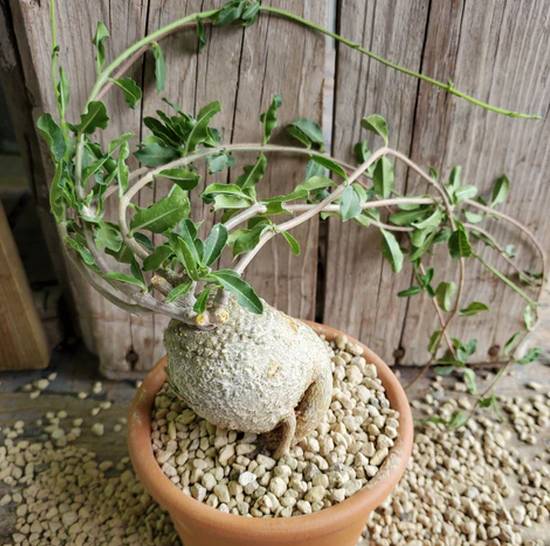
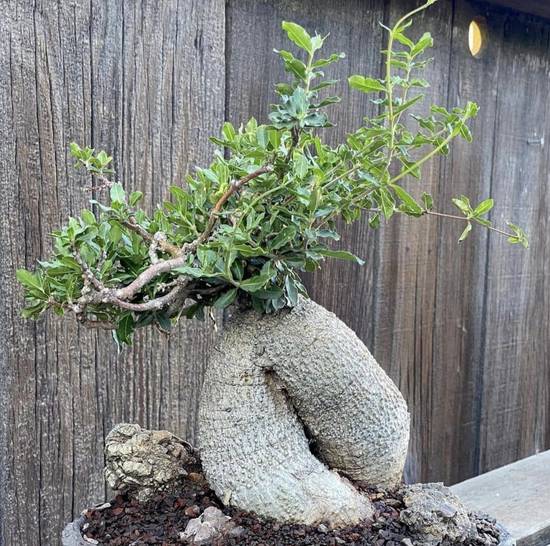
The Fockea Edulis is a succulent plant with a very distinctive habit, highly appreciated for its spectacular caudex, reminiscent of a swollen vegetable root. Native to the semi-arid regions of southern Africa, this species belongs to the Apocynaceae family (formerly Asclepiadaceae) and is one of the most popular caudiciform plants among collectors of exotic plants.

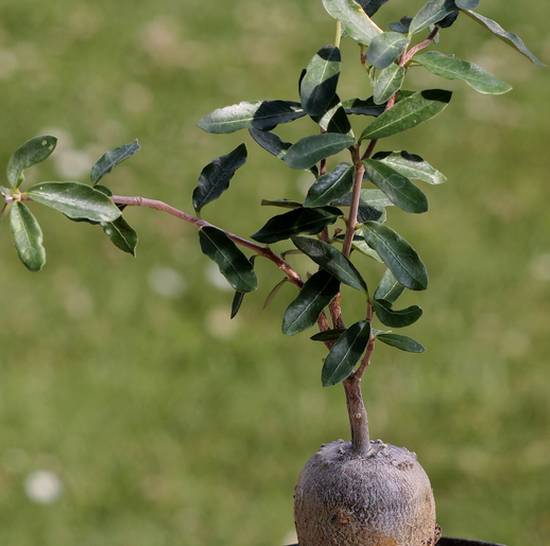
The plant consists of a swollen underground stem (the caudex) that can reach several tens of centimeters in diameter, topped with long, twining, thin, flexible climbing stems that can wrap around any support. The foliage is simple, green, slightly velvety, and drops during the dormant period. This combination of a massive base and discreet foliage gives the Fockea Edulis a silhouette that is both robust and delicate, ideal for decorating a shelf or a well-lit veranda.

The Fockea Edulis is endemic to South Africa and Namibia, where it grows in arid and semi-arid areas, often sheltered under rocks or in very well-drained sandy soils. Its name “edulis” means “edible” in Latin, referring to the caudex that some local populations consume after proper preparation, although this is not recommended in cultivation.

In nature, it enters dormancy during the dry season and develops its stems during the wet season. This adaptation allows it to survive extreme climatic conditions, making it particularly easy to grow in pots, provided its natural cycles are respected.
To thrive, the Fockea Edulis needs plenty of light.

🌞 Outdoors: it appreciates a very sunny position, provided it is protected from scorching during the hottest periods of summer.

🏠 Indoors: a spot near a south- or west-facing window is ideal. In winter, a cool and bright veranda is perfect to encourage its rest period.

💡 Tip: rotate the pot regularly so that growth remains balanced and the foliage does not lean excessively toward the light.
Watering the Fockea Edulis follows a very marked seasonal rhythm.

🌱 Growing period (spring/summer): water every 10 to 15 days, when the substrate is dry on the surface. Never water if the substrate is still moist.

❄️ Winter rest: watering is almost nonexistent. One or two light mistings may be sufficient throughout winter.

⚠️ Warning: Fockea roots are sensitive to stagnant moisture. It is therefore crucial to use a very well-draining substrate.
The Fockea Edulis is a warm-climate plant.

🌡️ Optimal range: between 20 °C and 30 °C during the growing season.

❄️ In winter: it tolerates temperatures around 5 to 8 °C as long as it is kept dry. Below 5 °C, the risk of rot increases.
The substrate is a key element for successfully growing this caudiciform plant.

🪨 Ideal mix: 40 % special cactus soil, 30 % coarse sand or pumice, and 30 % perlite.

⛏️ Tip: to properly display the caudex, bury it only partially and slightly raise it above the substrate for aesthetic appeal and better aeration.
Although discreet, the flowering of the Fockea Edulis is a special moment for enthusiasts.

📅 Period: usually in summer.

🌼 Flowers: small, star-shaped, pale green to creamy white, grouped in small umbels. They appear in the axils of mature leaves.

💡 Advice: to encourage flowering, respect the winter rest period and apply in spring a balanced fertilizer.

FAQ - Fockea Edulis

How should Fockea Edulis be watered to avoid rot?
Water moderately during its growing season, allowing the substrate to dry between waterings. In winter, reduce watering drastically. A highly draining substrate is essential to prevent excess moisture.
What substrate is recommended for Fockea Edulis?
A well-draining mix is crucial: use cactus soil combined with mineral materials to ensure proper root aeration.
Is Fockea Edulis toxic or edible?
Although its name means “edible,” consuming this plant in cultivation is not recommended, as it may contain irritating substances.
What is the ideal indoor exposure for Fockea Edulis?
Place it near a sunny window, ideally facing south or west. Bright light is essential for healthy growth. Rotate the pot regularly to ensure even development.
Can Fockea Edulis be grown outdoors?
Yes, but only during summer or in very mild climates. Bring it indoors when temperatures drop below 8°C.
How can flowering be encouraged in Fockea Edulis?
Encourage flowering by respecting its cool, dry winter rest period, then resume watering in spring and apply a suitable fertilizer during active growth.
What is the growth rate of Fockea Edulis?
Growth is slow, especially at the caudex level. The twining stems may grow more quickly in summer under optimal conditions.
Should the caudex of Fockea Edulis be buried?
It is best to leave the caudex partially exposed above the soil for aesthetic appeal and to reduce the risk of rot.
What pests can affect Fockea Edulis?
It is relatively resistant, but watch for mealybugs on foliage or at the base, especially indoors. Gentle treatment or manual cleaning is usually sufficient.
Why is my Fockea Edulis losing its leaves?
Leaf drop is often a sign of dormancy during autumn and winter. Reduce watering and keep the plant dry. Growth will resume in spring.