
Eriosyce Ceratistes

Eriosyce Ceratistes
Eriosyce Ceratistes
Eriosyce Ceratistes

Eriosyce Ceratistes

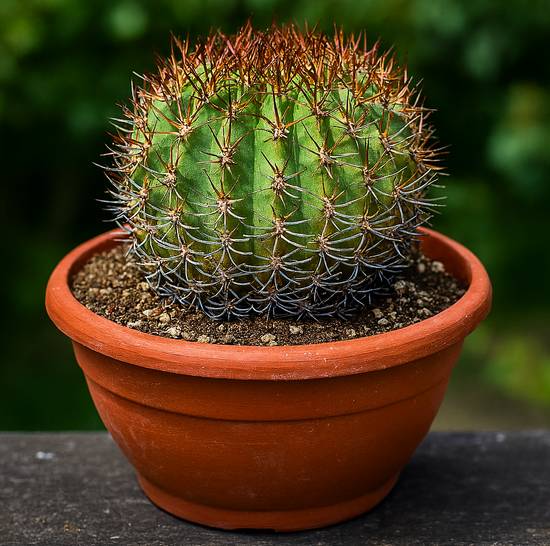
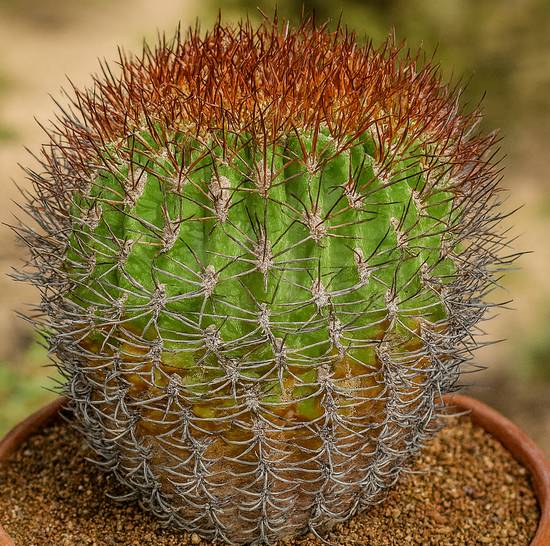
The Eriosyce Ceratistes is a fascinating species belonging to the large family of Cactaceae. Native to Chile, this spherical to slightly flattened cactus is known for its robust appearance and formidable horn-shaped spines, which gave it the name “ceratistes”, derived from the Greek “keras” meaning “horn”.

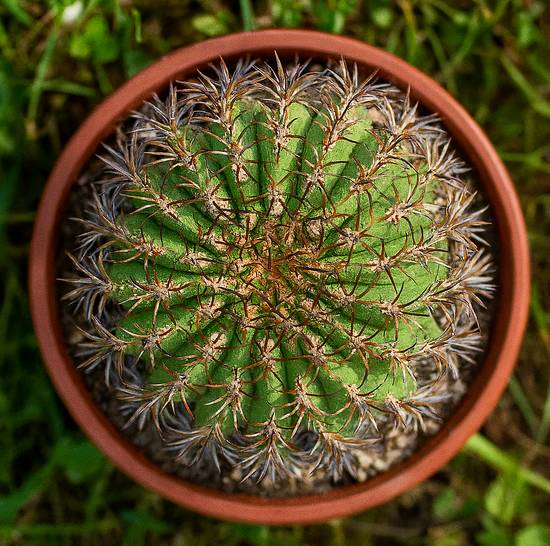
Its epidermis is generally gray-green to olive-brown, sometimes striated or lightly ribbed. It has numerous woolly areoles from which emerge powerful, hooked and dark spines, sometimes red to brown. Its appearance is characteristic and almost armored, reflecting the extreme conditions of its natural habitat.

In pots, it remains compact, making it ideal for cactus collections. However, it can live for a very long time, gradually becoming wider and developing increasingly impressive structures.

The Eriosyce Ceratistes originates from the arid and rocky areas of northern Chile, mainly in the coastal regions of the Atacama. It often grows on mountain slopes under very harsh conditions: intense sun, dry winds, high thermal amplitude and rare rainfall.

This adaptation to extreme environments makes it a particularly resilient species, but one that requires specific conditions to thrive in cultivation.
Exposure is essential for this cactus:

🌞 Direct sun required: at least 6 hours of sun per day

🧢 Protection during heatwaves: light shading may be useful in summer afternoons to avoid burns on young specimens

🌥️ Insufficient light = loss of compactness, etiolation and weakening

Good sun exposure ensures well-formed areoles, denser spines and optimal coloration.
Like all Eriosyce, this species is very drought tolerant:

🌱 Spring / Summer: moderate watering every 15 to 25 days, only when the substrate is completely dry

❄️ Winter: total dormancy → no watering

⚠️ Never allow water to stagnate in the saucer

💡 Prolonged drought is tolerated, but excess water will quickly cause irreversible internal rot.
Ideal temperature: between 20 and 30°C in summer

🌬️ Good resistance to dry cold: down to -5°C if the substrate is perfectly dry

🏠 Winter protection recommended as soon as temperatures drop below 5°C
The Eriosyce Ceratistes requires an ultra-draining soil:

🪨 Recommended mix: 30% cactus potting soil + 70% mineral (pumice, perlite, pozzolana)

This substrate prevents moisture accumulation near the roots while providing an ideal airy structure.
The flowers of the Eriosyce Ceratistes are true gems:

📅 Period: spring to early summer

🎨 Colors: pale yellow to bright yellow, sometimes with reddish tones

🧶 Appearance: at the top of the plant, from the central areoles

🌺 Required conditions: strict winter dormancy and strong sunlight

Flowering is rare in pots but spectacular.

FAQ - Eriosyce Ceratistes

What is the growth rate of Eriosyce Ceratistes?
It is a very slow-growing cactus. In pots, it may take several years to double in size. Good light, a well-draining substrate, and a suitable fertilizer such as Or Brun Cactus Fertilizer help optimize growth.
Can Eriosyce Ceratistes be grown outdoors all year round?
Yes, if the climate is Mediterranean, dry, and frost-free. Otherwise, it is recommended to bring it into a greenhouse or veranda from autumn.
When should Eriosyce Ceratistes be repotted?
Every 3 to 4 years, in spring, with a suitable substrate such as Algoflash special cactus potting soil.
Why is my Eriosyce Ceratistes deflating?
This may be a sign of dehydration or dead roots. Check the condition of the roots before reintroducing watering.
Is Eriosyce Ceratistes toxic?
No, it is not toxic, but its hooked spines can cause injury. Wear gloves when handling it.
How large can an adult Eriosyce Ceratistes grow?
In cultivation, it generally reaches 10 to 15 cm in diameter. In its natural habitat, it can exceed 20 cm.
Is it a cactus suitable for beginners?
It is not ideal for beginners. It requires careful management of watering and winter rest.
Can Eriosyce Ceratistes be propagated easily?
Propagation is done only by seed and is often difficult. It requires a lot of patience.
Does Eriosyce Ceratistes need fertilizer?
Yes, use a gentle fertilizer such as Fertiligène Cactus Fertilizer once a month.
Why is my Eriosyce ceratistes not flowering?
A lack of winter rest or insufficient light can prevent flowering. Provide complete winter rest and full sun in spring.