
Dioscorea Elephantipes
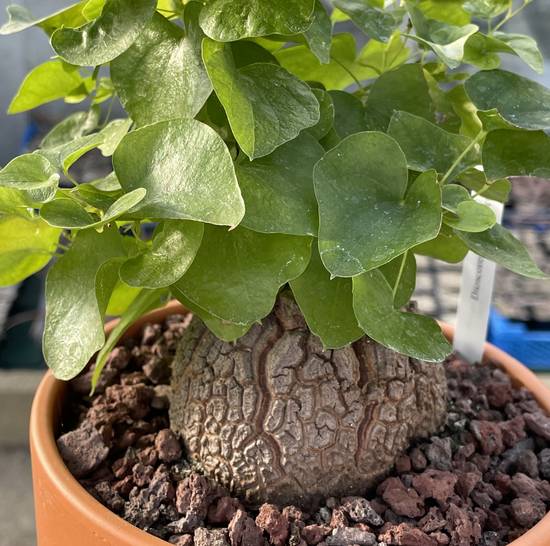
The Dioscorea Elephantipes, also known as the “turtle plant” or “elephant foot”, is a botanical marvel native to South Africa. This caudiciform plant develops an impressive caudex resembling a shell or the bark of a fossilized tree trunk. It is in fact a perennial climbing vine that stores water and nutrients in its woody base to survive long periods of drought.
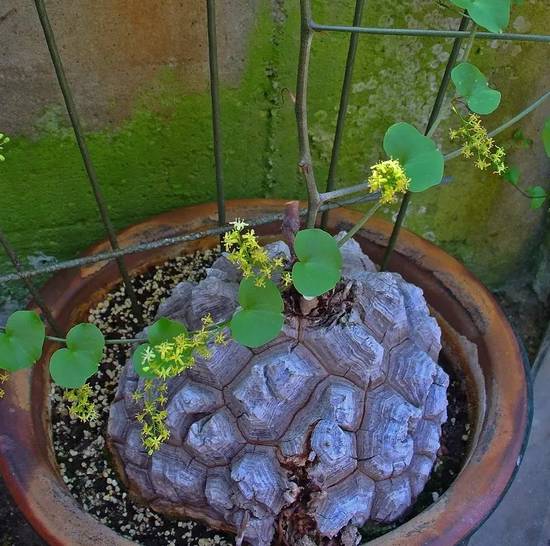
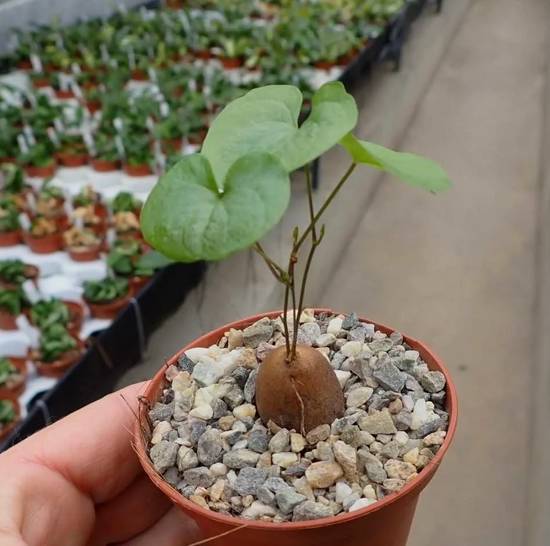
The caudex can exceed 1 meter in diameter with age, although it remains smaller in pots. Its growth is extremely slow, but it becomes more beautiful over time, forming spectacular polygonal patterns as it matures. From the top of the caudex, thin twining stems emerge, bearing heart-shaped leaves.
The Dioscorea Elephantipes follows an inverted growth cycle: it grows in autumn and winter, then enters dormancy in summer. This peculiarity makes it intriguing yet easy to care for, as long as its natural rhythm is respected.
It belongs to the Dioscoreaceae family, traditionally known for yams, although this species is purely ornamental.
🌞 Bright indirect light: ideally near an east- or south-facing window with filtered sunlight.
🌤️ Avoid direct full sun on the caudex, especially in summer, to prevent burns.
💡 The foliage tolerates brighter exposure during its growth period (winter–spring).
🌱 Autumn / winter: water moderately once leaves appear, allowing the substrate to dry between waterings. On average every 10 to 15 days.
🌞 Summer: dormancy period. Stop watering completely once the leaves dry.
⚡ Golden rule: never water a caudex without active foliage. This greatly increases the risk of rot.
🌞 Ideal: between 18°C and 26°C during growth.
❄️ Minimum threshold: 5°C if the caudex is completely dry. Otherwise, do not go below 10°C.
🏠 Wintering: indoors in a bright, draft-free place, kept dry during dormancy.
🪨 Recommended substrate: a mix of cactus potting soil + pumice stone + pozzolana in equal parts.
💡 Deep pots are unnecessary: choose a stable, wide container slightly larger than the caudex.
🌼 Season: during winter, at the same time as foliage growth.
🎨 Flowers: small, greenish to yellow, not ornamental, borne on the stems.
💡 Only mature, well-established plants can flower. The plant is dioecious: a male and a female plant are required to produce seeds.