
Decarya Madagascariensis
The Decarya Madagascariensis is a very rare succulent plant endemic to Madagascar, belonging to the Didiereaceae family — a unique group of plants that includes several emblematic species from this island. Unlike American cacti, this Malagasy genus evolved independently, developing similar survival strategies but with its own distinctive morphology. Decarya is undoubtedly one of the most unusual species of this family, both for its rarity and its truly strange appearance.
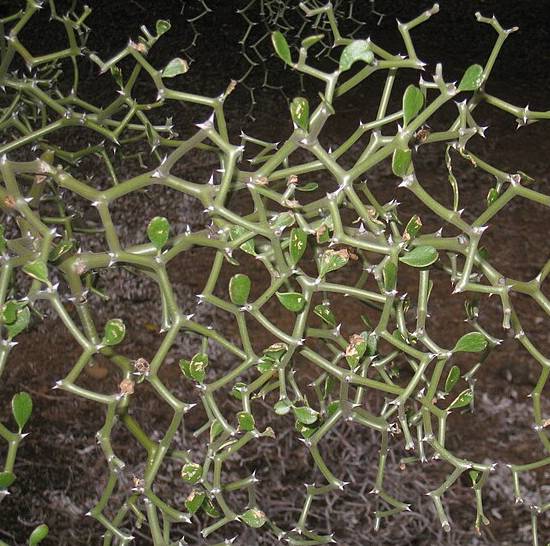
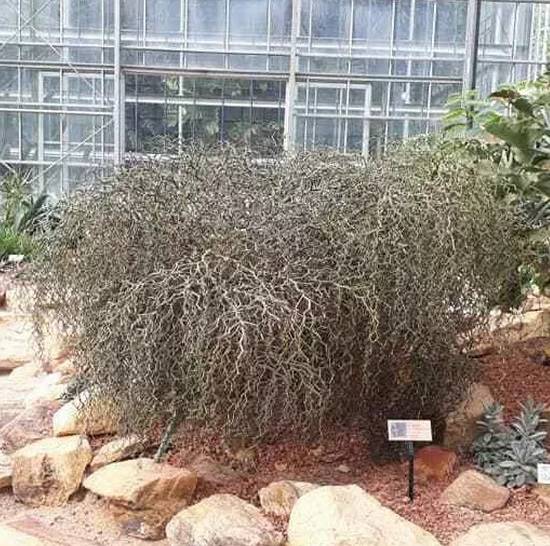
This plant forms woody, flattened stems, often interwoven or twisted, which can resemble fossilized corals or natural geological structures. The stems are covered with very hard spines and may become lignified over time, forming a small shrub with a highly architectural appearance. It can reach up to 1.5 meters in height under optimal conditions, but usually remains smaller in pots. Extremely slow-growing, Decarya fascinates collectors of caudiciform and xerophytic plants as well as specialized botanists with its almost prehistoric, sculptural and absolutely unique look.
🌞 Direct sunlight: Ideally 6 to 8 hours of sun per day, without shade. It can tolerate full sun year-round, especially if the air is well ventilated.
🏠 Indoors: Must be placed close to a south- or west-facing window. It can also be grown in a greenhouse with effective ventilation.
⚠️ Beware of insufficient light: Lack of light slows growth and makes the plant more vulnerable to disease.
🌱 Growing season: Water lightly about once every 3 weeks, only when the substrate is completely dry.
🍂 Rest period: In winter, stop watering completely. Any prolonged moisture during the cold season can cause rapid rot.
⚡ Tip: Use a spray bottle to lightly moisten the surface of the substrate if ambient humidity is too low.
🌡️ Ideal: Between 22°C and 30°C during the growing season.
❄️ Minimum: Never go below 10°C. Frost is fatal, even light frost.
🏠 Wintering: In winter, keep it in a bright, dry room without drafts and without watering.
🪨 Maximum drainage: Use cactus potting soil mixed in equal parts with perlite or pumice for optimal drainage.
🪴 Recommended pot: A perforated terracotta pot, shallow but wide, to allow proper root development.
🌼 Appearance: Small, greenish, insignificant flowers that appear between the woody stems.
🕑 Period: Usually in the height of summer, but only on well-established and mature specimens.
🎯 Note: This plant is grown primarily for its strange architecture rather than its flowers, which are rarely seen in cultivation.