
Aztekium Ritteri
The Aztekium Ritteri is a true botanical jewel, mysterious, tiny, and majestic at the same time. This cactus, often mistaken for a fossil stone or a miniature sculpture, fascinates enthusiasts worldwide with its perfect geometric shape and extremely slow growth. It belongs to one of the oldest cactus lineages, and its rarity makes it a prized specimen in any serious collection.
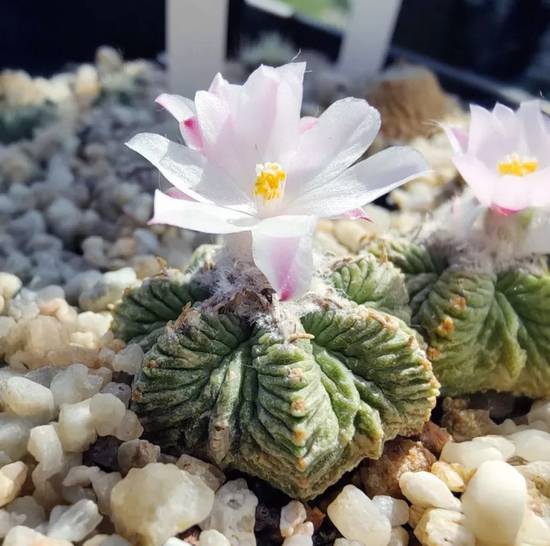
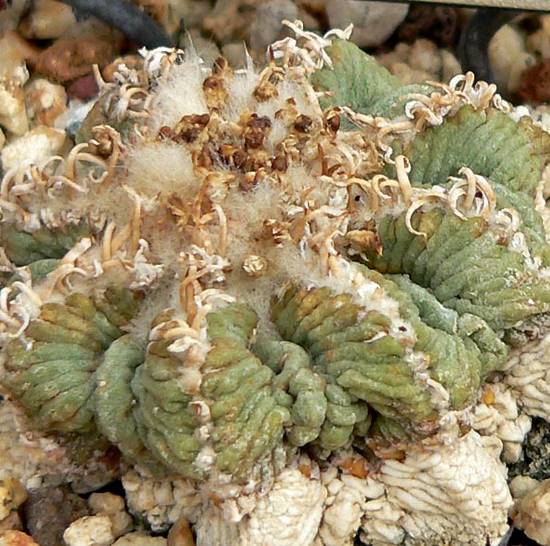
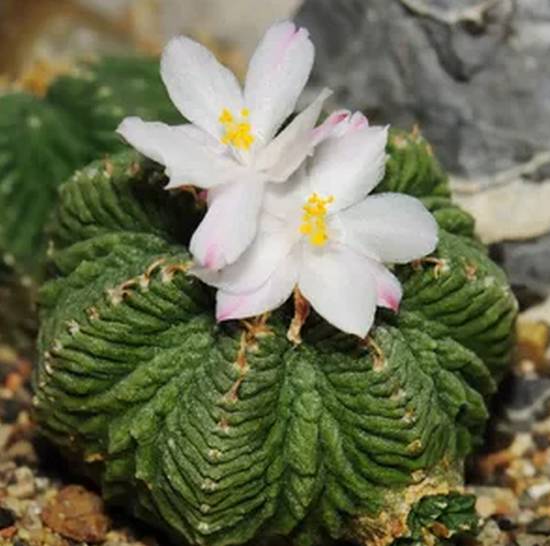
Its appearance resembles a miniature crown with finely striated ribs, adorned with small white areoles and sometimes a light woolly coating. Its color ranges from gray-green to bluish-green, often enhanced by a subtle glaucous bloom. Aztekium ritteri rarely exceeds 2 to 3 cm in height at maturity, but its morphological complexity makes it as fascinating as it is precious.
Its legendary slow growth is remarkable: a 1 cm specimen may already be several years old. This rhythm is linked to its extreme origin on the limestone cliffs of northern Mexico, where it survives in harsh conditions.
🌤️ Ideal exposure : Very bright light with filtered direct sun. Light shading in summer helps prevent sunburn.
🌿 Indoor cultivation : Near a bright window or under a full-spectrum LED lamp, 12 to 14 hours per day.
💧 Spring / summer : Water very sparingly, about every 4 to 5 weeks. Allow the substrate to remain dry for several days.
🍂 Autumn / winter : No watering. Keep the plant completely dry to avoid any risk of rot.
⚠️ Advice : Prefer rainwater or demineralized water, as limestone can harm its health.
🌞 Ideal temperature : Between 20°C and 28°C.
❄️ Minimum temperature : 5°C when dry. It does not tolerate cold humidity.
🏠 Wintering : Place it in a bright, dry space with no watering for 4 to 5 months.
🪨 Ideal composition : 80% mineral components (pumice, calcareous sand, perlite) + 20% cactus soil.
🌋 Drainage : Mandatory. Add a drainage layer at the bottom of the pot.
🌸 Flowering : From June to August. Small white to pale pink star-shaped flowers.
🌿 Favorable conditions : Dry winter rest combined with warmth and abundant light in spring.
💡 Tip : Very light fertilization may help, but must be applied sparingly.